EdX

Critical Raw Materials: Managing Resources for a Sustainable Future (edX)

Critical Raw Materials: Managing Resources for a Sustainable Future (edX)

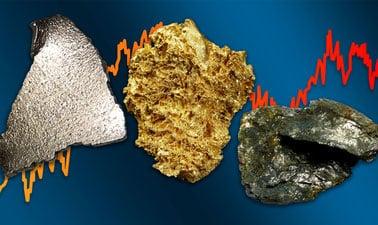
Gain a systemic understanding of critical raw materials and learn about strategies and solutions to manage them in a sustainable way. The availability of critical raw materials (CRMs) is under massive pressure. However, these materials are essential for products, technologies and solutions to some of the world’s most crucial issues – such as the energy transition.

Class Deals by MOOC List - Click here and see EdX's Active Discounts, Deals, and Promo Codes.

The small numbers of suppliers, price volatility, environmental damage from mining, and costly time- and energy-consuming extraction processes are just a few of the many associated challenges.
Addressing the criticality of raw materials is one of the most complex sustainability challenges of our time. Just as renewables alone will not solve climate change, recycling cannot be the only solution to deal with the increasing use of these materials. The transition to a raw materials-intensive economy calls for a systems-thinking approach and the involvement of businesses, governments and society at large.
This course provides a systemic understanding of CRMs and equips you with tools and strategies for managing them in a sustainable way. The course covers the entire raw materials’ value chain, which will help you see what actions can be taken at every stage and how you can make informed decisions, and contribute to and benefit from a more sustainable approach to CRMs, regardless of your professional or academic background.
Key topics include access to raw materials, environmental and social impacts, geopolitical factors, market dynamics, economics, supply chains, global trends in CRM use, and resource efficiency.
You can choose from three different tracks that cover possible solutions from a technical, business or policy perspective. These range from supply risk mitigation, exploration, urban mining and substitution to circularity strategies, business models, responsible sourcing and certification.
This course also introduces you to experts, start-ups and projects in the field and inspires you to tackle problems with concrete initiatives.

What you'll learn

  • Explore critical raw materials and their role in achieving a sustainable transition
  • Recognize the diverse challenges that come with critical raw materials and the complex issues involved in finding solutions
  • Analyse the importance of material systems and dynamics and review the social and environmental impacts of CRMs
  • Distinguish major strategies for developing a more circular and sustainable use of critical raw materials
  • Apply your knowledge to design innovative solutions in the field

Syllabus

Week 1: Introduction: Relevance of critical raw materials in our society
What is the definition of a critical raw material? What role do these materials play in our transition to a more sustainable future? Will we run out of critical raw materials soon?
We will introduce you to the topic, explain what criticality means and which materials are critical under which circumstances. We will also clarify the importance of critical raw materials in our modern society.

Week 2: Challenges: The issues with critical raw materials and their opportunities
How are critical raw materials related to geopolitics and conflicts? How are our consumption patterns related to resource use? What are the mechanisms of resource economics and commodity markets?
This week focuses on the challenges related to critical raw materials. We will explore the complexities of the global competition for resources, world-wide increase in resource use, and the role of resource efficiency for sustainability.

Week 3: Analysis: Tools for evaluating raw material challenges
What data do we have on the continued supply from existing mining sources? What is the potential for secondary sourcing?, How well can we predict the future of resources? How does our use of resources affect humans, the climate and the environment? What approaches are used to quantify these impacts?
In this week you will learn about the importance of materials systems and dynamics and methods for impact assessment.

Weeks 4 and 5: Solutions: Approaches and strategies for tackling the challenges
In this module you will be able to choose to focus on one of these three aspects for two weeks:
Technical Solutions : In the first week, we will focus on strategies to mitigate supply risks and the role of exploration to secure raw materials. In the second week, we will look at the potential of substitution and urban mining and we will dive into opportunities to make the resources value chain circular.
Systemic Solutions : In the first week, you will get an overview of circularity strategies (reuse, recycling, remanufacturing, etc.) for critical raw materials and learn how to design for recycling and circularity. In the second week, we will explore circular business models to improve circularity for raw materials and examine the economic drivers and policies that support recycling.
Policy Solutions : The first week will center around how certification can improve social conditions in mining regions and how trade relations can help to mitigate criticality. In the second week, we will discuss the relation between the Sustainable Development Goals and critical raw material challenges and learn how to consider and balance the interests of different stakeholders when assessing sustainability of CRMs.

Week 6: Ideas: Good practice examples and your turn to get creative
What are successful business cases of a more sustainable resource use? How can I get involved?
Get inspired by real life examples to create your own business idea that could be a solution to a resources challenge.

Go to Class
MOOC List is learner-supported. When you buy through links on our site, we may earn an affiliate commission.

Related Courses

Road safety in the Caribbean region: institutions and data management (edX) EdX
Inter-American Development Bank - IDB,IDBx

Road safety in the Caribbean region: institutions and data management (edX)

Learn about the current state of road safety in our region, its main challenges, and areas of action. Can you imagine being able to contrast your opinions and experiences with people like Lieutenant Colonel, Enrique, from Ecuador, or other practicing public managers and representatives of Civil Society organizations from all over the region? In this course, you will have that opportunity, and also, access to videos of international specialists from various organizations (IDB, PAHO / WHO, WRI, LatinNCAP among others); readings; real cases from the region; recommendations; practical activities and discussion forums.

Self Paced
Self-Paced
How to Drive Sustainable Healthcare: Educate, Engage, and Empower (FutureLearn) FutureLearn
University College London

How to Drive Sustainable Healthcare: Educate, Engage, and Empower (FutureLearn)

Understand how healthcare impacts the environment and gain the skills to drive sustainable change within your healthcare setting. Discover the importance of sustainability in healthcare. Though healthcare systems play a vital role in society, they also have a considerable environmental impact. As we face the climate crisis, we must identify ways to reduce this impact. On this three-week course, you’ll discover how healthcare systems negatively affect the environment and what you can do in your healthcare setting to mitigate this. With this understanding, you’ll gain skills to promote sustainability and improve the health of your patients and the planet.

Jan 29th 2024
3 Weeks
Sustainable Construction and Development (FutureLearn) FutureLearn
London South Bank University,Chartered Institute of Building Academy

Sustainable Construction and Development (FutureLearn)

Gain valuable insight into sustainable construction and development, and learn best practices from sustainability initiatives. Improve your understanding of sustainable construction and development. Sustainable development meets the needs of the present by carrying out activities that do not compromise future generations’ ability to meet their own needs. On this course, you’ll learn about the obligations and actions that play a role in the concept and practice of sustainability in construction and development.

Aug 3rd 2020
5-12 Weeks
Consommer responsable (FUN) FUN
Université Paris Ouest Nanterre La Défense

Consommer responsable (FUN)

Comment consommer de manière plus responsable ? Quels sont les impacts de nos modes de consommation, vecteurs de transition et de respect de la planète ? Voici là toutes les problèmatiques de ce MOOC ! Ses témoignages de plus de quarante experts issus de champs disciplinaires différents (histoire, droit, ingénierie, gestion…) vous permettront d'apprehender globalement ces questions. Ils orienteront de fait, ce MOOC vers une approche plurisdisciplinaire du sujet.

No sessions available
5-12 Weeks
The E-waste Challenge MOOC (Climate-KIC) Other Providers
United Nations Environment Programme - UNEP,KU Leuven University,Climate-KIC,World Resources Forum

The E-waste Challenge MOOC (Climate-KIC)

With our growing appetite for electrical and electronic products, combined with rapid innovation and ever-shorter product lifespans, e-waste has now become one of the fast growing waste streams. This course will help the participant to understand why and how we must manage e-waste in an environmentally sound manner and how we can take action on e-waste in their own life, business, or organization.

No sessions available
No Information
Traitement médiatique du changement climatique : le niveau des mers (FUN) FUN
Université de Versailles Saint-Quentin-en-Yvelines - UVSQ

Traitement médiatique du changement climatique : le niveau des mers (FUN)

L’impact du changement climatique sur les écosystèmes, l’économie, l’énergie, la santé et la société rend cruciale sa compréhension par le grand public. Par ailleurs, les décisions politiques, de l’échelle locale au niveau international, peuvent dépendre des questions climatiques et environnementales et les impacter également. Force est de constater que le niveau de compréhension des enjeux autour du climat est toujours mal appréhendé par les citoyens et de les décideurs, mais aussi par les "relais" chargés de leur transmettre les informations scientifiques, que sont les journalistes et les communicants.

No sessions available
5-12 Weeks
The E-waste Challenge (EMMA) EMMA
Climate-KIC

The E-waste Challenge (EMMA)

E-waste can be a threat to our planet: Illegal and poorly managed e-waste is polluting our environment, harming human health, and contributing to human-made climate change. The worst impacts are often in the countries that are least equipped to manage it. Or it can be a valuable resource: By recycling materials contained in e-waste, we can save on greenhouse gas (GHG) emissions from primary mining, we can create green jobs, and we can create economic opportunities.

No sessions available
5-12 Weeks
Orçamento e Cronograma de Projetos (Coursera) Coursera
University of California, Irvine,Universidade de São Paulo, Brasil

Orçamento e Cronograma de Projetos (Coursera)

Uma boa programação do projeto ajuda todos os membros da equipe a trabalhar em conjunto para atender aos objetivos do projeto. Um orçamento de projeto com restrições realistas de custos também é um fundamento essencial de qualquer projeto. Neste curso você aprenderá a planejar e manter restrições de tempo e custo para garantir o sucesso de seus projetos.

Aug 24th 2026
5-12 Weeks
Co-Creating Sustainable Cities (edX) EdX
Wageningen University,Delft University of Technology,DelftX,WageningenX

Co-Creating Sustainable Cities (edX)

Learn how citizen’s co-creation is key in making cities worldwide more sustainable. Around the world, major challenges of our time such as population growth and climate change are being addressed in cities. Here, citizens play an important role amidst governments, companies, NGOs and researchers in creating social, technological and political innovations for achieving sustainability.

Self Paced
Self-Paced