Crashing a Project using Microsoft Excel (Coursera)

Crashing a Project using Microsoft Excel (Coursera)

Project Scheduling is an essential aspect of Project Management. In most case, after the Project Schedule has been prepared or during the Project execution, the Project Schedule needs to be crashed. Crashing a Project means to reduce the total duration of the Project. Crashing a Project involves a cost called the Crash Cost. So, while Crashing a Project, we need ensuring that we increase the Project Cost by the least amount.

Class Deals by MOOC List - Click here and see Coursera's Active Discounts, Deals, and Promo Codes.

Crashing a Project optimally can be conducted using Linear Programming. As Microsoft Excel has support for Linear Programming, we can use Microsoft Excel to Crash a Project.
Using Microsoft Excel for Project Scheduling has 2 more advantages. The first advantage is that the nuances involved in Project Scheduling becomes clear (This is hidden by tools like Microsoft Project). The second advantage is that we do not need additional license for tools like Microsoft Project. Most importantly, we will discuss aspects of Project Scheduling which cannot be conducted using tools like Microsoft Project and Primavera.
In this Project, we will use Microsoft Excel to prepare a Project Schedule and then we will see how we can Crash the Project Schedule.
This Guided Project was created by a Coursera community member.

In this Guided Project, you will:

  • Schedule a project using Microsoft Excel.
  • Learn about crashing a project.
  • Crash a project using Solver.

Learn step-by-step

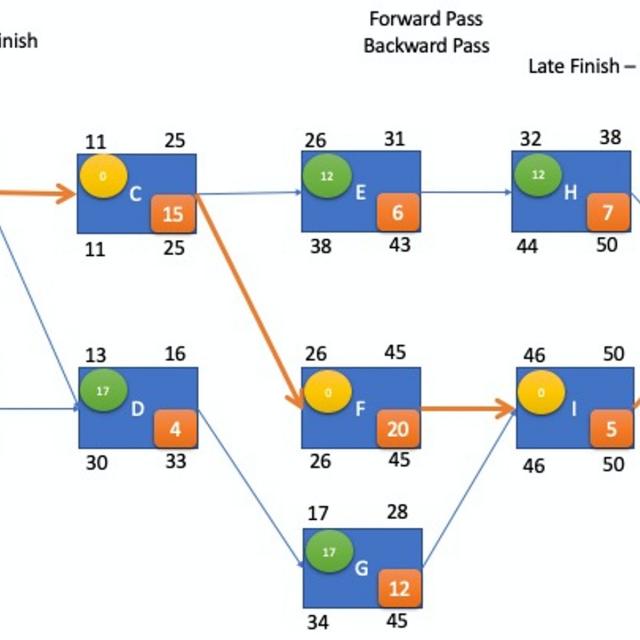
  • Create the Project Schedule Network
  • Create a Project Schedule Network Yourself
  • Calculate the Project Duration
  • Prepare for Crashing the Project
  • Set up Solver to Crash the Project

Go to Class
MOOC List is learner-supported. When you buy through links on our site, we may earn an affiliate commission.

Related Courses

Statistics and Data Analysis with Excel, Part 2 (Coursera) Coursera
University of Colorado Boulder

Statistics and Data Analysis with Excel, Part 2 (Coursera)

This course is meant to be a direct continuation of "Statistics and Data Analysis with Excel, Part 1." Therefore, it is not recommended to take Part 2 unless you've also taken Part 1. Building on the topics learned in Part 1 of the course (probability, probability mass and density functions, the normal and standard normal distributions), this course dives into a more applied side of statistics.

Sep 21st 2026
5-12 Weeks
Mastering Excel Essentials to Enhance Business Value (Coursera) Coursera
Illinois Tech

Mastering Excel Essentials to Enhance Business Value (Coursera)

This course is designed to cater to a diverse audience, particularly those with an interest in working in dynamic environments that place a strong emphasis on data-driven, quantitative analysis. Whether you are an experienced professional seeking to enhance your skills or someone looking to pivot into a cutting-edge industry, this course provides valuable insights and knowledge to thrive in today's data-centric and rapidly evolving landscape.

Sep 14th 2026
4 Weeks
An Introduction to Logic for Computer Science (Coursera) Coursera
University of Leeds

An Introduction to Logic for Computer Science (Coursera)

Logic plays a fundamental role in computer science. This course is designed to equip you with a solid understanding of the fundamental principles of logic and their relevance in the field of computer science. In this course, you'll explore proposition logic and discover its practical applications in problem-solving, algorithm design, and the development of intelligent systems. By engaging in hands-on exercises, exploring real-world examples, and participating in discussions, you'll develop strong logical reasoning and critical thinking skills.

Sep 21st 2026
2 Weeks
Development of Real-Time Systems (Coursera) Coursera
EIT Digital

Development of Real-Time Systems (Coursera)

This course is intended for the Master's student and computer engineer who likes practical programming and problem solving! After completing this course, you will have the knowledge to plan and set-up a real-time system both on paper and in practice. The course centers around the problem of achieving timing correctness in embedded systems, which means to guarantee that the system reacts within the real-time requirements.

Sep 21st 2026
5-12 Weeks
Business Models for Innovative Care for Older People (Coursera) Coursera
University of Copenhagen,Copenhagen Business School

Business Models for Innovative Care for Older People (Coursera)

This course will introduce you to healthcare innovation within the field of healthy living and active aging. By following two specific cases on diabetes and rehabilitation, this interdisciplinary course will provide you with key theories, tools and concepts for analyzing and developing viable innovative solutions for aging populations. The lectures will cover demographic, biological, economic, social and cultural aspects of active aging and healthy living, along with lectures on current innovation theories and methods.

Sep 14th 2026
5-12 Weeks
Habilidades de Excel para el negocio: Conceptos básicos (Coursera) Coursera
Macquarie University

Habilidades de Excel para el negocio: Conceptos básicos (Coursera)

En este primer curso de la especialización de habilidades de Excel para el negocio, aprenderá los conceptos básicos de Microsoft Excel. En seis semanas, podrá navegar, de forma experta, a través de la interfaz de usuario de Excel, realizar cálculos básicos con fórmulas y funciones, dar formato profesional a hojas de cálculo y crear visualizaciones de datos a través de gráficos y cuadros.

Sep 14th 2026
5-12 Weeks
Business Applications of Hypothesis Testing and Confidence Interval Estimation (Coursera) Coursera
Rice University

Business Applications of Hypothesis Testing and Confidence Interval Estimation (Coursera)

Confidence intervals and Hypothesis tests are very important tools in the Business Statistics toolbox. A mastery over these topics will help enhance your business decision making and allow you to understand and measure the extent of ‘risk’ or ‘uncertainty’ in various business processes. This course advances your knowledge about Business Statistics by introducing you to Confidence Intervals and Hypothesis Testing. These are done by easy to understand applications.

Sep 7th 2026
4 Weeks
Modeling Risk and Realities (Coursera) Coursera
University of Pennsylvania

Modeling Risk and Realities (Coursera)

Useful quantitative models help you to make informed decisions both in situations in which the factors affecting your decision are clear, as well as in situations in which some important factors are not clear at all. In this course, you can learn how to create quantitative models to reflect complex realities, and how to include in your model elements of risk and uncertainty.

Sep 7th 2026
4 Weeks