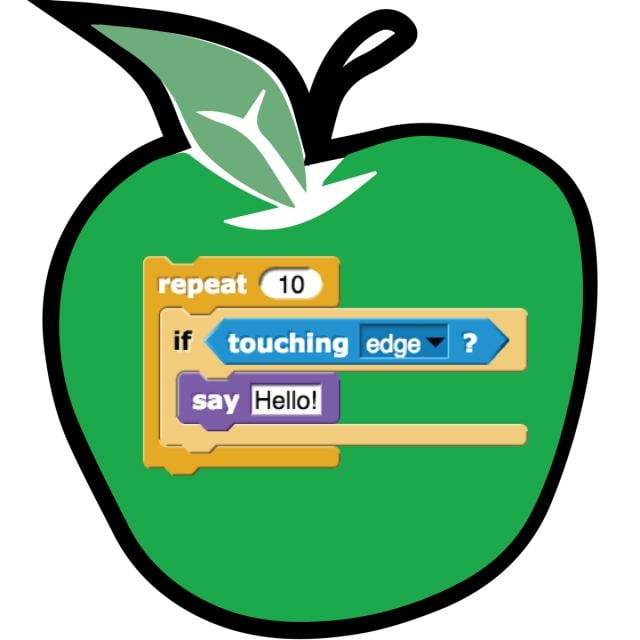
Computational Thinking for K-12 Educators: Conditional Loops and If Statements (Coursera)

Computational Thinking for K-12 Educators: Conditional Loops and If Statements (Coursera)

Want to make a game that ends when you "catch" an object by clicking on it? Or maybe you get points based on how close you came? You'll do that in this class! This class teaches the concepts of conditional loops and if/else statements.

Class Deals by MOOC List - Click here and see Coursera's Active Discounts, Deals, and Promo Codes.

For each concept, we'll start by helping you connect real-world experiences you are already familiar with to the programming concept you are about to learn. Next, through a cognitively scaffolded process we'll engage you in developing your fluency with problem solving with repeat until loops, while loops, and if/else statements in a way that keeps frustration at a minimum.
Along the way you will learn about the common challenges or "bugs" students have with these concepts as well as ways to help them find and fix those concepts. You'll also be guided in running classroom discussions to help students develop deeper understanding of these concepts.
Finally, you'll learn how to support interactive learning experiences among your students with Peer Instruction.
Additionally, you will create a resource for your classroom to support an equitable classroom.
Course 3 of 6 in the Computational Thinking & Block Programming in K-12 Education Specialization.

Syllabus

WEEK 1
Course Orientation
Meet Dr. Simon and fellow learners in this class! Find out what you’ll be doing and learning.
Conditional Loops
In this module we will learn about conditional loops and how they vary from fixed loops. We'll examine different examples of both loop types and look at some common challenges that you may come across. Finally you'll create your own conditional loop program and have the opportunity to create an assignment and conduct peer reviews.

WEEK 2
More Conditional Loops
Now that you've gotten an introduction to conditional loops, we will further explore them and their variations. We will look at why some programs require conditional loops and discuss suggestions that will help students trace each program. Finally we'll learn about a variation on the repeat until loop, called the do-while loop.

WEEK 3
If statements
In this module we'll get an introduction to conditionals, which are also known as if-else statements. First we'll examine some examples of if-else conditionals that exist in our everyday life. Next you will take a look at videos of completed programs and recreate the code. We'll end with some debugging tips and have you create your own if-else program assignment.

WEEK 4
More If statements
Now that you have a basic understanding of conditionals, we look at some more complicated cases. You'll watch a video of how a teacher introduces the topic to her class and learn about conditionals with more than 2 scenarios. You'll also look at programs with two independent conditionals and learn how this varies from else-if statements. Finally, you'll analyze some misconceptions and challenges you initially had when learning about conditionals and create resources to help others learn about conditionals.

WEEK 5
Equity & Pedagogy
In this module we take a look at peer instruction, an interactive teaching method that promotes learning. You will learn how peer instruction works and its benefits through various evidence-based studies. Then you'll determine how it can be applied to a computer science course and examine additional reasons peer instruction is beneficial in teaching computer science in class. You will have the opportunity to apply what you learn when creating a resource and peer reviewing others' work.

Go to Class
MOOC List is learner-supported. When you buy through links on our site, we may earn an affiliate commission.

Related Courses

Educación en Contextos Rurales: Perspectivas en América Latina (Coursera) Coursera
Universidad Austral

Educación en Contextos Rurales: Perspectivas en América Latina (Coursera)

Este curso te permitirá comprender la educación en contextos rurales de América Latina y los desafíos que plantea en la actualidad. A partir de las estadísticas actuales y literatura reciente, se caracterizará esta modalidad educativa, para identificar sus fortalezas y la potencialidad de inspirar, a partir de ellas, mejoras en otros contextos educativos.

Jun 22nd 2026
4 Weeks
Computational Thinking for Problem Solving (Coursera) Coursera
University of Pennsylvania

Computational Thinking for Problem Solving (Coursera)

Computational thinking is the process of approaching a problem in a systematic manner and creating and expressing a solution such that it can be carried out by a computer. But you don't need to be a computer scientist to think like a computer scientist! In fact, we encourage students from any field of study to take this course. Many quantitative and data-centric problems can be solved using computational thinking and an understanding of computational thinking will give you a foundation for solving problems that have real-world, social impact.

Jun 22nd 2026
4 Weeks
The Teacher's Social and Emotional Learning (Coursera) Coursera
University of Colorado Boulder

The Teacher's Social and Emotional Learning (Coursera)

Social and emotional learning, or SEL, programs have flourished in schools during the last decade. While this growth has been impressive, inadequate attention has been paid to teachers’ social and emotional learning. In this course Dan Liston and Randy Testa introduce you to various rationales for why teacher SEL is needed as well as examine and reflect on various emotions in teaching and learning.

Jun 22nd 2026
5-12 Weeks
Evaluación para el aprendizaje: Enfoque cuantitativo (Coursera) Coursera
Universidad Nacional Autónoma de México

Evaluación para el aprendizaje: Enfoque cuantitativo (Coursera)

La perspectiva contemporánea de la educación ha considerado que dentro del proceso educativo es indispensable la evaluación como una parte esencial de la enseñanza y el aprendizaje. Realizar este proceso de manera adecuada requiere de una formación especializada que nos permita conocer tanto el proceso en sí mismo, así como los elementos involucrados en él y la pertinencia de hacer uso de las técnicas e instrumentos más adecuados y necesarios para cada tipo de evaluación.

Jun 22nd 2026
4 Weeks
How to Write and Publish a Scientific Paper (Project-Centered Course) (Coursera) Coursera
École Polytechnique

How to Write and Publish a Scientific Paper (Project-Centered Course) (Coursera)

In this project-based course, you will outline a complete scientific paper, choose an appropriate journal to which you'll submit the finished paper for publication, and prepare a checklist that will allow you to independently judge whether your paper is ready to submit. What you'll need to get started: This course is designed for students who have previous experience with academic research - you should be eager to adapt our writing and publishing advice to an existing personal project.

Jun 22nd 2026
4 Weeks
Communication Skills for University Success (Coursera) Coursera
The University of Sydney

Communication Skills for University Success (Coursera)

This Specialization is aimed at preparing students for undergraduate study in an English-speaking university. The course equips you for full participation and engagement with your studies by building awareness and understanding of the core values and expectations of academic culture, and providing you with practical strategies to apply to your studies. In this course, you will learn how to develop your Communication Skills to help you achieve success in your university studies.

Jun 22nd 2026
5-12 Weeks
Assessment in Higher Education: Professional Development for Teachers (Coursera) Coursera
Erasmus University Rotterdam

Assessment in Higher Education: Professional Development for Teachers (Coursera)

Are you a teacher in higher education wanting to get the best out of your students and assessments? Then on behalf of Risbo, Erasmus University Rotterdam, we would like to welcome you to this MOOC on Assessment in Higher Education. In this MOOC we will guide you through the different phases of preparing, creating and evaluating the assessments in your course.

Jun 22nd 2026
5-12 Weeks
Aprendizaje de las matemáticas de primaria (Coursera) Coursera
Universidad de los Andes

Aprendizaje de las matemáticas de primaria (Coursera)

En este segundo curso de acceso gratuito* del programa especializado Educación Matemática para profesores de primaria, conocerás las cuestiones particulares sobre el aprendizaje de las matemáticas y las dificultades y los errores más frecuentes que tienen que enfrentar los estudiantes al aprenderlas. El curso tiene una duración aproximada de seis semanas, con una dedicación promedio de 4 horas semanales. Todas las evaluaciones tienen retroalimentación y podrás descargar la mayoría de los recursos del curso.

Jun 22nd 2026
5-12 Weeks
Problem-Solving Skills for University Success (Coursera) Coursera
The University of Sydney

Problem-Solving Skills for University Success (Coursera)

In this course, you will learn how to develop your Problem Solving and Creativity Skills to help you achieve success in your university studies. After completing this course, you will be able to: 1-Recognise the importance and function of problem solving and creative thought within academic study and the role of critical thought in creative ideation; 2-Develop a toolkit to be able to identify real problems and goals within ill-defined problems; 3-Recognize and apply analytical problem solving techniques: 4-Recognise and apply creative problem solving techniques; 5-Identify the use of creativity within and types of problems most common to your field; 6-Apply learnt problem solving and creative ideation skills to a real-life context and reflect on personal learning processes

Jun 22nd 2026
5-12 Weeks
Interactive eLearning and Assessment with Edulastic (Coursera) Coursera
Coursera Project Network

Interactive eLearning and Assessment with Edulastic (Coursera)

By the end of this project, you will be ready to use Edulastic to identify gaps and measure growth as your students learn. With Edulastic, you can not only assess and measure your students’ progress, but you can also differentiate student assignments. Each student in your class will receive instruction in any subject that is tailored to their unique learning needs. Edulastic is essential for distance learning but also valuable for learning in the classroom, whether you use a hybrid model or are looking for ways to engage students with content at home. Throughout each task, we will work together to ensure that you are ready to use Edulastic with your students right away.

Jun 22nd 2026
Self-Paced
Teaching Impacts of Technology: Global Society (Coursera) Coursera
University of California, San Diego

Teaching Impacts of Technology: Global Society (Coursera)

In this course you’ll focus on how technology-enabled communication is changing geopolitics and, more broadly, how technology is connecting our world and changing lives. This will be done through a series of paired teaching sections, exploring a specific “Impact of Computing” in your typical day and the “Technologies and Computing Concepts” that enable that impact, all at a K12-appropriate level.

Jun 25th 2026
4 Weeks
What future for education? (Coursera) Coursera
University of London,UCL Institute of Education

What future for education? (Coursera)

Through this course you will start to critically examine your own ideas about education, teaching and learning. The critique will be developed through engagement with theories and ideas developed through educational research. You will be encouraged to use these ideas to challenge or support your own ideas about education. Each week we will focus on one key question, using video lectures, key readings and challenges to explore some commonplace notions about education.

Jun 22nd 2026
5-12 Weeks