Competencias digitales. Conceptos y herramientas básicas (Coursera)

Competencias digitales. Conceptos y herramientas básicas (Coursera)

Los continuos cambios tecnológicos, sobre todo en aquellos aspectos vinculados a las tecnologías de la información y la comunicación (TIC) hacen que las personas tengan la necesidad de actualizarse de forma continua para que sus conocimientos no queden obsoletos. En este contexto, para las empresas se convierte en algo imprescindible disponer de profesionales que tengan las competencias necesarias para ejercer con éxito las actividades que requieren en su lugar de trabajo.

Class Deals by MOOC List - Click here and see Coursera's Active Discounts, Deals, and Promo Codes.

El curso, basado en las experiencias previas y el syllabus de ECDL (European Computer Driving Licence), nace con la voluntad de facilitar:

  • el desarrollo continuado de las personas en aquellas competencias vinculadas a las tecnologías de la información y la comunicación,
  • la inserción laboral y la renovación de las competencias tecnológicas de los estudiantes y de los profesionales.

Los 3 cursos que ofrecemos bajo el título general “Competencias digitales” están destinados a personas sin conocimientos de ofimática o a personas con unas competencias digitales básicas y que deseen mejorar sus conocimientos de ofimática para ser más eficientes en sus estudios o en su trabajo, o bien quieran aumentar sus perspectivas laborales.

En este curso, trabajaremos 4 temas:

  • Conceptos.
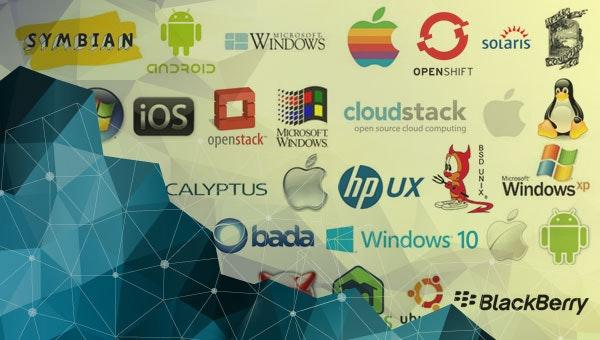
  • Uso del sistema operativo.
  • Internet.
  • Seguridad informática.

Syllabus

WEEK 1
Presentación
Los 3 cursos de Desarrollo de competencias digitales están destinados a personas sin conocimientos de ofimática o a personas con unas competencias digitales básicas y que deseen mejorar sus conocimientos de ofimática para ser más eficientes en sus estudios o en su trabajo, o bien quieran aumentar sus perspectivas laborales.En este curso, trabajaremos 4 temas:- Conceptos.- Uso del sistema operativo.- Internet.- Seguridad informática.Antes de empezar a visualizar vídeos u otros contenidos te recomendamos que hagas una parada en la siguiente sección (Información básica sobre el curso), en la que se te ofrece información importante sobre el curso y su funcionamiento.¡Bienvenido/a!
Conceptos y uso del ordenador (I): conceptos
Este módulo (dividido en 2 semanas) está pensado para aquellos que no tengáis conocimientos sobre el uso de los ordenadores. Si es vuestro caso, no tengáis miedo, no os avasallaremos con conceptos técnicos complicados, el módulo está pensado para que os familiaricéis con los conceptos básicos (primera semana) y aprendáis a utilizar las herramientas básicas del sistema operativo (segunda semana).Una vez superado este módulo, ya podréis, en el resto de módulos, aprender tareas concretas como navegar por Internet, usar el correo electrónico, usar un editor de textos, …No os saltéis este módulo porque contiene conceptos que es necesario tener claros para trabajar con las aplicaciones del resto de módulos.Aquellos que ya utilizáis ordenador, seguramente ya conoceréis todo lo que os explicamos en este módulo. Podéis echarle un vistazo y, si veis que ya tenéis estos conocimientos, podéis hacer los cuestionarios y pasar al siguiente módulo.

WEEK 2
Conceptos y uso del ordenador (II): uso del ordenador
Una vez nos hemos familiarizado con los conceptos básicos relacionados con los ordenadores, ahora vamos a ver cómo utilizar el sistema operativo, vamos a empezar a interactuar con el ordenador. Esta semana podréis adquirir los conocimientos básicos e indispensables para usar sistema operativo.

WEEK 3
Internet básico
Internet es la herramienta más importante de los últimos años. Aprende a navegar por páginas web y a utilizar el correo electrónico, así como a imprimir páginas web y a tomar unas precauciones básicas de seguridad informática.

WEEK 4
Seguridad
Aprende a mantener seguros tus datos y a usar de manera segura los servicios de Internet.

Go to Class
MOOC List is learner-supported. When you buy through links on our site, we may earn an affiliate commission.

Related Courses

Introduction to the Internet of Things and Embedded Systems (Coursera) Coursera
University of California, Irvine

Introduction to the Internet of Things and Embedded Systems (Coursera)

The explosive growth of the “Internet of Things” is changing our world and the rapid drop in price for typical IoT components is allowing people to innovate new designs and products at home. In this first class in the specialization you will learn the importance of IoT in society, the current components of typical IoT devices and trends for the future. IoT design considerations, constraints and interfacing between the physical world and your device will also be covered. You will also learn how to make design trade-offs between hardware and software. We'll also cover key components of networking to ensure that students understand how to connect their device to the Internet.

Jun 22nd 2026
4 Weeks
IT Infrastructure and Emerging Trends (Coursera) Coursera
University of Minnesota

IT Infrastructure and Emerging Trends (Coursera)

Today organizations are either embracing digital technologies to improve their businesses or being disrupted by entrants with such capabilities. Therefore it is important for managers and executives of all organizations to learn about various technologies and apply them in innovative ways. Some of the most important trends in Information Technology are in mobile, cloud, security, and blockchains.

Jun 22nd 2026
5-12 Weeks
Hardware Security (Coursera) Coursera
University of Maryland, College Park

Hardware Security (Coursera)

In this course, we will study security and trust from the hardware perspective. Upon completing the course, students will understand the vulnerabilities in current digital system design flow and the physical attacks to these systems. They will learn that security starts from hardware design and be familiar with the tools and skills to build secure and trusted hardware.

Jun 22nd 2026
5-12 Weeks
Mathematical Foundations for Cryptography (Coursera) Coursera
University of Colorado System

Mathematical Foundations for Cryptography (Coursera)

Welcome to Course 2 of Introduction to Applied Cryptography. In this course, you will be introduced to basic mathematical principles and functions that form the foundation for cryptographic and cryptanalysis methods. These principles and functions will be helpful in understanding symmetric and asymmetric cryptographic methods examined in Course 3 and Course 4. These topics should prove especially useful to you if you are new to cybersecurity. It is recommended that you have a basic knowledge of computer science and basic math skills such as algebra and probability.

Jun 22nd 2026
4 Weeks
Classical Cryptosystems and Core Concepts (Coursera) Coursera
University of Colorado System

Classical Cryptosystems and Core Concepts (Coursera)

Welcome to Introduction to Applied Cryptography. Cryptography is an essential component of cybersecurity. The need to protect sensitive information and ensure the integrity of industrial control processes has placed a premium on cybersecurity skills in today’s information technology market. Demand for cybersecurity jobs is expected to rise 6 million globally by 2019, with a projected shortfall of 1.5 million, according to Symantec, the world’s largest security software vendor. According to Forbes, the cybersecurity market is expected to grow from $75 billion in 2015 to $170 billion by 2020.

Jun 22nd 2026
3 Weeks
Introduction to TCP/IP (Coursera) Coursera
Yonsei University

Introduction to TCP/IP (Coursera)

You use the Internet through your PC (Personal Computer), laptop, tablet, smartpad, and smartphone every day in everything you do. Through your own PC/laptop, you can easily learn everything about the Internet, and that is what this course is focused on. In this course ‘Introduction to TCP/IP,’ you will learn the operational functions of Internet technologies (which include IPv4, IPv6, TCP, UDP, addressing, routing, domain names, etc.) and your PC/laptop's security and gateway Internet setup and basic principles.

Jun 22nd 2026
5-12 Weeks
Cybersecurity Compliance Framework & System Administration (Coursera) Coursera
IBM

Cybersecurity Compliance Framework & System Administration (Coursera)

This course gives you the background needed to understand the key cybersecurity compliance and industry standards. This knowledge will be important for you to learn no matter what cybersecurity role you would like to acquire or have within an organization. You will learn the basic commands for user and server administration as it relates to security. You will need this skill to be able to understand vulnerabilities within your organizations operating systems.

Jun 22nd 2026
4 Weeks
Engineering Practices for Building Quality Software (Coursera) Coursera
University of Minnesota

Engineering Practices for Building Quality Software (Coursera)

Agile embraces change which means that team should be able to effectively make changes to the system as team learns about users and market. To be good at effectively making changes to the system, teams need to have engineering rigor and excellence else embracing change becomes very painful and expensive. In this course, you will learn about engineering practices and processes that agile and traditional teams use to make sure the team is prepared for change. In additional, you will also learn about practices, techniques and processes that can help team build high quality software. You will also learn how to calculate a variety of quantitative metrics related to software quality.

Jun 22nd 2026
4 Weeks
Advanced System Security Topics (Coursera) Coursera
University of Colorado System

Advanced System Security Topics (Coursera)

In this MOOC, we learn RBAC and ABAC access control to facilitate the specification and management of access policies. We learn examples of how RBAC is supported by modern systems such as Docker and AWS IAM. We learn XACML 3.0 and an ABAC implementation for controling secure access to web documents and network resources with attribute certificates, and XACML architecture components.

Jun 22nd 2026
4 Weeks
Networking and Security in iOS Applications (Coursera) Coursera
University of California, Irvine

Networking and Security in iOS Applications (Coursera)

You will learn to extend your knowledge of making iOS apps so that they can securely interact with web services and receive push notifications. You'll learn how to store data securely on a device using Core Data. You’ll also learn to securely deploy apps to the App Store and beta users over-the-air. The format of the course is through a series of code tutorials. We will walk you through the creation of several apps that you can keep as a personal app toolbox. When you make your own apps after this course, you can bring in these capabilities as needed. When necessary we pop out of the code tutorials to talk about concepts at a higher level so that what you are programming makes sense.

Jun 22nd 2026
4 Weeks
Protecting Cloud Architecture with Alibaba Cloud (Coursera) Coursera
Alibaba Cloud Academy

Protecting Cloud Architecture with Alibaba Cloud (Coursera)

The Security Exam Preparation Course is a series of online courses covering topics including Linux and Windows OS basics and operations, network fundamentals, host security, application security, network security, and data security. It is designed to help you understand how these products work, how they should be used, and help you gain the required knowledge to prepare for the ACA/ACP level cloud security specialist.

Jun 22nd 2026
5-12 Weeks
Introduction to Cybersecurity for Business (Coursera) Coursera
University of Colorado System

Introduction to Cybersecurity for Business (Coursera)

The world runs computers. From small to large businesses, from the CEO down to level 1 support staff, everyone uses computers. This course is designed to give you a practical perspective on computer security. This course approaches computer security in a way that anyone can understand. Ever wonder how your bank website is secure when you connect to it? Wonder how other business owners secure their network? Wonder how large data breaches happen? This is practical computer security. It will help you answer the question – what should I focus on?

Jun 22nd 2026
5-12 Weeks