EdX

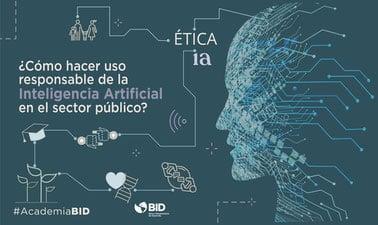
¿Cómo hacer uso responsable de la inteligencia artificial en el sector público? (edX)

¿Cómo hacer uso responsable de la inteligencia artificial en el sector público? (edX)

Este MOOC aborda los conceptos, principios, desafíos y oportunidades del uso ético y responsable de la inteligencia artificial (IA) para el sector público. Presenta herramientas para garantizar estándares mínimos, así como para fortalecer la calidad de los datos y de los modelos de IA desde su diseño hasta su implementación y monitoreo. Todo ello con el fin de reducir los posibles riesgos asociados a los sistemas de IA para una adopción de dicha tecnología de forma ética y responsable.

Class Deals by MOOC List - Click here and see EdX's Active Discounts, Deals, and Promo Codes.

¿Conoces las oportunidades del uso de la inteligencia artificial para diseñar, desarrollar e implementar proyectos que beneficien a los ciudadanos?
¿Sabes cuáles son los riesgos asociados a su uso y qué se puede hacer para mitigarlos?
Este curso en línea gratis te presenta las potencialidades, oportunidades y los riesgos existentes en el uso masivo de datos que se utilizan para alimentar sistemas de IA para el soporte o toma de decisión por parte de los gobiernos.
También analiza los riesgos al momento de la conceptualización, el diseño, la implementación y el monitoreo de un sistema de IA y las herramientas necesarias para mitigarlos.
Además, a lo largo del curso podrás utilizar estas herramientas para aplicar las recomendaciones éticas en proyectos reales, así como diferentes actividades prácticas que pondrán a prueba tu comprensión sobre el uso responsable de la IA en la política pública.
¿Estas preparado para utilizar el potencial de la IA de manera ética y responsable?

What you'll learn

  • Conocerás qué es un sistema responsable de IA sus características y los principios éticos que se deben tener en cuenta.
  • Comprenderás la diversidad de desafíos que enfrentan los países de la región para implementar un proyecto de IA ético y responsable en el sector público.
  • Analizarás las condiciones gubernamentales y presupuestales necesarias en para el desarrollo de proyectos que hagan uso de un sistema de IA, así como el impacto de estos en el ámbito social.
  • Conocerás marcos normativos, modelos de gobernanza y herramientas prácticas, que apoyan y guían los gobiernos en el desarrollo de sistemas de IA en proyectos con impacto social.
  • Comprenderás los retos de los ámbitos gubernamentales, jurídicos, de rendición de cuentas y de monitoreo de los sistemas de IA desde la política pública.

Syllabus

En este curso comprenderemos qué es un sistema de inteligencia artificial ético y responsable, así como sus características y principios éticos indispensables identificando la diversidad de desafíos que enfrentan los países de la región para implementarlo en el sector público.
Reconoceremos las condiciones gubernamentales y presupuestales necesarias en el desarrollo de proyectos que hagan uso de un sistema de inteligencia artificial, así como el impacto de estos en el ámbito social.
Identificaremos los marcos normativos, modelos de gobernanza y herramientas, que apoyan y guían a los gobiernos en el desarrollo de sistemas de inteligencia artificial en proyectos con impacto social. Finalmente, conoceremos los retos gubernamentales, jurídicos, de rendición de cuentas y de monitoreo de los sistemas de inteligencia artificial desde la política pública.


Go to Class
MOOC List is learner-supported. When you buy through links on our site, we may earn an affiliate commission.

Related Courses

Laudato si': On Care for Our Common Home (edX) EdX
SDGAcademyX,SDG Academy

Laudato si': On Care for Our Common Home (edX)

A mini-course on the urgent call to action: protect the earth and its inhabitants from ruin. What is “Laudato Si”? First presented by Pope Francis – spiritual leader to the world’s 1.2 billion Catholics – to his faith-based cohort, it is a call to action addressed not only to Catholics, but to all people of the world. Laudato Si’: On Care for Our Common Home raises the profile of the grave ecological crisis that humanity has created and issues a moral clarion call for urgent action to protect the earth and its inhabitants from ruin.

Self Paced
Self-Paced
Introduction to Java Programming: Writing Good Code (edX) EdX
Universidad Carlos III de Madrid - UC3M,UC3Mx

Introduction to Java Programming: Writing Good Code (edX)

Learn to program in an easy and interactive way and enter the fascinating world of computer science. This is an introductory course to learn programming with Java designed to teach how to code good programs in Java, understanding “good” as both correct and efficient. Basic principles of software engineering will be introduced to make it easier for our future self and others to reuse code. Ethical issues and the intellectual property of our programs will also be addressed in the last part of this course. Examples and case studies will be provided, so that learners can implement simple but increasingly complex programs in Java.

Self Paced
Self-Paced
Islamic Bioethics (edX) EdX
Hamad Bin Khalifa University - HBKU,HBKUx

Islamic Bioethics (edX)

This course provides an introductory, accessible but also in-depth overview of the emerging and promising field of Islamic Bioethics. It is developed and taught by one of the world’s leading scholars in Islamic Ethics, Dr. Mohammed Ghaly (Professor of Islam and Biomedical Ethics). The course explores how the rich Islamic moral tradition engages with the complex questions triggered by the cutting-edge biomedical advancements.

Self Paced
Self-Paced
Digital Transformation Strategy: Discovering and Reaching New Markets (edX) EdX
University of Maryland, College Park,University System of Maryland - USM,USMx,UMD

Digital Transformation Strategy: Discovering and Reaching New Markets (edX)

Learn key concepts of strategy, IT, and Innovation to bring emerging technologies to market through digital channels. This course is different – it’s a sample of the most important key concepts and techniques needed to develop digital strategies and bring them to market.

Self Paced
Self-Paced
AI in Practice: Preparing for AI (edX) EdX
Delft University of Technology,DelftX

AI in Practice: Preparing for AI (edX)

Learn to recognize and understand the implications of Artificial Intelligence for organizations, and the importance of compliance and ethics when AI is applied in practice. This course is not about difficult algorithms and complex programming; it is a course for anyone interested in learning about the benefits and implications of AI when applied in practical settings.

Self Paced
Self-Paced
Tech for Good: The Role of ICT in Achieving the SDGs (edX) EdX
SDGAcademyX,SDG Academy

Tech for Good: The Role of ICT in Achieving the SDGs (edX)

What opportunities and challenges do digital technologies present for the development of our society? Tech for Good was developed by UNESCO and Cetic, the Brazilian Network Information Center’s Regional Center for Studies on the Development of the Information Society. It brings together thought leaders and changemakers in the fields of information and communication technologies (ICT) and sustainable development to show how digital technologies are empowering billions of people around the world by providing access to education, healthcare, banking, and government services; and how “big data” is being used to inform smarter, evidence-based policies to improve people’s lives in fundamental ways.

Self Paced
Self-Paced
Ethical Decision-Making: Labor and Production Dilemmas (edX) EdX
Georgetown University,GeorgetownX

Ethical Decision-Making: Labor and Production Dilemmas (edX)

Labor and production standards, meant to ensure the safety of workers and consumers, are neither universally accepted nor always enforced. Where local governments fail to act, global corporations may receive pressure to step in. In this course, you will consider ethical questions about the role of international businesses in preventing harm abroad.

Self Paced
5-12 Weeks
AI skills for Engineers: Supervised Machine Learning (edX) EdX
Delft University of Technology,DelftX

AI skills for Engineers: Supervised Machine Learning (edX)

Learn the fundamentals of machine learning to help you correctly apply various classification and regression machine learning algorithms to real-life problems using the Python toolbox scikit-learn. Machine learning classification and regression techniques have potential uses in various engineering disciplines. These machine learning models allow you to make predictions for a category (classification) or for a number (regression) given sensor data, and can be used in, for example, predicting properties of objects (such as their weight or shape).

Self Paced
Self-Paced
Research Ethics: a guide for responsible research with human subjects (edX) EdX
KU Leuven University,KULeuvenX

Research Ethics: a guide for responsible research with human subjects (edX)

Learn to identify the key ethical issues in human subjects research, to critically reflect on these, and to practically approach them through experts’ lectures and interviews, case studies, and interesting exercises. Research ethics has become an established and essential part of scientific research with human subjects. In this course, we aim to give you a comprehensive introduction to the topic through the exploration of the main ethical issues that researchers experience in diverse contexts.

Self Paced
Self-Paced
Justice Today: Money, Markets, and Morals (edX) EdX
HarvardX,Harvard University

Justice Today: Money, Markets, and Morals (edX)

Explore the ethical controversies of financial markets. Should you be able to buy a vote, citizenship, or college admission? Would you bet on someone else’s life—or, more accurately their death date? What about paying to see the exploitation of a person? Competition, status, and greed often cause one’s moral compass to move in the wrong direction, but if there is a market to support these macabre sales, then the question to consider is this: Are there certain moral and civic goods, that markets do not honor, and money cannot buy?

Self Paced
Self-Paced