EdX

Codificación de audio: Más allá del MP3 (edX)

Codificación de audio: Más allá del MP3 (edX)

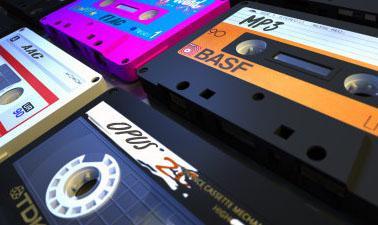
En este curso el alumno estudiará los fundamentos de los sistemas de compresión de audio así como los estándares más utilizados. Se verán los estándares del grupo MPEG como el MP3 y el AAC así como otros de código abierto como el OPUS.

Class Deals by MOOC List - Click here and see EdX's Active Discounts, Deals, and Promo Codes.

La Codificación de Audio (también conocida como compresión de audio) es una representación digital de las señales de sonido para ser almacenadas o transmitidas por cualquier medio digital. En este proceso se busca siempre ocupar el mínimo número de bits posible para poder transmitirla por canales limitados en velocidad o bien poder almacenar muchos sonidos o música en el menor espacio posible. Todo ello se debe realizar manteniendo una calidad de sonido cada vez más exigente y, en los últimos años, permitiendo sistemas más avanzados que el estéreo que proporcionan sonido espacial. En este curso veremos los estándares más conocidos, como el MP3, así como otros formatos superiores aparecidos en los últimos años.

Unidades:

Sección 1: Digitalización y compresión de audio, ¿cómo afecta a nuestra percepción?
Sección 2: Escalas auditivas y tipos de compresión
Sección 3: Estándares MPEG de compresión de audio
Sección 4: Codificadores avanzados de audio
Sección 5: Evaluación de codificadores

What you'll learn

  • Aprenderás los conceptos básicos de digitalización y almacenamiento de las señales y la capacidad de memoria necesaria.
  • Comprenderás el concepto de “tasa de compresión” y “velocidad binaria” (bitrate) de una coficación digital.
  • Estudiarás los mecanismos subjetivos de la percepción humana del sonido, sus limitaciones y el enmascaramiento que se produce en el oído.
  • Diferenciarás entre compresión con pérdidas y sin pérdidas.
  • Estudiarás los fundamentos básicos de la compresión con pérdidas a través de las diferentes capas del estándar MPEG hasta llegar al MP3.
  • Repasaremos estándares más avanzados que el MP3 como el MPEG-4 AAC y el OPUS.
  • Aprenderás a evaluar la calidad de un codificador con pérdidas a través de test “doble ciego” y MUSHRA

Go to Class
MOOC List is learner-supported. When you buy through links on our site, we may earn an affiliate commission.

Related Courses

Applications in Communication Acoustics (edX) EdX
RWTH Aachen,Technische Universität München - TUM,RWTHx,TUMx

Applications in Communication Acoustics (edX)

Explore the different system components involved in acoustic communication using a representative set of practical applications. This engineering course is the continuation of the edX course, “Fundamentals of Communication Acoustics.” Communication acoustics is defined as the way sounds travels from a source, through a channel and finally to a receiver.

Nov 27th 2023
5-12 Weeks
Coding for Your Classroom K - 3 (edX) EdX
The University of British Columbia,UBCx

Coding for Your Classroom K - 3 (edX)

Self-paced, asynchronous course aimed to build educators’ comfortability and confidence in digital literacy. Through hands-on learning activities and demos in a variety of web-based platforms, educators will have the resources and skills they need to introduce coding concepts to their students in the K-3 classroom.

Self Paced
Self-Paced
Information Theory (Coursera) Coursera
The Chinese University of Hong Kong

Information Theory (Coursera)

At the completion of this course, the student should be able to: demonstrate knowledge and understanding of the fundamentals of information theory; appreciate the notion of fundamental limits in communication systems and more generally all systems; develop deeper understanding of communication systems; apply the concepts of information theory to various disciplines in information science.

Aug 10th 2026
13-24 Weeks
Functional Programming in Haskell: Supercharge Your Coding (FutureLearn) FutureLearn
University of Glasgow

Functional Programming in Haskell: Supercharge Your Coding (FutureLearn)

Get an introduction to Haskell, the increasingly popular functional programming language, with this University of Glasgow course. Do you want to develop software using the latest programming language paradigm? Haskell is a functional programming language, based on formal mathematical principles. As such, it is easy to reason about and develop, and it executes efficiently on modern multicore machines. From investment banks to social networks, everyone is adopting Haskell.

Self Paced
5-12 Weeks
Computer Programming for Everyone (FutureLearn) FutureLearn
University of Leeds,Institute of Coding

Computer Programming for Everyone (FutureLearn)

Discover the art of computer programming and learn what code can do with the Institute of Coding and the University of Leeds. Explore computer programming and complete block-language programming exercises. What are computers good at and how can you get the best out of them? On this course, you’ll find out how and why people program computers.

Self Paced
2 Weeks
Generative Modelling (edX) EdX
National University of Singapore,NUS

Generative Modelling (edX)

This course focuses on generating spatial information models capturing various relationships and constraints. You will learn a set of advanced modelling techniques for generating spatial models. You will create multiple procedures that annotate and query your models using attribute data. By the end of the course, you will be able to create your own scripts consisting of multiple procedures working together to generate complex spatial information models.

Self Paced
Self-Paced
Procedural Modelling (edX) EdX
National University of Singapore,NUS

Procedural Modelling (edX)

This course will focus on the fundamentals of procedural programming for generating spatial models. You will learn how to code, using functions, data structures and control-flow statements. You will create procedures to generate geometric models with attribute data. By the end of the course, you will be able to write your own procedures for generating spatial information models.

Self Paced
Self-Paced
Design Computing: 3D Modeling in Rhinoceros with Python/Rhinoscript (Coursera) Coursera
University of Michigan

Design Computing: 3D Modeling in Rhinoceros with Python/Rhinoscript (Coursera)

Why should a designer learn to code? As our world is increasingly impacted by the use of algorithms, designers must learn how to use and create design computing programs. Designers must go beyond the narrowly focused use of computers in the automation of simple drafting/modeling tasks and instead explore the extraordinary potential digitalization holds for design culture/practice.

Aug 17th 2026
5-12 Weeks