Civics 4.0: active citizenship and participation in the digital age (UNED Abierta)

Offered by UNED, NEXUS Project,
Civics 4.0: active citizenship and participation in the digital age (UNED Abierta)

Civic education. Are you interested in the possibility of using civic technology as a tool for civic engagement?

Explore the objectives and topics of this MOOC:
Learning outcomes:
Understand active digital citizenship and civic engagement;
Know what skills you need to master and what civic-tech tools you can use to safely inhabit digital space as an activist;
Be able to monitor policy and use civic-tech for accountability and transparency;
Be able to connect with people in the community and identify civic-tech tools for advocacy and campaigning;
Increase your capacity to participate effectively and responsibly in your community by relying on citizen engagement platforms that connect citizens to decision makers;
Put in practice what you have learnt through the course for the design of a digital citizenship project at the micro-level.
As additional motivation we invited inspiring guests who stand as faces of some of the most impactful civic-tech initiatives at European and national level: Vouliwatch in Greece, Danes je nov dan with the Consult platform in Slovenia, and Minority Safe Pack, European Citizen Initiative.

Modules
Module 1. Introduction to active digital citizenship: what it is and why it matters
Module 2. Key basic skills for digital civic participation
Module 3. Monitoring public policy that affects you
Module 4. Connecting and engaging for social impact
Module 5. Foster local participation: smart communities and digital participation
Module 6. Wrap up and get ready for action

Activities and assessment
The course content is based on videos, readings and activities such as self-evaluation tests, forum discussions and collaborative tasks.

The MOOC is intended for anyone, especially students from diverse backgrounds, who are interested in digital civic education and digital participation. There is no entry requirement, as the course starts assuming no prior knowledge. All that is required is an interest in the subject matter and a B1 level of English, as the course is in English. However, reading materials are also translated into Spanish.

Go to Class
MOOC List is learner-supported. When you buy through links on our site, we may earn an affiliate commission.

Related Courses

Civic Engagement in American Democracy (Coursera) Coursera
Duke University

Civic Engagement in American Democracy (Coursera)

So how does the American political system work? Who are some of the key actors? What are key concepts for a student trying to understand what’s going on? How can I as a citizen influence politics? Civic Engagement in American Democracy takes on these and other key questions. We’re Dr. Nicholas Carnes and Dr. Bruce Jentleson, the principal course instructors. Along with our Duke faculty colleagues who also contributed modules, we’ve designed the course to provide a strong foundational introduction to US politics.

Oct 5th 2026
4 Weeks
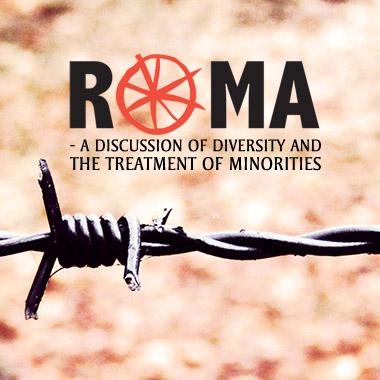
ROMA: A Discussion of Diversity and the Treatment of Minorities in Europe (CanopyLAB) CanopyLAB
Humanity in Action, Denmark

ROMA: A Discussion of Diversity and the Treatment of Minorities in Europe (CanopyLAB)

Learning about the Roma experience in Europe is not only about learning history. It is about understanding the presence, and it is also an insight into a common European future. Konstanty Gebert analyses the Roma people’s past and present and discusses issues of race, identity, integration and discrimination that are at the forefront of contemporary European politics.

Self Paced
Self-Paced
Taiwan Law in Focus: Economy, Society and Democracy (Coursera) Coursera
National Taiwan University

Taiwan Law in Focus: Economy, Society and Democracy (Coursera)

“Taiwan Law in Focus” is the first online course provided by the College of Law, National Taiwan University. This course will give you an introduction to the legal system in Taiwan, which includes the topics of Constitution, administration law, criminal law, civil law, corporative law, and some related issues. You will learn about the brief history of Taiwan’s legal system and its transition in recent decades.

Oct 5th 2026
5-12 Weeks
Transitology – Pathways to and from Democracy (GCHumanRights) Global Campus of Human Rights
Global Campus of Human Rights

Transitology – Pathways to and from Democracy (GCHumanRights)

In this MOOC, academic lecturers in the field of Regime/System Transformation, Quality of Democracy, Elections, and Comparative Politics have been invited to teach, as well as practitioners, data analysts, and policymakers from countries that are currently struggling with the backsliding of democratic institutions and/or are in demanding political regime change in their countries. **Registration deadline: 12 March 2023**

Feb 20th 2023
5-12 Weeks
Teaching Computing Systems and Networks to 5- to 11-year-olds (FutureLearn) FutureLearn
Raspberry Pi Foundation,National Centre for Computing Education

Teaching Computing Systems and Networks to 5- to 11-year-olds (FutureLearn)

Increase your knowledge of "computing systems & networks" and plan how you will teach young children about this topic. Help young children understand the Computing Systems and Networks around them. On this three-week course you’ll explore how you can build up young learners’ knowledge in an age-appropriate manner. You’ll start by thinking about how you can to help your learners recognise information technology - and how computers process an input to give an output.

Jan 2nd 2023
3 Weeks
Sustainable Development Goal 12: Responsible Consumption and Production (CanopyLAB) CanopyLAB
SDG LAB

Sustainable Development Goal 12: Responsible Consumption and Production (CanopyLAB)

In Unit 1, we look at the different factors which contributed to the recognition of Responsible Consumption and Production as a Sustainable Development Goal by the United Nations. Unit 2 focuses on the targets set under Goal 12. Unit 3 is a study of the companies and figures that are working to make Goal 12 a reality by 2030. Finally, Unit 4 gives you the opportunity to apply what you learn and take meaningful actions to contribute to this goal.

Self Paced
Self-Paced
The Smithsonian Summer Sessions: Inspiring Civic Engagement (edX) EdX
Smithsonian,SmithsonianX

The Smithsonian Summer Sessions: Inspiring Civic Engagement (edX)

Discover how museum objects can help learners explore the challenges and opportunities of living in a democracy and inspire civic action. How can educators of all disciplines prepare students to be active and informed participants in a democracy? Join us to explore this question through the lens of six Smithsonian collections! Discover how museum objects can help learners explore the challenges and opportunities of living in a democracy and inspire civic action.

Self Paced
Self-Paced
JuryX: Deliberations for Social Change (edX) EdX
HarvardX,Harvard University

JuryX: Deliberations for Social Change (edX)

Deliberate emotionally charged issues with your peers online without fear or rancor, and experience a system by which a jury, or any community, can move from a place of deep division to agreement and action. Today, you are the law. What does it mean to be a citizen? It means to participate in your society, to connect with others, and to decide, with them, the issues that you face. It starts with you.

No sessions available
5-12 Weeks
Promoting Democracy in the Classroom: A Practical Guide for Teachers (FutureLearn) FutureLearn
Manchester Metropolitan University

Promoting Democracy in the Classroom: A Practical Guide for Teachers (FutureLearn)

Discover how teachers can promote a culture of democracy in the classroom. Improve the democratic competences in your teaching practice. Teachers can play a vital role in guiding and inspiring their students, especially when it comes to instilling democratic values in young citizens. On this course, you’ll learn how to educate your pupils in the values of democracy, exploring what democratic education means and how you can put it into practice in your classroom.

Self Paced
3 Weeks
How Technology is Shaping Democracy and the 2020 Election (Coursera) Coursera
Stanford University

How Technology is Shaping Democracy and the 2020 Election (Coursera)

Democracy can only thrive with the participation of well-informed citizens. The 2020 U.S. presidential election will be historic for many reasons and all parties are leveraging the power of technology to both influence and mobilize voters. More than ever, digital tools and platforms are shaping the opinions and behaviors of voters who will determine the future of the governance of the United States. This new course examines the unprecedented influence of technology and technology policy on America’s elections and democratic process and takes a close look at how a public sphere plagued by polarization, online filter bubbles, a lack of transparency in content moderation policies, and foreign and domestic misinformation and disinformation campaigns, impacts our ability to be well-informed citizens.

Oct 21st 2024
1 Week