EdX

Cellular Solids 1: Structures, Properties and Engineering Applications (edX)

Offered by MIT, MITx,
Cellular Solids 1: Structures, Properties and Engineering Applications (edX)

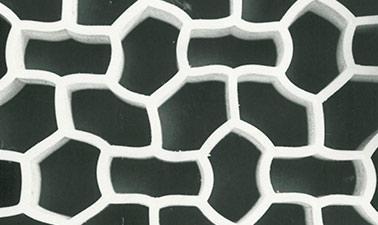
Learn how to model the mechanical properties of honeycombs and foams and to apply the models to material selection in engineering design. In this engineering course, we will explore the processing and structure of cellular solids as they are created from polymers, metals, ceramics, glasses and composites. We will derive models for the mechanical properties of honeycombs and foams, and we will discover how the unique properties of these materials can be exploited in applications such as lightweight structural panels, energy absorption devices, and thermal insulation.

Class Deals by MOOC List - Click here and see EdX's Active Discounts, Deals, and Promo Codes.

The Cellular Solids: Structures, Properties and Engineering Applications course provides a general understanding of cellular solids. Following this module, learners will be prepared to take one or both add-on modules to learn more about applications in medicine and to cellular materials in nature:

Taken together, these three modules provide similar content to the MIT subject 3.054: Cellular Solids: Structure, Properties, and Applications.

What you'll learn:

  • How cellular solids are made
  • How to characterize the microstructure of cellular solids
  • How to model the mechanical behavior of honeycombs and foams
  • Application of the models in devices for energy absorption and sandwich panels
Go to Class
MOOC List is learner-supported. When you buy through links on our site, we may earn an affiliate commission.

Related Courses

A Hands-on Introduction to Engineering Simulations (edX) EdX
CornellX,Cornell University

A Hands-on Introduction to Engineering Simulations (edX)

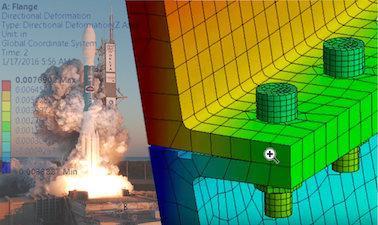
Learn how to analyze real-world engineering problems using ANSYS simulation software and gain important professional skills sought by employers. In this hands-on course, you’ll learn how to perform engineering simulations using a powerful tool from ANSYS, Inc. This is a problem-based course where you’ll learn by doing. The focus will be on understanding what’s under the blackbox so as to move beyond garbage-in, garbage-out. You’ll practice using a common solution approach to problems involving different physics: structural mechanics, fluid dynamics and heat transfer.

Self Paced
Self-Paced
Logistics Fundamentals (edX) EdX
LOGYCAX

Logistics Fundamentals (edX)

Have you ever wondered how products arrive at your hands? From the clothes we wear to the food we consume, they have been through a series of links, processes, operations and flows we know as logistics. Logistics are the first trait for a company’s success! Learn all about logistics and how you can use it to achieve every goal in your organization. In this online course you will gain a holistic view of logistics and transportation within your company, which is useful to understand how a company can thing strategically thanks to basic but essential content.

Self Paced
Self-Paced
Water and Wastewater Treatment Engineering: Biochemical Technology (edX) EdX
Tsinghua University,TsinghuaX

Water and Wastewater Treatment Engineering: Biochemical Technology (edX)

Learn the basic principles and characteristics of biochemical technology in water and wastewater treatment engineering. Biochemical technology in water and wastewater treatment engineering is essential in the field of water treatment. In this environmental studies course you will learn the basic principles and characteristics of biochemical technology.

Self Paced
Self-Paced
Software Engineering: Introduction (edX) EdX
The University of British Columbia,UBCx

Software Engineering: Introduction (edX)

Learn how to apply engineering principles, such as Agile, to build a full-stack software system. You will learn software engineering principles that are applicable to the breadth of large-scale software systems. The course explores topics such as agile development, REST and Async programming, software specification, design, refactoring, information security, and more.

Self Paced
Self-Paced
Modeling and Simulation of Multibody Systems - Part I (edX) EdX
LouvainX,Université Catholique de Louvain - UCL

Modeling and Simulation of Multibody Systems - Part I (edX)

Vehicles, bicycles, cranes, human body and robots are multibody systems. Learn how to model them and compute their kinematic and dynamic characteristics, such as velocities, accelerations and forces. This course aims at acquainting you with the modeling and simulation of complex articulated mechanical systems, denoted as multibody systems, such as vehicles, merry-go-rounds, motorbikes, cranes, human bodies, suspensions, robot manipulators, mechanical transmissions, etc.

Self Paced
Self-Paced
Solar Energy: Photovoltaic (PV) Technologies (edX) EdX
Delft University of Technology,DelftX

Solar Energy: Photovoltaic (PV) Technologies (edX)

Explore the main PV technologies in the current market. Get in-depth knowledge on the design and processing methods of solar cells. The technologies used to produce solar cells and photovoltaic modules are advancing to deliver highly efficient and flexible solar panels. In this course you will explore the main PV technologies in the current market.

Self Paced
5-12 Weeks
Assembling and Testing a Quadcopter (edX) EdX
MathWorks

Assembling and Testing a Quadcopter (edX)

Learn the crucial skills of system-level integration, comprehensive testing, and collaboration to design and evaluate quadcopter systems effectively. Welcome to Integration and Testing of Quadcopter Systems, the final course in the Engineering Design and Simulation Program. This course is focused on integrating all the quadcopter subsystems into a cohesive system-level model and conducting thorough testing to ensure optimal performance.

Self Paced
Self-Paced
Forensic Engineering: Learning from Failures (edX) EdX
Delft University of Technology,DelftX

Forensic Engineering: Learning from Failures (edX)

Don’t let good failures go to waste! Identify the causes of failure and use this knowledge to enhance safety and improve performance. What do collapsed buildings, infected hospital patients, and crashed airplanes have in common? If you know the causes of these events and conditions, they can all be prevented. In this course, you will learn how to use the TU Delft mind-set to investigate the causes of such events so you can prevent them in the future.

Self Paced
Self-Paced
Engineering Design for a Circular Economy (edX) EdX
Delft University of Technology,DelftX

Engineering Design for a Circular Economy (edX)

Discover and develop sustainable design and engineering methods to improve the reuse, repair, remanufacturing, and recycling of products for a circular economy. Products and equipment all around us are made of materials: look around you and you will see phones, computers, cars, and buildings. We face challenges in securing the supply of materials and the impact this has on the planet. Innovative product design can help us find solutions to these challenges. This course will explore new ways of designing products.

Self Paced
Self-Paced