EdX

Calculus 1A: Differentiation (edX)

Offered by MIT, MITx,
Calculus 1A: Differentiation (edX)

Discover the derivative---what it is, how to compute it, and when to apply it in solving real world problems. Part 1 of 3. How does the final velocity on a zip line change when the starting point is raised or lowered by a matter of centimeters? What is the accuracy of a GPS position measurement? How fast should an airplane travel to minimize fuel consumption? The answers to all of these questions involve the derivative.

Class Deals by MOOC List - Click here and see EdX's Active Discounts, Deals, and Promo Codes.

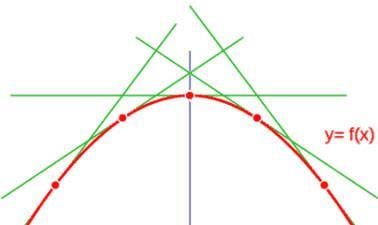
But what is the derivative? You will learn its mathematical notation, physical meaning, geometric interpretation, and be able to move fluently between these representations of the derivative. You will discover how to differentiate any function you can think up, and develop a powerful intuition to be able to sketch the graph of many functions. You will make linear and quadratic approximations of functions to simplify computations and gain intuition for system behavior. You will learn to maximize and minimize functions to optimize properties like cost, efficiency, energy, and power.
This course is part of the Single Variable Calculus XSeries.

What you'll learn

  • How to evaluate limits graphically and numerically
  • The physical meaning, and geometric interpretation of the derivative
  • To calculate the derivative of any function
  • To sketch many functions by hand
  • To make linear and quadratic approximations of functions
  • To apply derivatives to maximize and minimize functions and find related rates

Course Syllabus

  • Abridged Syllabus
  • Limits
  1. Limit Laws
  2. Continuity
  3. Intermediate Value Theorem
  • Differentiation
  1. Introducing the Derivative
  2. Rules for differentiation of all known functions
  3. Approximations
  • Applications of Differentiation
  1. Curve Sketching
  2. Optimization
  3. Related Rates
Go to Class
MOOC List is learner-supported. When you buy through links on our site, we may earn an affiliate commission.

Related Courses

Pre-University Calculus (edX) EdX
Delft University of Technology,DelftX

Pre-University Calculus (edX)

Prepare for Introductory Calculus courses. Mathematics is the language of Science, Engineering and Technology. Calculus is an elementary Mathematical course in any Science and Engineering Bachelor. Pre-university Calculus will prepare you for the Introductory Calculus courses by revising four important mathematical subjects that are assumed to be mastered by beginning Bachelor students: functions, equations, differentiation and integration.

Self Paced
Self-Paced
Question Everything: Scientific Thinking in Real Life (edX) EdX
University of Queensland,UQx

Question Everything: Scientific Thinking in Real Life (edX)

Learn how to use math and science to solve everyday problems and better prepare yourself to continue studying science in high school and beyond. Have you ever wondered how you can apply math and science skills to real life? Do you wish you could go beyond what you've learned in the classroom? This science course will advance your knowledge as we unpack some important scientific thinking skills using real-world examples.

Self Paced
Self-Paced
Data Analysis: Statistical Modeling and Computation in Applications (edX) EdX
MIT,MITx

Data Analysis: Statistical Modeling and Computation in Applications (edX)

A hands-on introduction to the interplay between statistics and computation for the analysis of real data. -- Part of the MITx MicroMasters program in Statistics and Data Science. Data science requires multi-disciplinary skills ranging from mathematics, statistics, machine learning, problem solving to programming, visualization, and communication skills. In this course, learners will combine these foundational and practical skills with domain knowledge to ask and answer questions using real data.

May 13th 2024
13-24 Weeks
Introduction to Differential Equations (edX) EdX
MIT,MITx

Introduction to Differential Equations (edX)

Scientists and engineers understand the world through differential equations. You can too. Differential equations are the language of the models we use to describe the world around us. In this mathematics course, we will explore temperature, spring systems, circuits, population growth, and biological cell motion to illustrate how differential equations can be used to model nearly everything in the world around us.

This course is archived
5-12 Weeks
Introduction to Engineering Mathematics with Applications (edX) EdX
University of Texas at Arlington,UTArlingtonX

Introduction to Engineering Mathematics with Applications (edX)

Learn basic engineering mathematics and how to apply basic mathematics to solve engineering problems. The goal of this mathematics course is to provide high school students and college freshmen an introduction to basic mathematics and especially show how mathematics is applied to solve fundamental engineering problems.

No sessions available
5-12 Weeks
Further Mathematics Year 13 course 2: Applications of Differential Equations, Momentum, Work, Energy & Power, The Poisson Distribution, The Central Limit Theorem, Chi Squared Tests, Type I and II Errors (edX) EdX
Imperial College London,ImperialX

Further Mathematics Year 13 course 2: Applications of Differential Equations, Momentum, Work, Energy & Power, The Poisson Distribution, The Central Limit Theorem, Chi Squared Tests, Type I and II Errors (edX)

Develop your thinking skills, fluency and confidence in the applied mathematics content of A-level further maths and prepare for undergraduate STEM degrees. This course by Imperial College London is designed to help you develop the skills you need to succeed in your A-level further maths exams. You will investigate key topic areas to gain a deeper understanding of the skills and techniques that you can apply throughout your A-level study.

Jan 3rd 2022
5-12 Weeks
Foundations of Data Analysis - Part 1: Statistics Using R (edX) EdX
University of Texas at Austin,UTAustinX

Foundations of Data Analysis - Part 1: Statistics Using R (edX)

This is a hands on course with a data lab to teach fundamental statistical topics such as descriptive statistics, inferential testing, and modeling. In this first part of a two part course, we’ll walk through the basics of statistical thinking – starting with an interesting question. Then, we’ll learn the correct statistical tool to help answer our question of interest – using R and hands-on Labs.

No sessions available
5-12 Weeks
Probability - The Science of Uncertainty and Data (edX) EdX
MIT,MITx

Probability - The Science of Uncertainty and Data (edX)

Build foundational knowledge of data science with this introduction to probabilistic models, including random processes and the basic elements of statistical inference. The world is full of uncertainty: accidents, storms, unruly financial markets, noisy communications. The world is also full of data. Probabilistic modeling and the related field of statistical inference are the keys to analyzing data and making scientifically sound predictions.

Jan 29th 2024
13-24 Weeks
Mathematical and Computational Methods (edX) EdX
Georgetown University,GeorgetownX

Mathematical and Computational Methods (edX)

Physicists use math all of the time in nearly everything that they work on. This course will help you understand how math is interconnected and recognize that math involves a handful of simple ideas that repeat. By the end of the course, you will be able to re-derive important formulas from basic principles or know precisely where to look them up and use them.

Jan 14th 2024
13-24 Weeks