Blockchain, Cryptoassets, and Decentralized Finance (Coursera)

Offered by INSEAD,
Blockchain, Cryptoassets, and Decentralized Finance (Coursera)

Today, large intermediaries establish trust in our economy and control the movement, storage, and allocation of money and assets. The status quo, however, is rife with inefficiencies. In this course, we’ll address the many challenges of the status quo and discuss how cryptoassets, smart contracts, new identity systems, and new financial business models can help overcome them. You’ll learn how blockchain technology empowers individuals, entrepreneurs, and businesses with the tools they need to help level the playing field and to participate in the value they create.

Class Deals by MOOC List - Click here and see Coursera's Active Discounts, Deals, and Promo Codes.

By the end of this course, you’ll learn how and why transacting on the blockchain can help us bring about a future that is faster, fairer, and more distributed than the world we inhabit today.

What You Will Learn

  • Describe seven types of cryptoassets, and explain what it means to “tokenize” an asset
  • Explain what a smart contract is, as well as various applications of smart contracts
  • Explore the features of a distributed, self-sovereign identity system
  • Describe eight core functions of the financial services industry and explain how blockchain will disrupt each of these functions

Course 2 of 4 in the Blockchain Revolution in Financial Services Specialization.

Syllabus

WEEK 1
Cryptoassets
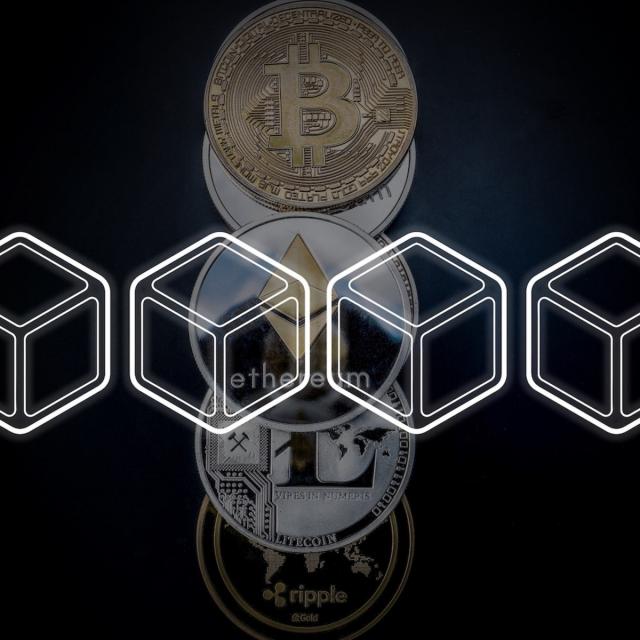
Blockchain is the first native digital medium for value. Consequently, we are witnessing one of the largest transformations of wealth in human history—from paper-based analog assets to digital ones. In this module, students will learn about seven different kinds of cryptoassets, including cryptocurrencies, protocol tokens, utility tokens, securities tokens, natural asset tokens, crypto collectibles, crypto-fiat currencies, and stablecoins.

WEEK 2
Smart Contracts
In this module, you will learn what smart contracts are and how they work. We will discuss how blockchain-based smart contracts can enable individuals and organizations to reduce transaction costs, minimize the need for third-party intermediaries, and improve productivity, security, and privacy.

WEEK 3
Identity
Accessing large, centralized systems such as email, health insurance, or a bank account requires the provision of various identifiers—for example, government-issued ID cards, self-selected passwords, or biometric data. However, identifier-based systems are problematic—both administratively and philosophically. In this module you will learn about five problems with identifier-based systems and explain how a distributed self-sovereign identity system, deployed on the blockchain, can resolve many of these issues.

WEEK 4
DApps and Distributed Business Models
There are countless opportunities for blockchain to disrupt or displace traditional centralized business models. In this module, we explore how blockchain technology can support “open networked enterprise” business models through the inclusion of native payment systems, reputation systems, uncensorable content, trustless transactions, smart contracts, and autonomous agents.

Go to Class
MOOC List is learner-supported. When you buy through links on our site, we may earn an affiliate commission.

Related Courses

Web3 and Blockchain Fundamentals (Coursera) Coursera
INSEAD

Web3 and Blockchain Fundamentals (Coursera)

There is a lot of hype around Web3 and blockchain. As with any disruptive technology, there are many competing sources of information. But if we look beyond the hype and mania—not to mention the fear, uncertainty, and doubt—we see something profound happening. We are witnessing one of the largest transformations of wealth in human history—from paper-based analog assets to digital ones. Blockchain represents the first native digital medium for value, and is foundational to the next generation of the Internet—also known as Web3.

Aug 17th 2026
1 Week
Finance for Everyone: Debt (Coursera) Coursera
McMaster University

Finance for Everyone: Debt (Coursera)

In Debt, we take on one of the most challenging financial questions that remains unresolved: How much to borrow? We start by demonstrating why using debt has always been and continues to be a great temptation, particularly when borrowing costs are historically low. We identify conditions for selecting the optimal amount of debt for a corporation looking to maximize its value. You’ll become fluent in related concepts like norms and benchmarks.

Aug 17th 2026
4 Weeks
FinTech Law and Policy (Coursera) Coursera
Duke University

FinTech Law and Policy (Coursera)

Being a successful FinTech firm requires more than just great technology; it also requires an understanding of the laws and regulations applicable to your business. This course will provide you with that understanding. You will learn about the critical legal, regulatory, and policy issues associated with cryptocurrencies, initial coin offerings, online lending, new payments and wealth management technologies, and financial account aggregators.

Aug 10th 2026
5-12 Weeks
Diseño y Creación de un Emprendimiento Social (Coursera) Coursera
Pontificia Universidad Católica de Chile

Diseño y Creación de un Emprendimiento Social (Coursera)

Este MOOC introduce al mundo del emprendimiento social definiendo conceptos de innovación y emprendimiento social dentro de un contexto nacional e internacional, por medio de herramientas, metodologías y técnicas útiles para desarrollar un modelo de negocios con misión social. También se utilizará un enfoque interdisciplinario, abarcando las temáticas del curso desde la perspectiva de la gestión de proyectos, la creatividad, la ideación, el diseño e implementación de soluciones y el comportamiento humano en la sociedad.

Aug 10th 2026
4 Weeks
Contexto de Negocios en LATAM: Factores Políticos, Sociales y Económicos (Coursera) Coursera
Pontificia Universidad Católica de Chile

Contexto de Negocios en LATAM: Factores Políticos, Sociales y Económicos (Coursera)

Latinoamérica resulta ser muy atractiva al momento de decidir realizar nuevos negocios, pero en algunos casos este proceso se considera algo distinto a cómo opera el mercado mundial, por lo que es importante conocer algunos elementos que permitan entender de mejor manera este contexto y así definir estrategias más efectivas cuando se piensa comenzar un negocio en esta región.

Aug 17th 2026
4 Weeks
Business English: Finance and Economics (Coursera) Coursera
Arizona State University

Business English: Finance and Economics (Coursera)

Do you work in finance or interact with finance professionals? Is it necessary to speak, write or understand English in your career? Follow the authentic characters in this course as they work through common business situations in finance and economics. Learn from your successes and failure, and think critically about your own communication options.

Aug 17th 2026
5-12 Weeks
Smart Contracts (Coursera) Coursera
University at Buffalo,The State University of New York

Smart Contracts (Coursera)

This second course of the Blockchain specialization will help you design, code, deploy and execute a smart contract – the computational element of the blockchain technology. Smart contracts allow for implementing user-defined operations of arbitrary complexity that are not possible through plain cryptocurrency protocols. They allow users to implement conditions, rules and policies of the domain applications. Smart contracts are a powerful feature that, when properly designed and coded, can result in autonomous, efficient and transparent systems.

Aug 17th 2026
4 Weeks