Business Model Canvas: A Tool for Entrepreneurs and Innovators (Project-Centered Course) (Coursera)

Business Model Canvas: A Tool for Entrepreneurs and Innovators (Project-Centered Course) (Coursera)

In this project-centered course*, you will use the Business Model Canvas innovation tool to approach either a personal or corporate challenge or opportunity. You’ll learn to identify and communicate the nine key elements of a business model: Customer Segments, Value Proposition, Channels, Customer Relationships, Key Resources, Key Activities, Key Partners, Revenue Streams, and Cost Structure. Your completed project will be a polished Business Model Canvas that outlines the business case for a new product or service to address your selected challenge or opportunity. You’ll present your case in both a one-page document and a 10-minute video presentation.

Class Deals by MOOC List - Click here and see Coursera's Active Discounts, Deals, and Promo Codes.

What you need to get started:
This project-centered course is designed for anyone who wants to understand innovation best practices and the intra-corporate entrepreneurial (intrapreneur) skills needed to lead innovation projects, teams, and strategies. Entry- and senior-level professionals in a variety of industries - including education, healthcare, business, and not-for-profit - will benefit from the course materials and project experience. The only prerequisite is a strong desire to understand best practices in innovation and to master the skills needed to transform a new idea into a profitable reality.

Syllabus

WEEK 1
The Business Model Canvas: A Tool for Entrepreneurs and Innovators
Are you interested in starting your own business? Are you an entrepreneur who wants to accelerate profitable growth by improving your business model? Are you an intrapreneur, inside of an organization, who has a new idea that could make your customers smile and your competitors cry? If yes, then the Business Model Canvas is the best place to start. It is a proven tool for creating, assessing or reinventing a business model.

WEEK 2
The Customer Segments
Every business model should start with selecting the customer segments that will benefit the most from your new idea, product, service, or solution. It's very tempting to select numerous customer segments that might have an interest in your value propositions. However, especially if you're just starting out, it's often best to choose just one, the most important, customer segment!

WEEK 3
The Value Propositions
According to the authors of the Business Model Generation; "The value proposition is the reason why customers turn to one company over another. It solves the customer problem or satisfies a customer need...some value propositions may be innovative and represent a new or disruptive offer. Others may be similar offers, but with added features and attributes."

WEEK 4
Channels and Customer Relationships
Channels are a critical element of the business model. They are how a company communicates with and reaches its customer segments. Channels are typically direct or indirect and has five phases: awareness, evaluation, purchase, delivery, and after sales. Customer relationships can range from highly personal to automated. Either way, the objective is to develop authentic relationships that lead to trust and customer loyalty.

WEEK 5
Revenue Streams and Key Resources
According to the authors of the Business Model Generation; "If customers comprise the heart of a business model, revenue streams are its arteries." A business model typically has two different types of revenue streams--transactional and recurring. Key resources represent the most important assets required to make a business model work. The resources fall into several categories including physical, intellectual, human, and financial.

WEEK 6
Key Activities and Key Partnerships
The key activities are what an entrepreneur or intrapreneur needs in order to create and offer a value proposition, reach markets, build and maintain customer relationships and generate revenues. Strategic partnerships have become a cornerstone of most business models. Entrepreneurs typically need the help of partners to create and deliver the value propositions. Innovation especially is a team sport.

WEEK 7
The Cost Structure
The final building block focuses on what costs will be incurred as we create and deliver the value propositions to the customer segments. The most common categories of cost are cost-driven and value-driven. Costs can also be described as fixed costs and variable costs. Costs typically should be minimized in every business model but low cost structures are more important to some business models than to others. Think how Wal-Mart's business model is different from that of a luxury hotel.

WEEK 8
Presenting the Business Model
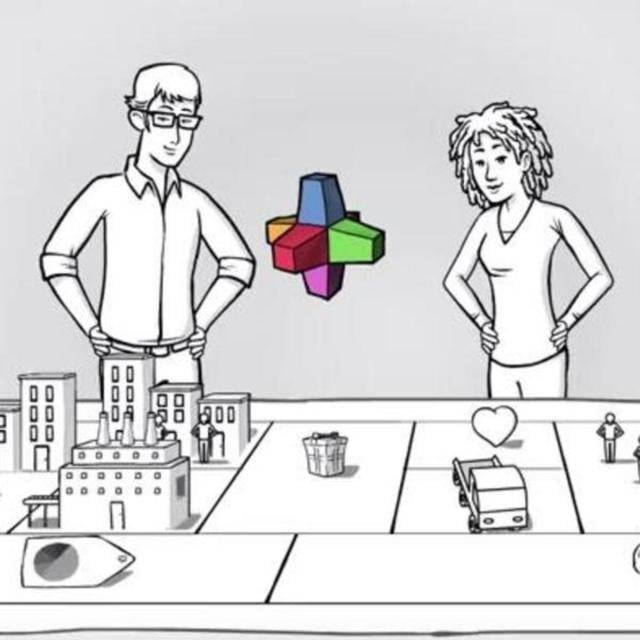
Now that your business model canvas is complete, it's time to tell your business model story to others. Successful entrepreneurs and innovators are masters at pitching their ideas and business models to stakeholders. The animated video titled "Telling Your Story" gives excellent advice on how to present your business model canvas.


Go to Class
MOOC List is learner-supported. When you buy through links on our site, we may earn an affiliate commission.

Related Courses

Essentials of Entrepreneurship: Thinking & Action (Coursera) Coursera
University of California, Irvine

Essentials of Entrepreneurship: Thinking & Action (Coursera)

Success in business can be greatly enhanced with an understanding of key entrepreneurial characteristics and competencies solutions. This interactive course provides potential entrepreneurs with the knowledge of succeeding in an entrepreneurial opportunity. Topics include: how creativity, opportunity and feasibility are best evaluated; business strategies for new businesses; importance of a business plan; achieving success in a new business. At the end of the course students will have the skills and confidence to evaluate starting a business, in addition to becoming more enterprising in how they approach their roles should they decide to work in organizations.

Jun 8th 2026
4 Weeks
Grow to Greatness: Smart Growth for Private Businesses, Part I (Coursera) Coursera
University of Virginia

Grow to Greatness: Smart Growth for Private Businesses, Part I (Coursera)

This course focuses on the common growth challenges faced by existing private businesses when they attempt to grow substantially. What you will learn: common myths and truths about growth in business; growth readiness assessment; the 4 P's of growing a business: planning, prioritization, pace and process; four ways to grow your business: scale and CVP, innovating, outsourcing and strategic acquisitions.

Jun 8th 2026
5-12 Weeks
Design Thinking for Innovation (Coursera) Coursera
University of Virginia

Design Thinking for Innovation (Coursera)

Today innovation is everyone's business. Whether you are a manager in a global corporation, an entrepreneur starting up, in a government role, or a teacher in an elementary school, everyone is expected to get lean – to do better with less. And that is why we all need design thinking. At every level in every kind of organization, design thinking provides the tools you need to become an innovative thinker and uncover creative opportunities that are there – you're just not seeing them yet.

Jun 8th 2026
5-12 Weeks
Fundamentos del Emprendimiento: Pensamiento y Acción (Coursera) Coursera
University of California, Irvine

Fundamentos del Emprendimiento: Pensamiento y Acción (Coursera)

El éxito en los negocios puede aumentar enormemente cuando se comprenden las características de emprendimiento claves y las soluciones basadas en las competencias. En este curso interactivo se brinda el conocimiento que los emprendedores potenciales necesitan para tener éxito en una oportunidad empresarial.

Jun 8th 2026
4 Weeks
New Models of Business in Society (Coursera) Coursera
University of Virginia

New Models of Business in Society (Coursera)

In this course, developed at the Darden School of Business at the University of Virginia and taught by top-ranked faculty, we will be discussing the emergence of a new story about business. This new story locates business within a societal framework. Almost every business creates or destroys value for customers, suppliers, employees, communities and society, in addition to shareholders and other financiers. A number of new models of business can be built on this idea such as corporate responsibility, philanthropy, shared value and sustainability. Profits and stakeholder value go together, and this course explains how. The final session explores the idea of how to become a stakeholder entrepreneur and create a business that makes money and makes the world a better place.

Jun 8th 2026
4 Weeks
Selling to Chinese Consumers (Coursera) Coursera
The Chinese University of Hong Kong

Selling to Chinese Consumers (Coursera)

This course is designed to help learners sell their products, goods and services to Chinese consumers. To achieve this goal, the course will use evidence-based research in psychology, economics, legal studies and marketing to help learners understand the historical, economic and legal contexts of doing business in China and the behavioral characteristics of Chinese consumers. The course will cover topics in Chinese and global marketing, Chinese consumers, institutional and cultural influence on consumer motivation and behaviors in Chinese markets, and brand management in China.

Jun 8th 2026
4 Weeks
Innovation Management (Coursera) Coursera
Erasmus University Rotterdam

Innovation Management (Coursera)

What is innovation management? How do firms bring in new business models and get new products and services to the market? Go on a nine-week journey through innovation management concepts, theories of idea generation, selection, strategy formulation and implementation in this MOOC in Innovation Management. In it, you will also learn the tools for implementing innovation projects yourself. Guided by world-class academics, you will develop an innovative mindset and expertise in how firms successfully create new ideas for marketing new products. The syllabus also includes sessions about innovation strategy, idea management and social networks.

Jun 11th 2026
5-12 Weeks
Construction Project Management (Coursera) Coursera
Columbia University

Construction Project Management (Coursera)

Construction Project Management introduces you to Project Initiation and Planning. Industry experts join Columbia University professor, Ibrahim Odeh, to give an overview of the construction industry. Professor Odeh teaches the fundamentals of the Project Development Cycle while guest lecturers discuss Lean Project Delivery method and Lean Design Behaviors.

Jun 8th 2026
5-12 Weeks
Global Strategy II: Doing Business in The Global Economy (Coursera) Coursera
University of Illinois at Urbana-Champaign

Global Strategy II: Doing Business in The Global Economy (Coursera)

This course explores the ways firms overcome challenges when operating globally. The global economy is characterized for its high complexity and uncertainty. Corporations trying to succeed in the global economy need to develop different types of strategies depending on where they are conducting business or what type business they are in.

Jun 8th 2026
4 Weeks
Master Class for Corporate Entrepreneurs (Coursera) Coursera
University of Maryland, College Park

Master Class for Corporate Entrepreneurs (Coursera)

The Master Class experience is designed to serve as the final project experience for the Corporate Entrepreneurship Specialization. Alternatively, professionals with experience in opportunity analysis, business modeling, and corporate finance are invited to complete the Master Class experience without the preliminary courses.

Jun 8th 2026
4 Weeks