EdX

Biorefinery: From Biomass to Building Blocks of Biobased Products (edX)

Biorefinery: From Biomass to Building Blocks of Biobased Products (edX)

Learn how to design an effective biorefinery to obtain valuable components from various biobased feedstocks such as plants, organisms and waste streams. The use of fossil resources is a controversial topic and there is much scientific research to argue against their use for energy, chemicals, and in the production of almost every product. Because of this, we're seeing a huge shift towards sustainable biobased and renewable resources and away from fossil-based ones. In this new world, it’s critical to know how to efficiently and effectively obtain valuable elements from biomass.

Class Deals by MOOC List - Click here and see EdX's Active Discounts, Deals, and Promo Codes.

Join this course and gain the latest academic knowledge on biorefinery which can be applied to their ongoing studies or to advance their careers.
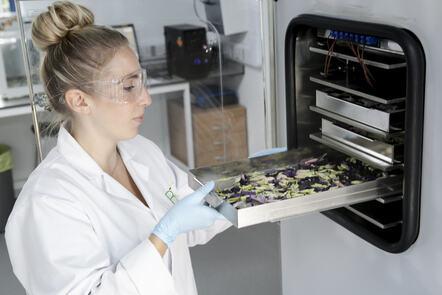
Just as the petrochemical refinery is a crucial part of the fossil-based industry, so is the biorefinery for the biobased industry. In a biorefinery, a complex biobased feedstock is separated and processed in such a way to maximize sustainability and application opportunities. Upon completing this course, you will understand the tools and techniques needed to efficiently disentangle, separate and convert different biomass based feedstocks into simpler (functional) components.
First, you'll learn about available techniques and processes for biomass activation, disentanglement and separation. Next, you’ll explore how to design a biorefinery taking into account feedstock and sustainable energy use and dive into:

  • Mass and energy balances
  • Design of biorefinery process units to obtain multiple products from one type of biomass
  • How to recover energy and resources in the biorefinery system
  • Evaluation of the designed system with respect to sustainability and economic criteria
  • Evaluation of criteria for successful implementation

This course is part of the MicroMasters programme in Chemistry and Technology for Sustainability: a series of 3 courses and a final capstone project designed to help you develop the skills needed to seize opportunities and embrace the transition from a fossil-based economy to a biobased one. It's especially valuable to those who have (or ambition to have) a career in industries such as: (bio)chemical industry, agrifood water companies, energy producers, logistics, and related (non-)governmental organizations.
Explore the other courses in the MicroMasters programme:

What you'll learn
After this course you will be able to:

  • Choose proper (chemical) pre-treatment and conversions to arrive at the required products
  • Conceptually design a biorefinery process
  • Critically evaluate a process design with respect to energy and feedstock efficiency
  • Compare that design with fossil-based processes
  • Know how to activate/disentangle and separate biobased feedstocks

Course Syllabus

Module 1: Introduction to Biorefinery
In this introduction module you will get acquainted with the general concepts of biorefineries. Use our diagnostic test to check if you need to get additional information before starting with the next module.

Module 2: Biomass and Biorefineries
Let’s take a closer look at biomass, what components can be found in them and how to get these out as value-adding compounds. This module focuses on the refinery of naturally occurring compounds, such as oils and proteins.

Module 3: Conversion
In this module we zoom in on fermentation as a bioconversion method. Based on the case of the acetone-butanol-ethanol fermentation by Clostridium species, we will illustrate the use of fermentation in biorefineries.

Module 4: Downstream Processing
This module highlights several methods used to separate fermentation broth into different streams. You will learn how to effectively get your product out!

Module 5: Process Evaluation and Improvements
Let’s zoom out and look at the biorefinery process as whole. Find out how you can improve a process with respect to energy use, side-streams recovery, and economics.

Module 6: Case Study: Process Design
You will learn to use the flow-sheeting software SuperPro Designer to design a bio-butanol process. You will look at the different steps needed to convert and separate the product. In addition you will look at a biorefinery process and propose relevant improvements using the knowledge acquired in the course.

Go to Class
MOOC List is learner-supported. When you buy through links on our site, we may earn an affiliate commission.

Related Courses

Quantum Mechanics for Scientists and Engineers 2 (edX) EdX
StanfordOnline

Quantum Mechanics for Scientists and Engineers 2 (edX)

This course covers key topics in the use of quantum mechanics in many modern applications in science and technology, introduces core advanced concepts such as spin, identical particles, the quantum mechanics of light, the basics of quantum information, and the interpretation of quantum mechanics, and covers the major ways in which quantum mechanics is written and used in modern practice.

Self Paced
Self-Paced
Science & Cooking: From Haute Cuisine to Soft Matter Science (physics) (edX) EdX
HarvardX,Harvard University

Science & Cooking: From Haute Cuisine to Soft Matter Science (physics) (edX)

Top chefs and Harvard researchers explore how traditional and modernist cooking techniques can illuminate basic principles in chemistry, physics, and engineering. Learn about elasticity, viscosity, mayonnaise, baking, and more! In this course, which investigates physical transformations in food, we will be visited by world-famous chefs who use a number of different styles and techniques in their cooking. Each chef will demonstrate how he or she prepares delicious and interesting creations, and we will explore how fundamental scientific principles make them possible.

Self Paced
Self-Paced
Agroressources et agro-industries durables (FUN) FUN
Université Fédérale Toulouse Midi-Pyrénées

Agroressources et agro-industries durables (FUN)

Coproduit par l'INP Toulouse et l'INSA Toulouse, ce cours est ouvert sur 6 semaines et vous propose de découvrir ce que sont les agroressources. Pourquoi en parler ? Quelle utilité ? Comment les transformer et les valoriser ? Les agroressources sont des matières premières issues de l'agriculture. Vous découvrirez au cours de ce MOOC le potentiel de valorisation de ces matières issues du carbone renouvelable au travers de leurs utilisations, leurs impacts économiques, environnementaux et sociétaux.

No sessions available
5-12 Weeks
Biobased Economy Green Chemistry (Canvas Network) Canvas Network
Avans Hogeschool,HZ University of Applied Sciences

Biobased Economy Green Chemistry (Canvas Network)

This self-paced online course, powered by Avans Hogeschool and HZ University of Applied Sciences, brings you online instructional videos, exercises, interesting guest speakers and discussions. We focus on such aspects as biorefinery, nutrients, biopolymers and bioenergy, and many more. You receive an overview of the entire chain from several types of biomass via biorefinery to commercial products for the world market.

Self Paced
Self-Paced
Ash-Related Operational Challenges in Energy Utilization of Sustainable Fuels (Coursera) Coursera
Technical University of Denmark - DTU

Ash-Related Operational Challenges in Energy Utilization of Sustainable Fuels (Coursera)

The basic idea behind this MOOC, is to present recent data on fuel characterization, slagging, fouling, corrosion, and trace element transformations, in a course that can be readily provided for students and industry people. This ensures understanding and application of the research, and provides the students and industry with a forum for discussion of the very latest research results, as well as feedback from industry to the research group at DTU, on important new research subjects in the field.

Aug 24th 2026
5-12 Weeks
Understanding Biological Energy (FutureLearn) FutureLearn
Royal Holloway, University of London

Understanding Biological Energy (FutureLearn)

Get an introduction to energy and explore how humans and other living things obtain and use their biological energy sources. Discover applications of biological energy, from human energy to photosynthesis. On this course, you’ll learn what energy actually is and how living things acquire and convert it.

Self Paced
4 Weeks
Renewable Energy: Achieving Sustainability through Bioenergy (FutureLearn) FutureLearn
University of Leeds

Renewable Energy: Achieving Sustainability through Bioenergy (FutureLearn)

Understand the principles of bioenergy and learn how to harness this form of renewable energy to achieve sustainability. Learn about the principles and environmental implications of bioenergy. On this two week course, you will explore bioenergy, one of the most diverse and readily available sources of renewable energy. You’ll look into what types of biomass can be used and how sustainable energy solutions can be developed in a wide range of communities.

Self Paced
2 Weeks
Critical Thinking & Problem Solving (edX) EdX
Rochester Institute of Technology,RITx

Critical Thinking & Problem Solving (edX)

The most successful professionals are able to assess the environment, analyze a situation, design a solution, and ultimately win in a competitive scenario. In today’s business environment, organizations have identified critical thinking and problem-solving as skills that are integral to an employee’s—and their organization’s—success.

Self Paced
Self-Paced
Business Communication (edX) EdX
Rochester Institute of Technology,RITx

Business Communication (edX)

Learn how to effectively communicate and build professional relationships through face-to-face, written, and non-verbal communication. Business communication is vital to professional success. You will learn techniques to effectively and succinctly articulate your business ideas to a diverse range of audiences to ensure they understand even the most complex concepts.

Self Paced
Self-Paced
Gestion de projets de développement (edX) EdX
Inter-American Development Bank - IDB,IDBx

Gestion de projets de développement (edX)

Apprenez les meilleures pratiques de gestion de projet pour promouvoir le développement socioéconomique en Amérique latine et dans les Caraïbes. Jour après jour les institutions publiques, les organisations non gouvernementales, les agences de développement ainsi que d'autres acteurs travaillant en faveur du développement économique et social en Amérique latine et dans les Caraïbes, font face à un défi majeur. Il s'agit de savoir comment transformer les propositions en réalités concrètes qui puissent améliorer le bien-être de la société et d'atteindre les résultats avec le temps et les ressources disponibles.

Self Paced
Self-Paced
Strategic Management: From Intuition to Insight (edX) EdX
RWTH Aachen,RWTHx

Strategic Management: From Intuition to Insight (edX)

Help your organization prosper in times of transition with engaging in rigorous strategic analysis to complement your intuition with the deep insights needed. Learn how to design effective strategy processes and to spot fundamental market and technology changes in your industry.

Self Paced
Self-Paced
Super-Earths And Life (edX) EdX
HarvardX,Harvard University

Super-Earths And Life (edX)

Learn about the Earth, life, and how we can search for life elsewhere in the universe. Are we alone in this universe? What new information and observations on exoplanets have we discovered? In the past decade, astronomers have made incredible advances in the discovery of planets outside our solar system. Thirty years ago, we knew only of the planets in our own solar system. Now we know of thousands circling nearby stars.

Self Paced
Self-Paced