AWS: Storage Systems and Data Management (Coursera)

Offered by Whizlabs,
AWS: Storage Systems and Data Management (Coursera)

AWS: Storage Systems and Data Management Course is the second course of AWS Certified Data Analytics Specialty Specialization. This course assists learners with knowledge of storage components with operational storage services. The concept of Implementation of DynamoDB Operational Characteristics and Redshift is also described in this course. Learners will be able to Analyze various approaches for Management of data.

Class Deals by MOOC List - Click here and see Coursera's Active Discounts, Deals, and Promo Codes.

This course is basically divided into three modules and each module is further segmented by Lessons and Video Lectures. This course facilitates learners with approximately 3:30-4:00 Hours Video lectures that provide both Theory and Hands -On knowledge. Also, Graded and Ungraded Quiz are provided with every module in order to test the ability of learners.
Module 1: Operational Characteristics of Storage Solutions for Data Analytics in AWS
Module 2: AWS: Storage Components and Data Management approaches
Module 3: Advanced Features: Storage Systems and Data Management in AWS
This course is part of the Exam Prep DAS-C01: AWS Certified Data Analytics Specialty Specialization.

What You Will Learn

  • Describe storage components with operational storage services
  • Implement DynamoDB Operational Characteristics and Redshift
  • Analyze various approaches for Management of data.

Syllabus

Operational Characteristics of Storage Solutions for Data Analytics in AWS
Welcome to Week 1 of the AWS: Storage Systems and Data Management Course. This week, we’ll analyze the operational characteristics of the storage solution for analytics. We’ll also gain demonstration of the operational characteristics of DynamoDB. We’ll end this week by understanding the working of Amazon Redshift service.

AWS: Storage Components and Data Management approaches
Welcome to Week 2 of the AWS: Storage Systems and Data Management Course. This week, we will learn how to determine data freshness, access, and retrieval patterns, and analyze Redshift data storage and retrieval patterns. We will also explore how to select the appropriate data layout, schema, structure, and format for Redshift. By the end of this week, we will be equipped with the knowledge and skills needed to effectively manage and analyze data using AWS storage systems.

Advanced Features: Storage Systems and Data Management in AWS
Welcome to Week 1 of the AWS: Storage Systems and Data Management Course. This week, we will focus on understanding the data lifecycle and determining the appropriate system for cataloging data and managing metadata. We will gain practical experience with the Glue data catalog, a metadata repository that makes it easy to discover and manage data assets. By the end of the week, we should have a good grasp of how to manage data effectively throughout its lifecycle and maximize its value to the organization.

Go to Class
MOOC List is learner-supported. When you buy through links on our site, we may earn an affiliate commission.

Related Courses

Football: More than a Game (Coursera) Coursera
University of Edinburgh

Football: More than a Game (Coursera)

Explore the world of football (soccer), the money, the rivalries, the trends, the past, the present, the men’s game, the women's game and the real issues. Whether you love it, hate it or try to ignore it – join us as we go behind the scenes to examine why football is more than just a game.

Sep 21st 2026
5-12 Weeks
Combining and Analyzing Complex Data (Coursera) Coursera
University of Maryland, College Park

Combining and Analyzing Complex Data (Coursera)

In this course you will learn how to use survey weights to estimate descriptive statistics, like means and totals, and more complicated quantities like model parameters for linear and logistic regressions. Software capabilities will be covered with R® receiving particular emphasis. The course will also cover the basics of record linkage and statistical matching—both of which are becoming more important as ways of combining data from different sources. Combining of datasets raises ethical issues which the course reviews. Informed consent may have to be obtained from persons to allow their data to be linked. You will learn about differences in the legal requirements in different countries.

Sep 21st 2026
4 Weeks
Process Mining: Data science in Action (Coursera) Coursera
Eindhoven University of Technology

Process Mining: Data science in Action (Coursera)

Process mining is the missing link between model-based process analysis and data-oriented analysis techniques. Through concrete data sets and easy to use software the course provides data science knowledge that can be applied directly to analyze and improve processes in a variety of domains. Data science is the profession of the future, because organizations that are unable to use (big) data in a smart way will not survive. It is not sufficient to focus on data storage and data analysis. The data scientist also needs to relate data to process analysis.

Sep 21st 2026
5-12 Weeks
Principles of fMRI 2 (Coursera) Coursera
Johns Hopkins University,University of Colorado Boulder

Principles of fMRI 2 (Coursera)

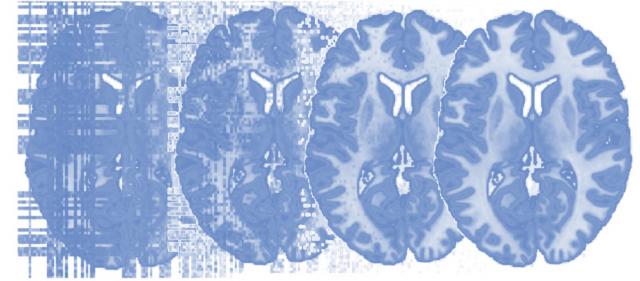
Functional Magnetic Resonance Imaging (fMRI) is the most widely used technique for investigating the living, functioning human brain as people perform tasks and experience mental states. It is a convergence point for multidisciplinary work from many disciplines. Psychologists, statisticians, physicists, computer scientists, neuroscientists, medical researchers, behavioral scientists, engineers, public health researchers, biologists, and others are coming together to advance our understanding of the human mind and brain. This course covers the analysis of Functional Magnetic Resonance Imaging (fMRI) data.

Sep 21st 2026
4 Weeks
Data Science Ethics (Coursera) Coursera
University of Michigan

Data Science Ethics (Coursera)

What are the ethical considerations regarding the privacy and control of consumer information and big data, especially in the aftermath of recent large-scale data breaches? This course provides a framework to analyze these concerns as you examine the ethical and privacy implications of collecting and managing big data. Explore the broader impact of the data science field on modern society and the principles of fairness, accountability and transparency as you gain a deeper understanding of the importance of a shared set of ethical values.

Sep 21st 2026
4 Weeks
Data Management for Clinical Research (Coursera) Coursera
Vanderbilt University

Data Management for Clinical Research (Coursera)

This course presents critical concepts and practical methods to support planning, collection, storage, and dissemination of data in clinical research. Understanding and implementing solid data management principles is critical for any scientific domain. Regardless of your current (or anticipated) role in the research enterprise, a strong working knowledge and skill set in data management principles and practice will increase your productivity and improve your science. Our goal is to use these modules to help you learn and practice this skill set.

Sep 14th 2026
5-12 Weeks
Structural Equation Model and its Applications | 结构方程模型及其应用 (普通话) (Coursera) Coursera
The Chinese University of Hong Kong

Structural Equation Model and its Applications | 结构方程模型及其应用 (普通话) (Coursera)

在社会学、心理学、教育学、经济学、管理学、市场学等研究领域的数据分析中,结构方程建模是当前最前沿的统计方法中应用最广、研究最多的一个。它包含了方差分析、回归分析、路径分析和因子分析,弥补了传统回归分析和因子分析的不足,可以分析多因多果的联系、潜变量的关系,

Sep 14th 2026
5-12 Weeks
A Scientific Approach to Innovation Management (Coursera) Coursera
Università Bocconi

A Scientific Approach to Innovation Management (Coursera)

How can innovators understand if their idea is worth developing and pursuing? In this course, we lay out a systematic process to make strategic decisions about innovative product or services that will help entrepreneurs, managers and innovators to avoid common pitfalls. We teach students to assess the feasibility of an innovative idea through problem-framing techniques and rigorous data analysis labelled ‘a scientific approach’.

Sep 21st 2026
5-12 Weeks
Introduction to Digital Transformation (Coursera) Coursera
Siemens

Introduction to Digital Transformation (Coursera)

This course is primarily for professionals, college students, and advanced high school students who are interested in driving the digital transformation by integrating automation, software, and cutting-edge technologies. This course represents a foundational introduction to Digital Transformation, appropriate for learners with a basic familiarity with common business terms and concepts and an interest in digital technology.

Sep 21st 2026
5-12 Weeks