EdX

Atomic and Optical Physics I - Part 1: Resonance (edX)

Offered by MIT, MITx,
Atomic and Optical Physics I - Part 1: Resonance (edX)

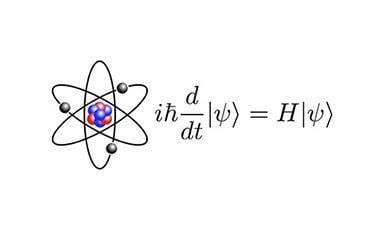
First part of a course in modern atomic and optical physics: the physics of resonances, a central theme in atomic physics.

Class Deals by MOOC List - Click here and see EdX's Active Discounts, Deals, and Promo Codes.

This is the first of five modules to introduce concepts and current frontiers of atomic physics, and to prepare you for cutting-edge research:
8.421.1x: Resonance
8.421.2x: Atomic structure and atoms in external field
8.421.3x: Atom-Light Interactions 1 -- Matrix elements and quantized field
8.421.4x: Atom-Light interactions 2 -- Line broadening and two-photon transitions
8.421.5x: Coherence

The first module, 8.421.1x, introduces resonance as an overarching theme of the course. You will deepen your understanding of the physics of resonance by examining systems using both classical and quantum techniques. Of special importance is the precession of a magnetic moments in time-dependent magnetic fields.
At MIT, the content of the five modules makes the first of a two-semester sequence (8.421 and 8.422) for graduate students interested in Atomic, Molecular, and Optical Physics. This sequence is required for Ph.D. students doing research in this field.
In these modules you will learn about the interaction of radiation with atoms: resonance; absorption, stimulated and spontaneous emission; methods of resonance, dressed atom formalism, masers and lasers, cavity quantum electrodynamics; structure of simple atoms, behavior in very strong fields; fundamental tests: time reversal, parity violations, Bell's inequalities; and experimental methods.
Completing the five-course sequence allows you to pursue advanced study and research in cold atoms, as well as specialized topics in condensed matter physics.

Go to Class
MOOC List is learner-supported. When you buy through links on our site, we may earn an affiliate commission.

Related Courses

Fundamentos de Mecánica para Ingeniería (edX) EdX
Universitat Politècnica de València,UPValenciaX

Fundamentos de Mecánica para Ingeniería (edX)

Estudiaremos la cinemática y la dinámica del punto, los conceptos de trabajo y potencia y la energía mecánica. Se aborda el estudio del universo físico analizando objetos en movimiento. Se definen y analizan todas las magnitudes y leyes físicas que permiten describir geométrica y causalmente el movimiento de cuerpos representados por un punto.

Self Paced
Self-Paced
Science & Cooking: From Haute Cuisine to Soft Matter Science (chemistry) (edX) EdX
HarvardX,Harvard University

Science & Cooking: From Haute Cuisine to Soft Matter Science (chemistry) (edX)

Top chefs and Harvard researchers explore how everyday cooking and haute cuisine can illuminate basic principles in chemistry, physics, and engineering. Learn about food molecules and how chemical reactions can affect food texture and flavor. During each module of this course, chefs reveal the secrets behind some of their most famous culinary creations — often right in their own restaurants. Inspired by such cooking mastery, the Harvard team will then explain the science behind the recipe.

Self Paced
Self-Paced
Astrophysics: Exploring Exoplanets (edX) EdX
Australian National University - ANU,ANUx

Astrophysics: Exploring Exoplanets (edX)

Explore the mysteries of exoplanets - planets around other stars – in this introductory astrophysics course. The discovery of exoplanets is one of the greatest revolutions in modern astrophysics. Twenty years ago, we had no idea whether any of the countless stars out there beyond our solar system had planets or not.

Self Paced
Self-Paced
Quantum Detectors (edX) EdX
Purdue University,PurdueX

Quantum Detectors (edX)

Learn about quantum sensors and devices that extract maximal information from the world around us. Classical detectors and sensors are ubiquitous around us from heat sensors in cars to light detectors in a camera cell phone. Leveraging advances in the theory of noise and measurement, an important paradigm of quantum metrology has emerged. Here, ultra-precision measurement devices collect maximal information from the world around us at the quantum limit.

Feb 12th 2024
5-12 Weeks
Astrophysics: The Violent Universe (edX) EdX
Australian National University - ANU,ANUx

Astrophysics: The Violent Universe (edX)

Explore the deadliest places in the universe, from black holes to supernovae. Interested in exploring the deadliest and most mysterious parts of our universe? Or, investigating black holes, which warp the very fabric of space-time around them? We will look at what we know about these objects, and also at the many unsolved mysteries that surround them. We will also study white-dwarf stars and neutron stars, where the mind-bending laws of quantum mechanics collide with relativity. And, examine dwarf novae, classical novae, supernovae and even hypernovae: the most violent explosions in the cosmos.

Self Paced
Self-Paced
Semiconductor Fundamentals (edX) EdX
Purdue University,PurdueX

Semiconductor Fundamentals (edX)

From smartphones to satellites, semiconductors are everywhere. Tying together physics, chemistry, and electrical engineering, this easy-to-follow introduction provides the background needed to understand devices such as transistors and solar cells. This course provides the essential foundations required to understand the operation of semiconductor devices such as transistors, diodes, solar cells, light-emitting devices, and more.

Jan 9th 2023
5-12 Weeks
Mecanique des Fluides (edX) EdX
École Polytechnique Fédérale de Lausanne,EPFLx

Mecanique des Fluides (edX)

Ce cours de base est composé des sept premiers modules communs à deux cours bachelor, donnés à l’EPFL en génie mécanique et génie civil. Ce cours est une première introduction à la mécanique des fluides. Nous allons aborder tout d'abord les propriétés physiques des fluides : les états de la matière et la notion de viscosité.

No sessions available
5-12 Weeks
How Stuff Moves, Part 3: Wave Motion (edX) EdX
Harvey Mudd College,HarveyMuddX

How Stuff Moves, Part 3: Wave Motion (edX)

WHAT IS “HOW STUFF MOVES”? Mechanics is the study of how things move. It was the first quantitative science to achieve wide power to predict behavior, including things never before directly observed. Newton, Leibniz, and others invented calculus to describe motion and we will find both differential and integral calculus extremely useful throughout this course.

No sessions available
4 Weeks
Global Warming Science (edX) EdX
MIT,MITx

Global Warming Science (edX)

Learn about the physics, chemistry, biology, and geology of the earth’s climate system. Global Warming Science teaches you about the risks and uncertainties of future climate change by examining the science behind the earth’s climate. You will be able to answer such questions as, “What is the Greenhouse Effect?” and “How and why has earth’s climate changed through geologic history?”

No sessions available
13-24 Weeks
Fundamentals of Transistors (edX) EdX
Purdue University,PurdueX

Fundamentals of Transistors (edX)

This course develops a simple framework for understanding the essential physics of transistors, including modern nanoscale transistors. Important technology considerations and circuit applications are also discussed. The transistor has been called the greatest invention of the 20th century - it enabled the electronics systems that have shaped the world we live in. Today's nanotransistors are a high volume, high impact success of the nanotechnology revolution.

Feb 13th 2023
5-12 Weeks