Art and Inquiry: Museum Teaching Strategies For Your Classroom (Coursera)

Art and Inquiry: Museum Teaching Strategies For Your Classroom (Coursera)

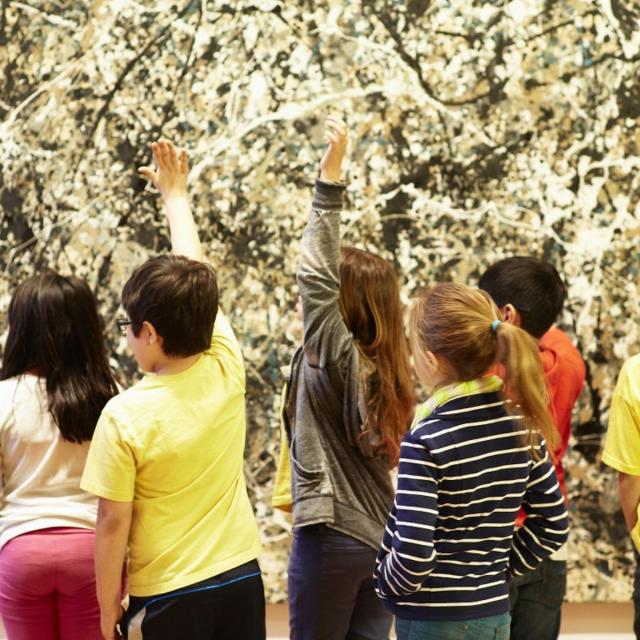
Explore how to integrate works of art into your classroom with inquiry-based teaching methods originally developed for in-gallery museum education.

Class Deals by MOOC List - Click here and see Coursera's Active Discounts, Deals, and Promo Codes.

Syllabus

WEEK 1
Introduction to Inquiry | Why Engage in Inquiry Around Art?
This course will introduce ways to integrate works of art into your classroom by using inquiry-based teaching methods commonly used in museum settings. It is designed to give you the tools to create meaningful object-based learning activities that can be integrated into a wide variety of curricula. All the strategies covered emphasize literacy and critical thinking skills that connect across disciplines.

WEEK 2
Close-Looking and Open-Ended Inquiry
In this module we will discuss and review the different ways that you can facilitate close-looking with your students and engaging in open-ended, inquiry-based conversation around works of art. Don’t wait to start practicing! Grab a friend or a family member and start leading inquiry-based conversation around a work of art, or anything. As you will see in the Google Hangout video, you can use a digital image or any object that you have around that would lend itself to leading an inquiry-based discussion. These practice sessions are not required but the more you practice, the easier and better your classroom performance will be.

WEEK 3
Activities as Inquiry
This section explores interactive methods that promote an open-ended, two-way exchange of ideas and engage a specific set of skills including close-looking, peer-to-peer learning, creative thinking, and problem-solving.

WEEK 4
Putting it all Together: Making Connections Across Curriculum
In this module we will model ways that you can incorporate inquiry around a work of art into your classroom and make connections to curricula. We will also explore the types of resources that you can access to supplement your lesson development and planning.
Go to Class
MOOC List is learner-supported. When you buy through links on our site, we may earn an affiliate commission.

Related Courses

Making Sense of the News: News Literacy Lessons for Digital Citizens (Coursera) Coursera
University of Hong Kong,The State University of New York

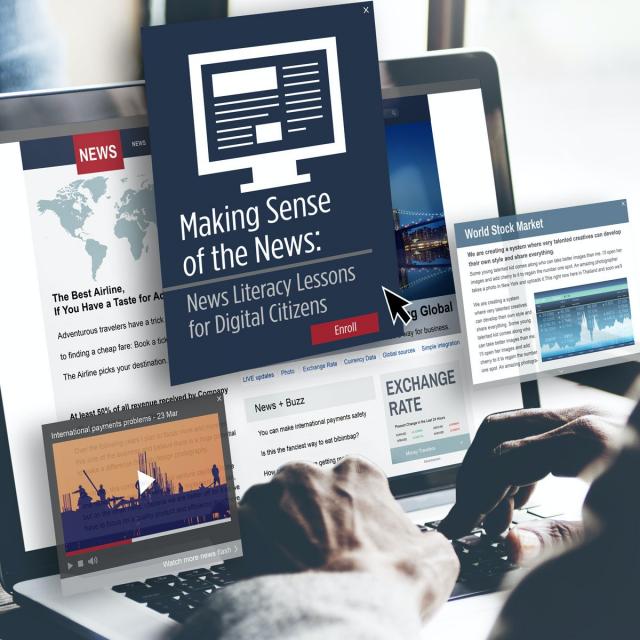
Making Sense of the News: News Literacy Lessons for Digital Citizens (Coursera)

Never before has the need for News Literacy been more urgent. As news consumers are bombarded with a constant stream of fake news, propaganda, hoaxes, rumors, satire, and advertising — that often masquerade as credible journalism — it is becoming more and more difficult to distinguish fact from fiction. While the public’s faith in the news media erodes, purveyors of misinformation have helped give rise to troubling cultural trends and alarming political movements.

Nov 2nd 2026
5-12 Weeks
Mi Primer Empleo (MPE) (Coursera) Coursera
Universidad de Chile

Mi Primer Empleo (MPE) (Coursera)

¿Qué debo tener en cuenta en mi primer empleo? El curso "Mi Primer Empleo" (MPE) te ayudará a enfrentar con éxito el tránsito entre tu formación profesional y el mundo del trabajo. Los objetivos de aprendizaje de este curso son: identificar las expectativas laborales personales actuales y futuras; preparar el curriculum vitae y la entrevista de trabajo; gestionar la huella digital.

Nov 2nd 2026
4 Weeks
Art and the Digital Transformation (Coursera) Coursera
Copenhagen Business School

Art and the Digital Transformation (Coursera)

More than two decades into the new millennium, it is difficult to envision a future in which digital technologies do not play a significant role. Digital technologies frequently make a lot of promises. However, in recent years, we have seen an increasing number of artists address fundamental issues of the Digital Transformation, such as surveillance, lack of representation, and digital illiteracy. Artists have demonstrated that, while digital technologies have the potential to support processes leading to greater equality, they are frequently viewed as perpetuating and even exacerbating inequalities.

Nov 2nd 2026
5-12 Weeks
The Modern and the Postmodern (Part 2) (Coursera) Coursera
Wesleyan University

The Modern and the Postmodern (Part 2) (Coursera)

This course examines how the idea of "the modern" develops at the end of the 18th century in European philosophy and literature, and how being modern (or progressive, or hip) became one of the crucial criteria for understanding and evaluating cultural change. Are we still in modernity, or have we moved beyond the modern to the postmodern?

Nov 2nd 2026
5-12 Weeks
Get Interactive: Practical Teaching with Technology (Coursera) Coursera
University of London,Bloomsbury Learning Environment

Get Interactive: Practical Teaching with Technology (Coursera)

This course is designed to help you create dynamic, interactive online courses through the use of multimedia tools, student collaboration opportunities, and formative assessment and feedback. Each week we will focus on a particular topic: Using multimedia for teaching and learning; Encouraging student collaboration; Formative assessment and feedback.

Nov 1st 2026
3 Weeks
Usos didácticos del cine: Introducción al análisis (Coursera) Coursera
Universidad Nacional Autónoma de México

Usos didácticos del cine: Introducción al análisis (Coursera)

¡Hola! Bienvenido al MOOC "Usos Didácticos del Cine: Introducción al Análisis", ofrecido por la UNAM. A lo largo de este curso, te presentaremos varias formas de usar películas en tus clases para mejorar el rendimiento de tus estudiantes. Además, podrás acceder a una variedad de herramientas y marcos conceptuales referentes a la teoría del cine válidos para poder usar con más conocimientos cualquier obra cinematográfica en el aula.

Nov 2nd 2026
5-12 Weeks
Diversity and Inclusion in Education (Coursera) Coursera
University of Glasgow

Diversity and Inclusion in Education (Coursera)

Student diversity is becoming the rule rather than the exception in education systems across the world. Students bring to classroom different characteristics such as ability and disability, socio-economic background, race, ethnicity, and cultural background, beliefs and religion, and gender characteristics. The United Nations’ Sustainable Development Goal 4 aims to ensure inclusive and equitable quality education and promote lifelong learning opportunities for all (United Nations, 2015).

Nov 2nd 2026
4 Weeks
Words Spun Out of Images: Visual and Literary Culture in Nineteenth Century Japan (Coursera) Coursera
The University of Tokyo

Words Spun Out of Images: Visual and Literary Culture in Nineteenth Century Japan (Coursera)

In their ambition to capture “real life,” Japanese painters, poets, novelists and photographers of the nineteenth century collaborated in ways seldom explored by their European contemporaries. This course offers learners the chance to encounter and appreciate behavior, moral standards and some of the material conditions surrounding Japanese artists in the nineteenth century, in order to renew our assumptions about what artistic “realism” is and what it meant.

Nov 2nd 2026
4 Weeks
Music and Social Action (Coursera) Coursera
Yale University

Music and Social Action (Coursera)

What is a musician’s response to the condition of the world? Do musicians have an obligation and an opportunity to serve the needs of the world with their musicianship? At a time of crisis for the classical music profession, with a changing commercial landscape, a shrinking audience base, and a contraction in the number of professional orchestras, how does a young musician construct a career today? Are we looking at a dying art form or a moment of reinvigoration?

Nov 2nd 2026
5-12 Weeks
Teaching Children with Visual Impairment: Creating Empowering Classrooms (Coursera) Coursera
University of Cape Town

Teaching Children with Visual Impairment: Creating Empowering Classrooms (Coursera)

In the education of children with visual impairment, there is at present a global movement away from segregated special schooling, and towards inclusive neighbourhood schools. Inclusion provides an opportunity for everyone, teachers as well as learners, to become more acquainted about life with visual impairment and to overcome some of the barriers of difference which have existed in the past. But if it is to be successful, teachers and others require key skills and insights in order to create classroom environments which fully accommodate the learning needs of children with visual impairment.

Nov 2nd 2026
4 Weeks
International Law in Action: A Guide to the International Courts and Tribunals in The Hague (Coursera) Coursera
Leiden University

International Law in Action: A Guide to the International Courts and Tribunals in The Hague (Coursera)

International Law in Action explains the functions of each international court and tribunal present in The Hague, and it looks at how these institutions address contemporary problems. On the basis of selected cases, and through interviews with judges and lawyers, you will explore the role of these courts and tribunals and their potential to contribute to global justice. The first module of the course will investigate how judicial settlement is different from other more political forms of dispute settlement, such as negotiation and mediation. It offers a brief historical overview and introduces the judicial and arbitral bodies based in The Hague.

Nov 2nd 2026
5-12 Weeks