APIs (Coursera)

Offered by Meta,
APIs (Coursera)

Delve deeper into the processes and concepts behind APIs and their infrastructure. Explore the key concepts that underpin API development and the principles of representational state transfer architectural style (REST) architecture. Build basic API and REST data backbones for web apps using Django. Discover emerging API technology and practice other ways to build and work with APIs. Finally, you will test, optimize and develop documentation for an API.

Class Deals by MOOC List - Click here and see Coursera's Active Discounts, Deals, and Promo Codes.

By the end of this course you will be able to:
• Work with and build APIs
• Build basic API and REST data backbones for web apps using Django
• Discover emerging API technology
• Test, optimize and develop documentation for an API
To complete this course, you will need Django experience. Additionally, it always helps to have a can-do attitude!
This course is part of the Meta Back-End Developer Professional Certificate.

Syllabus

WEEK 1
REST APIs
Get to know RESTful API development.

WEEK 2
Django REST framework
Use the Django REST framework to create APIs efficiently, then learn to serialize your database models and convert, validate and render data.

WEEK 3
Advanced API development
Control access to your APIs, and put systems in place to ensure you maintain their health.

WEEK 4
Final project assessment
Practice and reflect on the skills you learned in this course.
Go to Class
MOOC List is learner-supported. When you buy through links on our site, we may earn an affiliate commission.

Related Courses

Python Programming Essentials (Coursera) Coursera
Rice University

Python Programming Essentials (Coursera)

This course will introduce you to the wonderful world of Python programming! We'll learn about the essential elements of programming and how to construct basic Python programs. We will cover expressions, variables, functions, logic, and conditionals, which are foundational concepts in computer programming. We will also teach you how to use Python modules, which enable you to benefit from the vast array of functionality that is already a part of the Python language. These concepts and skills will help you to begin to think like a computer programmer and to understand how to go about writing Python programs.

Aug 24th 2026
4 Weeks
Advanced Django: Introduction to Django Rest Framework (Coursera) Coursera
Codio

Advanced Django: Introduction to Django Rest Framework (Coursera)

Code and run Django websites without installing anything! This course is designed for learners who are familiar with Python and basic Django skills (similar to those covered in the Django for Everybody specialization). The modules in this course cover an introduction to the the Django REST framework and handling JSON within the context of APIs, fundamentals such as serialization ViewSheets, and authentication/permissions.

Aug 31st 2026
4 Weeks
Algorithmic Toolbox (Coursera) Coursera
University of California, San Diego,Higher School of Economics - HSE University

Algorithmic Toolbox (Coursera)

The course covers basic algorithmic techniques and ideas for computational problems arising frequently in practical applications: sorting and searching, divide and conquer, greedy algorithms, dynamic programming. We will learn a lot of theory: how to sort data and how it helps for searching; how to break a large problem into pieces and solve them recursively; when it makes sense to proceed greedily; how dynamic programming is used in genomic studies. You will practice solving computational problems, designing new algorithms, and implementing solutions efficiently (so that they run in less than a second).

Aug 24th 2026
5-12 Weeks
Stages of Incident Response (Coursera) Coursera
Infosec

Stages of Incident Response (Coursera)

The Cyber Incident Response course will give students an understanding of how incidents are responded to at a high level, as well as allow them to build important technical skills through the hands-on labs and projects. This course starts with a high-level discussion of what happens at each phase of responding to an incident, followed by a technical deep dive into some of the more exciting parts of memory, network, and host analysis and forensics. This course is for anyone wishing to apply learned forensics and offensive knowledge such as ethical hacking to the incident response process.

Aug 31st 2026
5-12 Weeks
Big Data Science with the BD2K-LINCS Data Coordination and Integration Center (Coursera) Coursera
Icahn School of Medicine at Mount Sinai

Big Data Science with the BD2K-LINCS Data Coordination and Integration Center (Coursera)

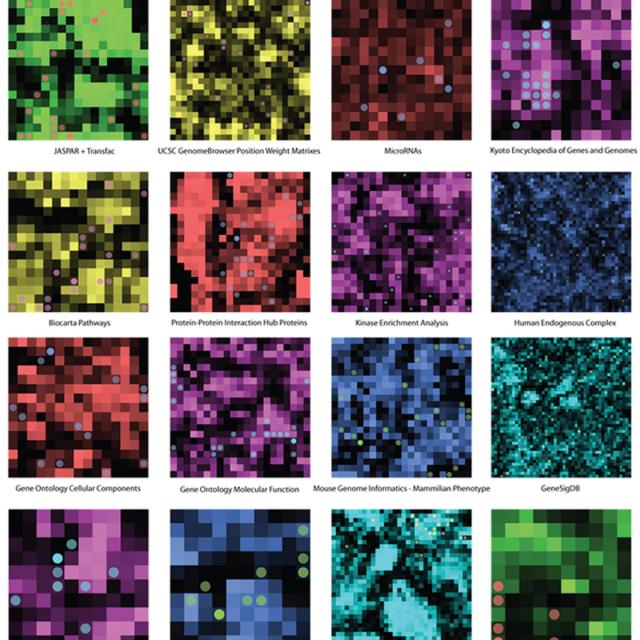
In this course we briefly introduce the DCIC and the various Centers that collect data for LINCS. We then cover metadata and how metadata is linked to ontologies. We then present data processing and normalization methods to clean and harmonize LINCS data. This follow discussions about how data is served as RESTful APIs. Most importantly, the course covers computational methods including: data clustering, gene-set enrichment analysis, interactive data visualization, and supervised learning. Finally, we introduce crowdsourcing/citizen-science projects where students can work together in teams to extract expression signatures from public databases and then query such collections of signatures against LINCS data for predicting small molecules as potential therapeutics.

Aug 24th 2026
5-12 Weeks
Software Engineering: Implementation and Testing (Coursera) Coursera
The Hong Kong University of Science and Technology - HKUST

Software Engineering: Implementation and Testing (Coursera)

Software Development Life Cycle (SDLC) is the process of developing software through planning, requirement analysis, design, implementation, testing, and maintenance. This course focuses on the implementation and testing phases of SDLC, and you will examine different software development processes for large software systems development, and understand the strengths (pros) and weaknesses (cons) of different software development processes.

Aug 31st 2026
5-12 Weeks
Google Cloud Product Fundamentals em Português Brasileiro (Coursera) Coursera
Google Cloud

Google Cloud Product Fundamentals em Português Brasileiro (Coursera)

Este curso é uma continuação do "Business Transformation with Google Cloud" e guiará você pela jornada de transformação de uma organização do ponto de vista tecnológico. Explicaremos como as organizações podem fazer a transformação digital usando a tecnologia do Google Cloud nestas categorias: modernização da infraestrutura de TI; melhorias no processo de desenvolvimento dos aplicativos da empresa; uso do machine learning e da inteligência artificial para criar novo valor; a importância de ferramentas de produtividade como o G Suite na realização do trabalho; e compreender as oportunidades e os desafios da gestão do custo que uma infraestrutura de TI na nuvem traz.

Aug 31st 2026
5-12 Weeks
Interfacing with the Raspberry Pi (Coursera) Coursera
University of California, Irvine

Interfacing with the Raspberry Pi (Coursera)

The Raspberry Pi uses a variety of input/output devices based on protocols such as HDMI, USB, and Ethernet to communicate with the outside world. In this class you will learn how to use these protocols with other external devices (sensors, motors, GPS, orientation, LCD screens etc.) to get your IoT device to interact with the real world.

Aug 31st 2026
4 Weeks
ExpressJS Essentials: Building Modern Web APIs (Coursera) Coursera
EDUCBA

ExpressJS Essentials: Building Modern Web APIs (Coursera)

This comprehensive course provides a deep dive into Express.js, a robust web application framework for Node.js. Participants will master fundamental concepts, architecture, and the step-by-step process of setting up Express.js projects. Explore HTTP methods, route definition, and parameter extraction, gaining practical skills in setting up requests with Thunder Client and Postman tools.

Aug 31st 2026
5-12 Weeks
The Full Stack (Coursera) Coursera
Meta

The Full Stack (Coursera)

As you prepare for your role in back-end development, practice bringing together multiple skills to build a full-stack Django app. You’ll start by setting up an environment for a local practical project, and refactoring the front and back-ends of an existing application. You will then have the opportunity to create the front and back-ends of a new application using your full-stack developer skills.

Aug 31st 2026
5-12 Weeks