EdX

Animation and CGI Motion (edX)

Animation and CGI Motion (edX)

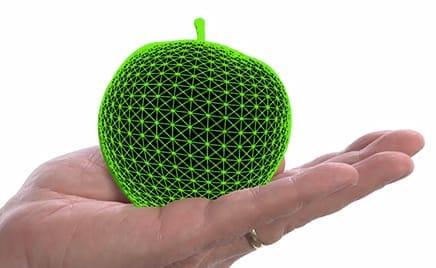
Learn the science behind movie animation from the Director of Columbia’s Computer Graphics Group. How do you create realistic animations? How do you predict the motion of materials? It’s key to the success of animated films to ensure (was insure) audiences believe in characters. This course will show you how to create lifelike animations focusing on the technical aspects of CGI animation and also give you a glimpse into how studios approach the art of physically-based animation.

Class Deals by MOOC List - Click here and see EdX's Active Discounts, Deals, and Promo Codes.

You will learn the fundamental concepts of physical simulation, including:

  1. integration of ordinary differential equations such as those needed to predict the motion of a dress in the wind.
  2. formulation of models for physical phenomena such as crumpling sheet metal and flowing water.
  3. treatment of discontinuities such as fractures and collisions.
  4. simulation of liquids and solids in both Lagrangian and Eulerian coordinates.
  5. artistic control of physically-based animations.

These concepts will be put into practice in the programming assignments spanning:

  • Discretizing and integrating Newton’s equations of motion
  • Constrained Lagrangian Mechanics
  • Collisions, contact, and friction: detection and response
  • Continuum mechanics
  • Finite elements
  • Rigid body simulation
  • Thin shell and cloth simulation
  • Elastic rod and hair simulation
  • Fluid simulation

What you'll learn

  • To code your own physics simulator to master the fundamental algorithms for creating lifelike animations clothing, hair, liquids, rigid bodies and more!
  • Temporal integration of the equations of motion
  • Formulation of mathematical models for mechanical systems
  • Numerical methods for treating contact and impact
  • Lagrangian and Eulerian representations of continua control of physical models

Course Syllabus

The coursework will focus on seven themes. Each theme is divided into weekly assignments, or "milestones." Each milestone will include successful implementation of new technical features, and an artistic scene that demonstrates these features.

Theme 01: Mass-spring systems, in which you will implement point masses, gravity, springs, dampers, time integrators (explicit Euler, symplectic Euler, linearized implicit Euler).

Theme 02: Collision handling, in which you will implement detection against fixed obstacles (discs, half-planes, polygonal objects), response against fixed obstacles (using reflection with a coefficient of restitution, and penalty methods), advanced pairwise detection between polygonal objects, and broad-phase accelerations using spatial hashing and hierarchical bounding volumes.

Theme 03: Rigid bodies, in which you will implement computations of center of mass and moment of intertia for polygonal objects, time integration for rigid bodies, and contact with fixed obstacles.

Theme 04: Elastica, in which you will implement the constant strain finite element, a discrete bending force for polygonal objects, and plastic and viscous flow.

Theme 05: Fluids, in which you will implement a fast and stable fluid simulation including advection, convection, and viscosity, in an Eulerian framework.

Theme 07: Project, in which you are the boss.
Go to Class
MOOC List is learner-supported. When you buy through links on our site, we may earn an affiliate commission.

Related Courses

Explore Animation (FutureLearn) FutureLearn
National Film and Television School - NFTS

Explore Animation (FutureLearn)

Learn animation techniques such as stop motion, 2D, CGI and pixilation, in this NFTS course with award-winning animators. Become an expert animator and master different animation techniques Whether you’re a budding animator or animation fan, this 4-week online course from the internationally acclaimed National Film and Television School (NFTS) will have something for you. Our team of award-winning animators will take you through their approach to telling stories and demystify their own animation technique.

No sessions available
4 Weeks
Statistical Mechanics: Algorithms and Computations (Coursera) Coursera
École normale supérieure

Statistical Mechanics: Algorithms and Computations (Coursera)

In this course you will learn a whole lot of modern physics (classical and quantum) from basic computer programs that you will download, generalize, or write from scratch, discuss, and then hand in. Join in if you are curious (but not necessarily knowledgeable) about algorithms, and about the deep insights into science that you can obtain by the algorithmic approach.

Aug 31st 2026
5-12 Weeks
Animation and CGI Motion (edX) EdX
Columbia University,ColumbiaX

Animation and CGI Motion (edX)

Learn the science behind movie animation from the Director of Columbia’s Computer Graphics Group. How do you create realistic animations? How do you predict the motion of materials? It’s key to the success of animated films to ensure (was insure) audiences believe in characters. This course will show you how to create lifelike animations focusing on the technical aspects of CGI animation and also give you a glimpse into how studios approach the art of physically-based animation.

This course is archived
5-12 Weeks
HTML5 Canvas (Udacity) Udacity
Udacity

HTML5 Canvas (Udacity)

From Pixels to Animation! Canvas is an HTML5 element which gives you drawable surface inside your web pages you can control with JavaScript. Powerful enough to use for compositing images and even creating games. In this course, through several sample projects, you’ll learn how to use the canvas; how to make compositions using shapes, images, and text; how to create effects and filters on images and how to create animations.

Self Paced
Self-Paced
Basic 3D Animation using Blender (edX) EdX
IIT Bombay,IITBombayX

Basic 3D Animation using Blender (edX)

Learn the basics of 3D animation, including key-framing, timing, and animation principles, using the free and open source tool: Blender. Animation is an emerging medium of communication. More and more learners are aspiring to learn and make a career in this domain. However, animation training is expensive due to the high cost of proprietary animation software.

No sessions available
4 Weeks
Lectures on Selected Topics in Classical and Fluid Mechanics (Coursera) Coursera
Moscow Institute of Physics and Technology

Lectures on Selected Topics in Classical and Fluid Mechanics (Coursera)

This course is devoted to selected problems of classical (theoretical) and fluid mechanics which are usually remain outside the standard course of mechanics. Despite the fact that the course is aimed at students with an understanding of the methods and approaches of classical and fluid mechanics, several lectures of the course are devoted to revision of material from the course of classical (theoretical) mechanics. The course is aimed at an audience interested in theoretical physics methods for solving problems of classical and fluid mechanics. The course is designed for an audience that has previously attended general course of classical and fluid mechanics and courses of higher mathematics: mathematical analysis and differential equations theory.

Aug 1st 2022
5-12 Weeks
Speed Up Your Workflow With Motion2 From Mt. Mograph (Skillshare) Skillshare
Skillshare

Speed Up Your Workflow With Motion2 From Mt. Mograph (Skillshare)

In this quick course I’ll show you just a handful of the many incredibly useful tools in Mt. Mograph’s Motion2 plugin. There are so many uses for this plugin, and each one of them on their own is worth the full price. I’ll show you how I use Motion2 regularly to speed up my workflow and keep things moving in After Effects.

Self Paced
Self-Paced
Filmmaking and Animation in the Classroom (FutureLearn) FutureLearn
INTO FILM

Filmmaking and Animation in the Classroom (FutureLearn)

Learn how to use simple filmmaking and animation to bring learning to life, and aid cross-curricular attainment and assessment. This free online course will help anyone working with young people aged 5-19 to engage them in learning through simple filmmaking and animation. You’ll discover how film and animation can be used as powerful tools for encouraging active learning and enabling pupils to establish strong connections with any area of the curriculum.

Jan 31st 2022
3 Weeks