Advanced Deep Learning Techniques for Computer Vision (Coursera)

Offered by MathWorks,
Advanced Deep Learning Techniques for Computer Vision (Coursera)

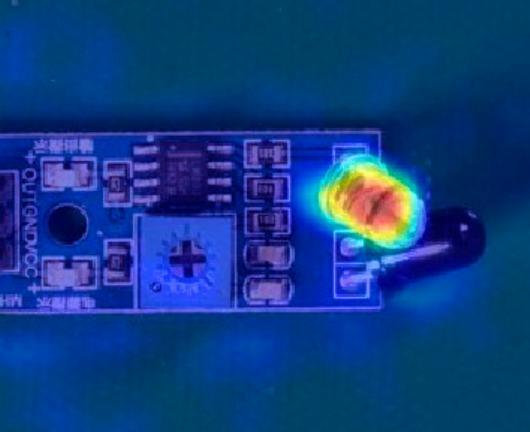
Visual inspection and medical imaging are two applications that aim to find anything unusual in images. In this course, you’ll train and calibrate specialized models known as anomaly detectors to identify defects. You’ll also use advanced techniques to overcome common data challenges with deep learning.

Class Deals by MOOC List - Click here and see Coursera's Active Discounts, Deals, and Promo Codes.

AI-assisted labeling is a technique to auto-label images, saving time and money when you have tens of thousands of images. If you have too few images, you’ll generate synthetic training images using data augmentation for situations where acquiring more data is expensive or impossible.
By the end of this course, you will be able to:
• Train anomaly detection models
• Generate synthetic training images using data augmentation
• Use AI-assisted annotation to label images and video files
• Import models from 3rd party tools like PyTorch
• Describe approaches to using your model outside of MATLAB
For the duration of the course, you will have free access to MATLAB, software used by top employers worldwide. The courses draw on the applications using MATLAB, so you spend less time coding and more time applying deep learning concepts.
This course is part of the Deep Learning for Computer Vision Specialization.

What you'll learn

  • Train and calibrate specialized models known as anomaly detectors
  • Generate synthetic training images for situations where acquiring more data is expensive or impossible
  • Use AI-assisted auto-labeling to save time and money
  • Import models from 3rd party tools like PyTorch and export your model outside of MATLAB

Syllabus

Anomaly Detection
Train anomaly detection models. These models do not find specific objects or classes, but instead find unusual regions in images.

Data Augmentation
Generate synthetic images to use for training models.

Model-Assisted Labeling
Save hours of manual labor by using model-assisted labeling to prepare images for object detection

Creating Your Own Models
Learn how to diagnose problems when training models for your applications. Also, learn the options available to share and use your model outside of MATLAB.

Go to Class
MOOC List is learner-supported. When you buy through links on our site, we may earn an affiliate commission.

Related Courses

Introduction to Computer Vision with Watson and OpenCV (Coursera) Coursera
IBM

Introduction to Computer Vision with Watson and OpenCV (Coursera)

Computer Vision is one of the most exciting fields in Machine Learning and AI. It has applications in many industries such as self-driving cars, robotics, augmented reality, face detection in law enforcement agencies. In this beginner-friendly course you will understand about computer vision, and will learn about its various applications across many industries.

Jun 15th 2026
4 Weeks
Business Implications of AI: Full course (Coursera) Coursera
EIT Digital

Business Implications of AI: Full course (Coursera)

In this course you will learn what Artificial Intelligence is, from a leaders point of view. How shall we, as leaders, understand it from a corporate strategy point of view? What is it and how can it be used? What are the crucial strategic decisions we have to make, and how to make them? What consequences can we expect if we decide on doing AI-projects and what kind of competences do we need? Where shall we start, and what could be a good second as well as third step? What implications for the organization can we expect? These are the questions answered in this course.

Jun 15th 2026
4 Weeks
Solve Business Problems with AI and Machine Learning (Coursera) Coursera
CertNexus

Solve Business Problems with AI and Machine Learning (Coursera)

Artificial intelligence (AI) and machine learning (ML) have become an essential part of the toolset for many organizations. When used effectively, these tools provide actionable insights that drive critical decisions and enable organizations to create exciting, new, and innovative products and services. This is the first of four courses in the Certified Artificial Intelligence Practitioner (CAIP) professional certification. This course is meant as an entry point into the world of AI/ML. You'll learn about the business problems that AI/ML can solve, as well as the specific AI/ML technologies that can solve them. In addition, you'll get an overview of the general workflow involved in machine learning, as well as the tools and other resources that support it.

Jun 15th 2026
4 Weeks
Computer Vision Basics (Coursera) Coursera
University at Buffalo,The State University of New York

Computer Vision Basics (Coursera)

By the end of this course, learners will understand what computer vision is, as well as its mission of making computers see and interpret the world as humans do, by learning core concepts of the field and receiving an introduction to human vision capabilities. They are equipped to identify some key application areas of computer vision and understand the digital imaging process. The course covers crucial elements that enable computer vision: digital signal processing, neuroscience and artificial intelligence.

Jun 15th 2026
4 Weeks
Business Application of Machine Learning and Artificial Intelligence in Healthcare (Coursera) Coursera
Northeastern University

Business Application of Machine Learning and Artificial Intelligence in Healthcare (Coursera)

The future of healthcare is becoming dependent on our ability to integrate Machine Learning and Artificial Intelligence into our organizations. But it is not enough to recognize the opportunities of AI; we as leaders in the healthcare industry have to first determine the best use for these applications ensuring that we focus our investment on solving problems that impact the bottom line.

Jun 15th 2026
4 Weeks
Data Analytics Foundations for Accountancy II (Coursera) Coursera
University of Illinois at Urbana-Champaign

Data Analytics Foundations for Accountancy II (Coursera)

Welcome to Data Analytics Foundations for Accountancy II! I'm excited to have you in the class and look forward to your contributions to the learning community. To begin, I recommend taking a few minutes to explore the course site. Review the material we’ll cover each week, and preview the assignments you’ll need to complete to pass the course. Click Discussions to see forums where you can discuss the course material with fellow students taking the class.

Jun 15th 2026
5-12 Weeks
Introduction to Trading, Machine Learning & GCP (Coursera) Coursera
New York Institute of Finance,Google Cloud

Introduction to Trading, Machine Learning & GCP (Coursera)

In this course, you’ll learn about the fundamentals of trading, including the concept of trend, returns, stop-loss, and volatility. You will learn how to identify the profit source and structure of basic quantitative trading strategies. This course will help you gauge how well the model generalizes its learning, explain the differences between regression and forecasting, and identify the steps needed to create development and implementation backtesters. By the end of the course, you will be able to use Google Cloud Platform to build basic machine learning models in Jupyter Notebooks.

Jun 15th 2026
4 Weeks
Probabilistic Deep Learning with TensorFlow 2 (Coursera) Coursera
Imperial College London

Probabilistic Deep Learning with TensorFlow 2 (Coursera)

Welcome to this course on Probabilistic Deep Learning with TensorFlow! This course builds on the foundational concepts and skills for TensorFlow taught in the first two courses in this specialisation, and focuses on the probabilistic approach to deep learning. This is an increasingly important area of deep learning that aims to quantify the noise and uncertainty that is often present in real world datasets. This is a crucial aspect when using deep learning models in applications such as autonomous vehicles or medical diagnoses; we need the model to know what it doesn't know.

Jun 15th 2026
5-12 Weeks