Adaptive Python (Stepik)

Offered by JetBrains,
Adaptive Python (Stepik)

Adaptive problem set to learn Python. Join the course and you can try out the first prototype of the adaptive engine! This course is adaptive: it will adjust according to your skill.

The course consists of few hundreds of programming assignments for Python, ranging from basics up to complex topics.
Right now Stepik.org is developing an adaptive learning engine which chooses content for each learner individually – by his/her level and knowledge gaps. In this course you can try out the first prototype of this engine.

Go to Class
MOOC List is learner-supported. When you buy through links on our site, we may earn an affiliate commission.

Related Courses

Getting Started with CyberGIS (Coursera) Coursera
University of Illinois at Urbana-Champaign

Getting Started with CyberGIS (Coursera)

This course is intended to introduce students to CyberGIS—Geospatial Information Science and Systems (GIS)—based on advanced cyberinfrastructure as well as the state of the art in high-performance computing, big data, and cloud computing in the context of geospatial data science. Emphasis is placed on learning the cutting-edge advances of cyberGIS and its underlying geospatial data science principles.

Sep 28th 2026
4 Weeks
Blockchain Scalability and its Foundations in Distributed Systems (Coursera) Coursera
The University of Sydney

Blockchain Scalability and its Foundations in Distributed Systems (Coursera)

Blockchain promises to disrupt industries once it will be efficient at large scale. In this course, you will learn how to make blockchain scale. You will learn about the foundational problem of distributed computing, consensus, that is key to create blocks securely. By illustrating limitations of mainstream blockchains, this course will indicate how to improve the technology in terms of security and efficiency. In particular, this course will help you: understand security vulnerabilities of mainstream blockchains; design consensus algorithms that tolerate attacks, and; design scalable blockchain systems.

Sep 28th 2026
5-12 Weeks
Applied Calculus with Python (Coursera) Coursera
Johns Hopkins University

Applied Calculus with Python (Coursera)

This course is designed for the Python programmer who wants to develop the foundations of Calculus to help solve challenging problems as well as the student of mathematics looking to learn the theory and numerical techniques of applied calculus implemented in Python. By the end of this course, you will have learned how to apply essential calculus concepts to develop robust Python applications that solve a variety of real-world challenges.

Sep 28th 2026
5-12 Weeks
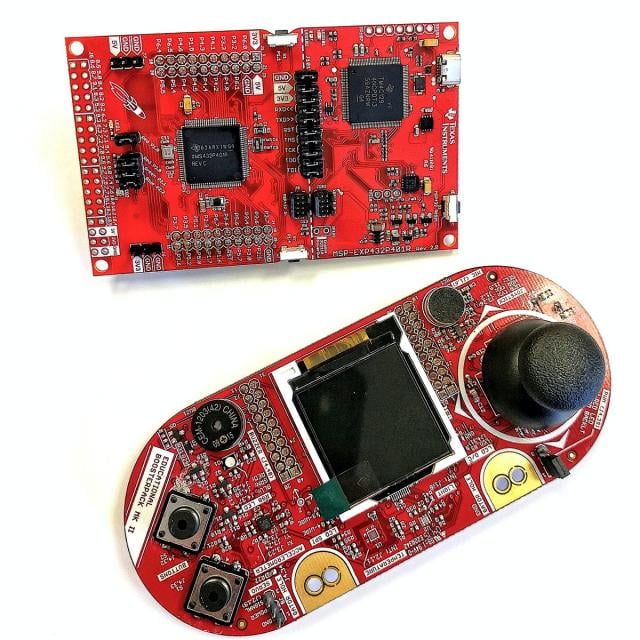
Introduction and Programming with IoT Boards (Coursera) Coursera
Pohang University of Science and Technology - POSTECH

Introduction and Programming with IoT Boards (Coursera)

Internet of Things (IoT) is an emerging area of information and communications technology (ICT) involving many disciplines of computer science and engineering including sensors/actuators, communications networking, server platforms, data analytics and smart applications. IoT is considered to be an essential part of the 4th Industrial Revolution along with AI and Big Data. This course will be very useful to senior undergraduate and graduate students as well as engineers who are working in the industry.

Sep 28th 2026
5-12 Weeks
Practical Python for AI Coding 2 (Coursera) Coursera
Korea Advanced Institute of Science and Technology - KAIST

Practical Python for AI Coding 2 (Coursera)

This course is for a complete novice of Python coding, so no prior knowledge or experience in software coding is required. This course selects, introduces and explains Python syntaxes, functions and libraries that were frequently used in AI coding. In addition, this course introduces vital syntaxes, and functions often used in AI coding and explains the complementary relationship among NumPy, Pandas and TensorFlow, so this course is helpful for even seasoned python users.

Sep 28th 2026
5-12 Weeks
Programming Mobile Applications for Android Handheld Systems: Part 1 (Coursera) Coursera
University of Maryland, College Park

Programming Mobile Applications for Android Handheld Systems: Part 1 (Coursera)

This course introduces you to the design and implementation of Android applications for mobile devices. You will develop an app from scratch, assuming a basic knowledge of Java, and learn how to set up Android Studio, work with various Activities and create simple user interfaces to make your apps run smoothly.

Sep 28th 2026
5-12 Weeks
Code Yourself! An Introduction to Programming (Coursera) Coursera
University of Edinburgh,Universidad ORT Uruguay

Code Yourself! An Introduction to Programming (Coursera)

Have you ever wished you knew how to program, but had no idea where to start from? This course will teach you how to program in Scratch, an easy to use visual programming language. More importantly, it will introduce you to the fundamental principles of computing and it will help you think like a software engineer.

Sep 28th 2026
5-12 Weeks