Teaching Computing Systems and Networks to 5- to 11-year-olds (FutureLearn)

Teaching Computing Systems and Networks to 5- to 11-year-olds (FutureLearn)

Increase your knowledge of "computing systems & networks" and plan how you will teach young children about this topic. Help young children understand the Computing Systems and Networks around them. On this three-week course you’ll explore how you can build up young learners’ knowledge in an age-appropriate manner. You’ll start by thinking about how you can to help your learners recognise information technology - and how computers process an input to give an output.

Class Deals by MOOC List - Click here and see FutureLearn's Active Discounts, Deals, and Promo Codes.

Whether stand-alone, connected in a local network or plugged into the internet, computers are central to many everyday tasks and routines. It’s important for young people to develop their knowledge of how these devices work, so that they can appreciate the impacts that computers and networks have on the world around them.
Networking
In the second week of the course, you’ll learn about the key pieces of technology that allow us to connect computers into networks, and the advantages that networks can bring. You’ll also consider how you can make the concept of a computer network relatable to young children.

The internet, the web, and networked services
By the end of week two, you’ll be able to explain why the internet and the world wide web are not the same thing - as well as identifying a range of services that run over the internet. This will provide you with a solid basis for the third week, in which you’ll investigate computer systems consisting of multiple devices working together.

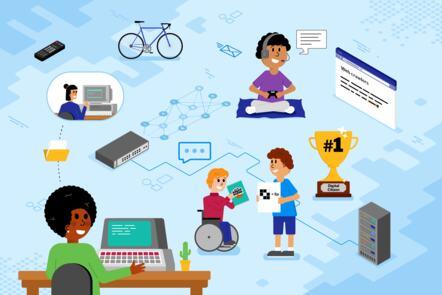
Safety and digital citizenship
Young people also need to understand how to act on the internet - both for their own safety and to contribute to a pleasant online environment. You’ll think about the skills and attitudes that young people need, and how you can help them develop these not only while teaching about computer networks, but also more generally across the curriculum.

Syllabus

Week 1:Devices
Week 2: Networks
Week 3: IT systems

What topics will you cover?

  • Why we teach ‘Computing Systems and Networks’
  • Information Technology and its impact
  • Input-process-output
  • How computer networks function
  • Communication and collaboration on the internet
  • Big IT systems

Learning on this course
You can take this self-guided course and learn at your own pace. On every step of the course you can meet other learners, share your ideas and join in with active discussions in the comments.

What will you achieve?
By the end of the course, you‘ll be able to...

  • Explain the input, process, output (IPO) model of computing systems
  • Evaluate the impacts of computing systems and networks on everyday life
  • Model a computer network with your class
  • Summarise several ways in which people can communicate and collaborate over the internet
  • Lead your pupils through the working of big IT systems that span multiple networks
  • Demonstrate the skills and attitude needed to be a good digital citizen

Who is the course for?
This course is aimed at educators who work with learners aged 5 to 11 years old.

Go to Class
MOOC List is learner-supported. When you buy through links on our site, we may earn an affiliate commission.

Related Courses

Blended and Online Learning Design (FutureLearn) FutureLearn
University College London

Blended and Online Learning Design (FutureLearn)

Learn to develop the best pedagogy for your students using blended and online learning methods. Develop the skills you need to teach blended and online learning. Online learning is the future of teaching. This three-week teaching course aims to support teachers’ own innovations in teaching and learning online, whether you teach in a school, college or university.

May 30th 2022
3 Weeks
Safeguarding Adults: Level 3 Training (FutureLearn) FutureLearn
Health Education England

Safeguarding Adults: Level 3 Training (FutureLearn)

Learn how to ensure the successful safeguarding of adults with this training course from Health Education England. Explore professional safeguarding approaches to protect adults at risk. This course contributes towards the achievement of Level 3 Safeguarding competencies, as set out in Safeguarding for Adults: Roles and Competencies. On this course, you’ll build the skills to ensure people at risk of abuse and neglect receive the care and protection they need to stay safe and unharmed.

Dec 2nd 2024
3 Weeks
Instructional Design: Facilitation Skills (FutureLearn) FutureLearn
University of California, Irvine

Instructional Design: Facilitation Skills (FutureLearn)

Help prepare instructors for course facilitation as you learn the skills to train and guide them to success. Go beyond your role as an instructional designer. Often when a course is developed, many instructional designers move on to the next project, without considering how the instructor facilitates the course.

Jun 6th 2022
3 Weeks
Dyslexia and Foreign Language Teaching (FutureLearn) FutureLearn
Lancaster University

Dyslexia and Foreign Language Teaching (FutureLearn)

Learn more about dyslexia, and gain practical teaching tools and insights to help dyslexic students learn foreign languages. Discover teaching strategies to help dyslexic students learn a foreign language. Dyslexia affects 10-15% of the population. Dyslexic students are often either exempted from the study of additional languages or they underperform in foreign language classes.

Apr 17th 2023
4 Weeks
Global Education for Teachers (FutureLearn) FutureLearn
University College London

Global Education for Teachers (FutureLearn)

Discover key issues in global citizenship education and learn how to prepare your students for the global challenges of tomorrow. Incorporate global learning and global citizenship education into your teaching. Teachers today must prepare their students for a global future. Young people will need to learn how to positively engage with people from all over the world and build the skills and knowledge to become a global citizen.On this course, you’ll increase your confidence and ability to introduce global issues into your teaching. You’ll get CPD training in how to address global issues in your teaching and support global citizenship in your school.

Mar 9th 2026
3 Weeks
Introduction to Encryption and Cryptography (FutureLearn) FutureLearn
Raspberry Pi Foundation,National Centre for Computing Education

Introduction to Encryption and Cryptography (FutureLearn)

Learn how encryption keeps information safe, and teach your students how it's used in the world today. Supported by Google. Discover the history of encryption and learn how it's used in the modern world. On this course, you will learn about what encryption is and understand its use in the past by using the Caesar and Vigenère ciphers.

Mar 6th 2023
2 Weeks
Teaching Migration Through Data and Storytelling (FutureLearn) FutureLearn
SOAS University of London,PositiveNegatives,MIDEQ

Teaching Migration Through Data and Storytelling (FutureLearn)

Explore how migration can be taught using both visual storytelling and big data sets. Help learners understand where, why, and how migration happens. There have been urgent recent calls for curricula to address issues of migration. Yet 78% of British teachers asked by the Runnymede Trust said they needed more support “to equip them to teach migration more sensitively and effectively.” On this course, teachers can develop their skills to explain where and why migration happens.

Dec 5th 2022
3 Weeks
Teaching and Assessing Core Skills (FutureLearn) FutureLearn
British Council,UK Aid

Teaching and Assessing Core Skills (FutureLearn)

Develop your ability to teach core skills and learn how to measure your students' core skills development. Help your students succeed by building their core skills. Employers are demanding higher-order cognitive skills from their workforces, so it’s crucial that young people have access to education that supports the development of core skills to help them succeed.

Oct 10th 2022
4 Weeks
Train the Trainer: Design Genomics and Bioinformatics Training (FutureLearn) FutureLearn
Wellcome Connecting Science

Train the Trainer: Design Genomics and Bioinformatics Training (FutureLearn)

Discover how to plan and design engaging learning for those wanting to generate and analyse genomic data. Explore techniques for genomics training. Genomics and bioinformatics is a growing area of research with important practical implications for sectors as diverse as healthcare, food production, and environmental research. On this course, you’ll learn how to train students, peers, professionals, and future experts in genomic techniques, and come away able to plan and design engaging lessons for adult learners.

Nov 25th 2024
3 Weeks
Exploring Teaching and Assessments for Higher Education (FutureLearn) FutureLearn
Coventry University

Exploring Teaching and Assessments for Higher Education (FutureLearn)

Discover new approaches to teaching and assessing students and understand how to effectively support their learning. Invigorate your teaching, learning, and assessment practices. On this two-week course from Coventry University, you will have the opportunity to explore evidence-based theories, methods, and concepts to critique and enhance your practice for the dynamic higher education environment.

Sep 2nd 2024
2 Weeks
The Online Educator: People and Pedagogy (FutureLearn) FutureLearn
The Open University

The Online Educator: People and Pedagogy (FutureLearn)

Design engaging courses, make your teaching more inclusive, navigate online research ethics and shape your digital identity. Enhance your online teaching with strategies from educational technology experts. As e-learning becomes ever-more widespread, online educators are being required to design learning experiences that engage and meet the needs of very diverse learners.

May 13th 2024
4 Weeks
Teach Computing in Schools: Creating a Curriculum for Ages 11 to 16 (FutureLearn) FutureLearn
Raspberry Pi Foundation,National Centre for Computing Education

Teach Computing in Schools: Creating a Curriculum for Ages 11 to 16 (FutureLearn)

Create an inspiring and engaging computing curriculum for secondary school students, using freely available resources. Learn how to create a successful computing curriculum tailored for your setting. On this course, teachers can discover how to create a computing curriculum for pupils aged 11 to 16, using freely available online resources to complement your existing materials.

Mar 6th 2023
3 Weeks