Supply Chain Planning (Coursera)

Supply Chain Planning (Coursera)

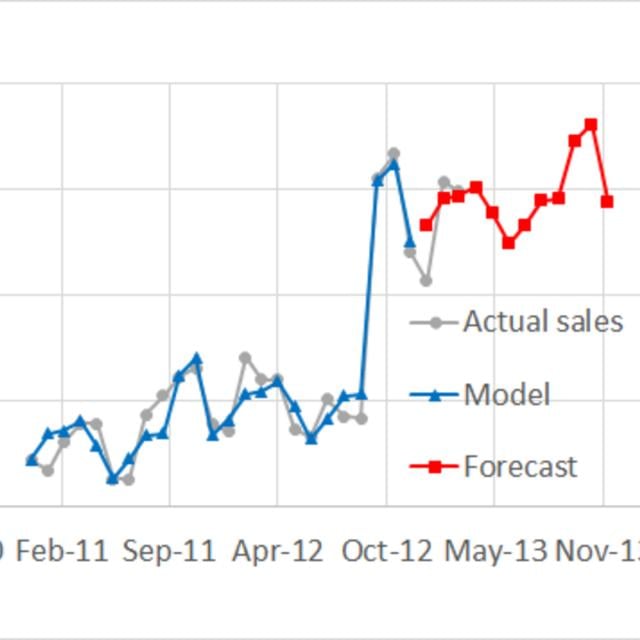
Supply chain planning is an important activity in any supply chain. This is where organizations get an idea of the upcoming demand, realize if they have the capacity to meet the demand, and determine how to realize these demands. In this course, we will explore how to use data science to conduct demand and supply planning, how to constrain the forecast, and how to measure the results. As we walk through this process, we will also explore how to use Excel to quantify each step.

Class Deals by MOOC List - Click here and see Coursera's Active Discounts, Deals, and Promo Codes.

Course 1 of 3 in the Leverage Data Science for a More Agile Supply Chain Specialization.

What You Will Learn

  • Describe how demand planning, supply planning, and constrained forecast are associated with one another.
  • Use Excel to analyze historical data to quantify future needs.
  • Measure and quantify results for improvement.

Syllabus

WEEK 1
Demand Planning
Welcome to Module 1, Demand Planning. In this module, we will explore demand planning, how to identify influencing factors, how to differentiate between the three simple statistical forecast types, and how to compute a few forecast values.

WEEK 2
Supply Planning
Welcome to Module 2, Supply Planning. In this module, we will discuss the basics of supply planning, how to confirm internal & external capacity, how to confirm material availability, and the importance of communication and data sharing to supply planning.

WEEK 3
Constrained Forecast
Welcome to Module 3, Constrained Forecast. In this module, we will discuss constrained forecasts and consensus meetings. Specifically, we will cover the purpose and creation of constrained forecasts and how consensus meetings are utilized to reach organizational goals.

WEEK 4
Measure Results
Welcome to Module 4, Measure Results. In this module, we will discuss measuring results through collecting actual performance results and calculating forecast errors. Specifically, we will discuss the purpose of measuring results, the types of metrics used when measuring results, and common error measurements and their advantages and disadvantages.
Go to Class
MOOC List is learner-supported. When you buy through links on our site, we may earn an affiliate commission.

Related Courses

Cadeia de Suprimentos na Nuvem (Coursera) Coursera
FIA Business School

Cadeia de Suprimentos na Nuvem (Coursera)

Nossas boas-vindas ao Curso Cadeia de Suprimentos na Nuvem. Neste curso, você aprenderá como o supply chain pode ampliar o valor da empresa explorando as diversas ferramentas disponíveis em cloud para potencializar a visibilidade e a responsividade da cadeia, melhorando o nível de serviço prestado aos clientes.

Sep 14th 2026
5-12 Weeks
Supply Chain Analytics Essentials (Coursera) Coursera
Rutgers University

Supply Chain Analytics Essentials (Coursera)

In this introductory course to Supply Chain Analytics, I will take you on a journey to this fascinating area where supply chain management meets data analytics. You will learn real life examples on how analytics can be applied to various domains of a supply chain, from selling, to logistics, production and sourcing, to generate a significant social / economic impact.

Sep 7th 2026
4 Weeks
Operations Excellence (Coursera) Coursera
Rutgers University

Operations Excellence (Coursera)

Supply Chains are made up of a network of companies from the initial raw materials to the ultimate consumer of the finished product. Within this network of companies, there are three ongoing flows: products, information, and finances. To properly understand and manage the supply chain, you need to understand all the flows. If you do not consider all of the flows, you will miss opportunities or sub-optimize parts of the supply chain.

Aug 31st 2026
4 Weeks
Sustainable Business: Big Issues, Big Changes (Coursera) Coursera
University of Colorado System

Sustainable Business: Big Issues, Big Changes (Coursera)

This is class 3 in the MOOC specialization, Become a Sustainable Business Change Agent. This class looks at the big issues companies are fixing - climate change, water, worker satisfaction and supply chain issues. You will learn tools to help your company address these issues intelligently. The class ends with an assignment to set a science-based carbon reduction target for a small company. Tis is absolutely cutting edge material. Only about 300 companies in the whole world are doing this as of July 2017. You could put your company in the elite group!

Sep 7th 2026
5-12 Weeks
Managing Supply Chain Disruption During COVID-19 (Coursera) Coursera
University of Illinois at Urbana-Champaign

Managing Supply Chain Disruption During COVID-19 (Coursera)

In this course, you will learn about why and how supply chains become susceptible to a disruption. We will examine this by discussing supply side and demand side issues, primary supply chain flows, complexity, risk management and a combination of solid theoretical supply chain perspectives and current real-world stories. You will learn about the structural, relational and operational factors that come into play during a supply chain disruption and the mechanisms for the effective management of these factors.

Sep 14th 2026
4 Weeks
Inventory Management (Coursera) Coursera
University of California, Irvine

Inventory Management (Coursera)

Inventory is a strategic asset for organizations. The effective management of inventory can minimize a company’s spending while dramatically increasing its profit. In this course, we will explore how to use data science to manage inventory in uncertain environments, how to set inventory levels based on customer service requirements, and how to calculate inventory for products that have short sales cycles.

Sep 7th 2026
4 Weeks
Supply Chain Operations (Coursera) Coursera
Rutgers University

Supply Chain Operations (Coursera)

Have you ever wondered how products and services are created exactly the same thousands of times over? And how companies are able to smooth out operations to manufacture efficiently, effectively, and without any waste? How is such precision possible? The answer lies at the heart of operations. In the Supply Chain Operations course, we introduce and apply essential process improvement tools to achieve perfection. After completing this course, you will be able to apply the Six Sigma methodology for process improvement.

Sep 7th 2026
4 Weeks
Sourcing Excellence (Coursera) Coursera
Rutgers University

Sourcing Excellence (Coursera)

Supply Chains are made up of a network of companies from the initial raw materials to the ultimate consumer of the finished product. Within this network of companies, there are three ongoing flows: products, information, and finances. To properly understand and manage the supply chain, you need to understand all the flows. If you do not consider all of the flows, you will miss opportunities or sub-optimize parts of the supply chain.

Aug 31st 2026
4 Weeks
Logistics Excellence (Coursera) Coursera
Rutgers University

Logistics Excellence (Coursera)

Supply Chains are made up of a network of companies from the initial raw materials to the ultimate consumer of the finished product. Within this network of companies, there are three ongoing flows: products, information, and finances. To properly understand and manage the supply chain, you need to understand all the flows. If you do not consider all of the flows, you will miss opportunities or sub-optimize parts of the supply chain.

Aug 31st 2026
4 Weeks