Speaking to inform: Discussing complex ideas with clear explanations and dynamic slides (Coursera)

Speaking to inform: Discussing complex ideas with clear explanations and dynamic slides (Coursera)

In the professional realm, most speeches and presentations we give are informative in scope. A scientist needs to explain her recent research findings. A financial officer needs to report on quarterly earnings to his company’s board. A technology professional needs to educate a consumer about a new product. Any time you need to convey ideas or demonstrate a process, you’re dealing with informative speaking.

Class Deals by MOOC List - Click here and see Coursera's Active Discounts, Deals, and Promo Codes.

Informative speaking is a fun puzzle. You need to think from the perspective of your audience to identify what they need to hear in order to understand the key ideas. How much does the audience already know? What are the most important elements to convey? How should one convey these ideas with appropriate breadth and depth given the time constraints of the speech? This demands a strategic approach to speech design that we’ll undertake in this class.
By the end of the course, you should be able to explain complex ideas vividly and accessibly, design clear and compelling presentation slides, convey your passion for a topic while maintaining your professional credibility, and speak dynamically from notes and/or a manuscript. Learners will record speeches, providing and receiving peer feedback.

Course 2 of 4 in the Dynamic Public Speaking Specialization.

Syllabus

WEEK 1
Targeting your presentation
This week, we’ll focus on essential strategies for designing informative speeches. The key issue is: what does the audience need? This process of identifying constraints and opportunities will allow you to zero in on a set of achievable goals, not trying to do too much nor too little. By the end of the week, you will have some tactics for thinking strategically about your goals in any speech. If you want some feedback, you’ll be able to upload an introductory speech for peer review.

WEEK 2
Designing informative speeches
In this module, we'll move an informative speech from idea through to completed outline. Arrangement is always important. It's doubly important in informative speaking. We have to be clear and that starts with good speech design. By the end of the week, you should have a storehouse of arrangement strategies to organize almost any informative speech. If you want some feedback, you’ll be able to upload an informative speech outline for peer review and engage in some speech analysis.

WEEK 3
Clarity through support and slides
This week is all about helping the audience see what we’re talking about. We’ll begin by talking about how to explain details in a vibrant way, working in tandem with how an audience will hear this information. This ability to explain details and evidence well is essential to scientific speaking, business presentations, and any situation when you need to walk an audience through a new set of ideas. Then we turn to slides! They can make or break a speech. We’ll talk about how to design slides so that they support you as a speaker (not replace you). By the end of the week, you should have skills and experience explaining ideas richly and designing and using clear presentation slides. If you want some feedback, you’ll be able to upload a draft slide deck for peer review.

WEEK 4
Delivering informative speeches
Now for some delivery work. We start with the concept of ethos. It is that performance of credibility that all great informative speakers have. We'll dive deep into how you can refine your ethos as a speaker. We’ll finish this course by focusing on the unique delivery demands of informative speaking: using notes, mics, and podiums effectively. Interacting with the audience well. By the end of the week, you’ll have some strategies for speaking more smoothly and with greater credibility. If you want some feedback, you’ll be able to upload a practice informative speech for peer review.

WEEK 5
Review and assessment
Thank you for time in this course! I hope that the material has proven helpful to you. We concluded our discussion of the speech last week. This week, I would like to spend a bit of time reflecting on the course and talking about other exercises and activities that you can use to continue improving your public speaking abilities. We will end this week with your final informative speech.


Go to Class
MOOC List is learner-supported. When you buy through links on our site, we may earn an affiliate commission.

Related Courses

Academic Listening and Note-Taking (Coursera) Coursera
University of California, Irvine

Academic Listening and Note-Taking (Coursera)

This course will help non-native English speakers improve their listening and note-taking skills for the purpose of listening to academic lectures. You will learn techniques for improving your understanding and skills for taking more effective notes, and you will get lots of practice in using these. If you're planning to attend college classes in English, then this class is for you.

Sep 21st 2026
4 Weeks
Advanced Interviewing Techniques (Coursera) Coursera
University of Maryland, College Park

Advanced Interviewing Techniques (Coursera)

People interviewing for jobs today often fail because they are using yesterday's strategies. Recruiting technology has become more sophisticated, and the best employers are constantly changing the way interviews are done. This course gives you detailed strategies for handling tough competency-based, or behavioral, interviews so that you can communicate the knowledge, skills, and abilities that you have and that employers demand.

Oct 5th 2026
5-12 Weeks
Moving to the Cloud (Coursera) Coursera
University of Melbourne

Moving to the Cloud (Coursera)

The cloud is taking business by storm. In fact, due to the extraordinary growth of the cloud, it has been described as a tornado, not a fluffy white floating object! Commercial research analysts consider cloud as one of the most significant trends with a potential to change the whole global IT industry. Governments, including those in the US, Britain, and Australia, have cloud-first policies now in place which mandate cloud over non-cloud services in ICT procurement.

Sep 28th 2026
5-12 Weeks
Applied Public History: Places, People, Stories (Coursera) Coursera
University of London

Applied Public History: Places, People, Stories (Coursera)

This course introduces learners to applied public history: understanding and interpreting the past today, and engaging diverse communities in the practice of making and sharing histories. The course draws on project case studies, expert insights and diverse perspectives to model exciting approaches to researching and sharing the history of places and people. Learners will develop a toolkit to apply in their own practice, by participating in discussion, quizzes, creative activities and mini masterclasses. What kinds of stories can we discover through research into the history of places and people?

Oct 5th 2026
5-12 Weeks
Compreender as dimensões interculturais na vida cotidiana (Coursera) Coursera
Universidad de los Andes

Compreender as dimensões interculturais na vida cotidiana (Coursera)

Este MOOC é o resultado de uma Co construção e pesquisa por professoras da Universidad Sorbonne-Nouvelle Paris 3 e da Universidad de los Andes (Colômbia). Seu principal objetivo é fornecer ferramentas para desenvolver dimensões interculturais na vida cotidiana. O curso é destinado a estudantes e profissionais de diferentes áreas além do ensino de idiomas (humanidades e ciências sociais, educação, clínica intercultural, estudos de arte e administração) que têm que enfrentar situações da vida cotidiana e relações com outros, onde ferramentas de reflexão são necessárias para ter uma abordagem intercultural.

Sep 28th 2026
4 Weeks
Communicating with the Public (Coursera) Coursera
University of California, San Diego

Communicating with the Public (Coursera)

Rooted in theater, journalism and humanities practices, this course presents tools and techniques that help you improve your public-facing communication skills, particularly when describing your work to a lay audience. Whether it’s a 30-second elevator pitch or speaking to a large organization, “Communicating with the Public” will boost your confidence in any speech-communication scenario.

Sep 28th 2026
13-24 Weeks
Voice Disorders: What Patients and Professionals Need to Know (Coursera) Coursera
Icahn School of Medicine at Mount Sinai

Voice Disorders: What Patients and Professionals Need to Know (Coursera)

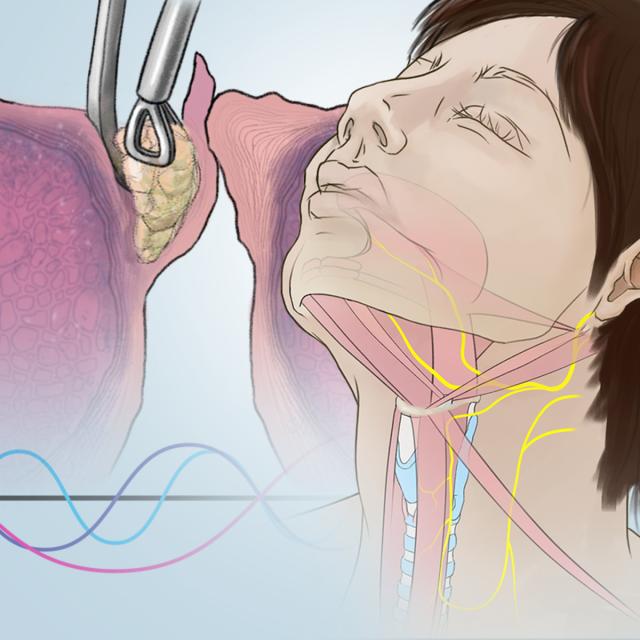
Knowledge regarding vocal production physiology and management options for voice disorders have experienced rapid growth over the past 40 years. This growth has resulted in a knowledge gap amongst patients and practitioners. Entirely new subspecialties of laryngology under otolaryngology and vocology under speech-language pathology have developed in response to this gap. This MOOC (Massive Open Online Course) is designed to educated patients, allied healthcare providers, vocal trainers/coaches, general medical practitioners and otolaryngologists.

Sep 28th 2026
5-12 Weeks
Promote your Scientific Results (Coursera) Coursera
Institut Mines-Telecom

Promote your Scientific Results (Coursera)

Whether you are a member of the natural or human science community, if you are a PhD student, professor, part of an academic department or international research team, or self-employed and you wish to showcase your work to a wider audience then this is the perfect course for you. You will learn how to promote your work to professional peers, the general public, as well as the media.

Oct 5th 2026
5-12 Weeks
The Art of the Job Interview (Coursera) Coursera
Big Interview

The Art of the Job Interview (Coursera)

Learn how to prepare for a job interview the right way! This unique collaboration between Big Interview and Coursera will teach proven techniques to help you turn your interviews into job offers. You'll learn what interview questions to expect and how to answer them. You'll also get access to interactive tools to guide you in outlining answers to key questions and practicing until you feel confident. The course also provides guidance on how to optimize your resume using the Big Interview resume builder and how to use networking to uncover more job leads.

Oct 5th 2026
5-12 Weeks
Successful Interviewing (Coursera) Coursera
University of Maryland, College Park

Successful Interviewing (Coursera)

The goal of hiring managers is not just to hire people who need a job. It’s to hire people who believe in their organization, its mission and the work that’s involved in the job position. Every hiring manager knows: Hire people to do a job and they’ll work for your money. Hire people who believe in the work and they’ll work for their passion. And this is not a case of “fake it until you make it.” You have to be genuine about your belief in an organization and its mission. That means you have to have researched the industry, the company, and the position – and be able to show how your goals in life align with the company’s mission.

Sep 28th 2026
5-12 Weeks
ADHD: Everyday Strategies for Elementary Students (Coursera) Coursera
University at Buffalo,The State University of New York

ADHD: Everyday Strategies for Elementary Students (Coursera)

This course will provide an overview of ADHD diagnosis and treatment. Course participants can expect to learn about ADHD as a developmental disorder that begins early in childhood, and participants will also learn about evidence-based approaches for diagnosing ADHD. Following that, two evidence-based treatment approaches (the Daily Report Card and Parenting Strategies) will be introduced. (Note these course activities are informational and are not intended to replace working with a licensed/trained professional).

Sep 28th 2026
4 Weeks
The Arts and Science of Relationships: Understanding Human Needs (Coursera) Coursera
University of Toronto

The Arts and Science of Relationships: Understanding Human Needs (Coursera)

This course provides an introduction to: 1- Basic concepts of The Strategies and Skills Learning and Development System (SSLD), their relevance for every day relationships and provide advanced concepts for participants who work in fields of social work and health care. 2- Basic practice principles and methods of SSLD, illustrated by relationship management case studies. 3- The SSLD framework for relationship management assessment; N3C (needs, circumstances, characteristics, capacity) and problem translation. 4- Core competencies in the relationship management application of the SSLD system: Observation learning, simulation, real life implementation, review and monitoring.

Oct 5th 2026
5-12 Weeks