Regression Analysis: Simplify Complex Data Relationships (Coursera)

Offered by Google,
Regression Analysis: Simplify Complex Data Relationships (Coursera)

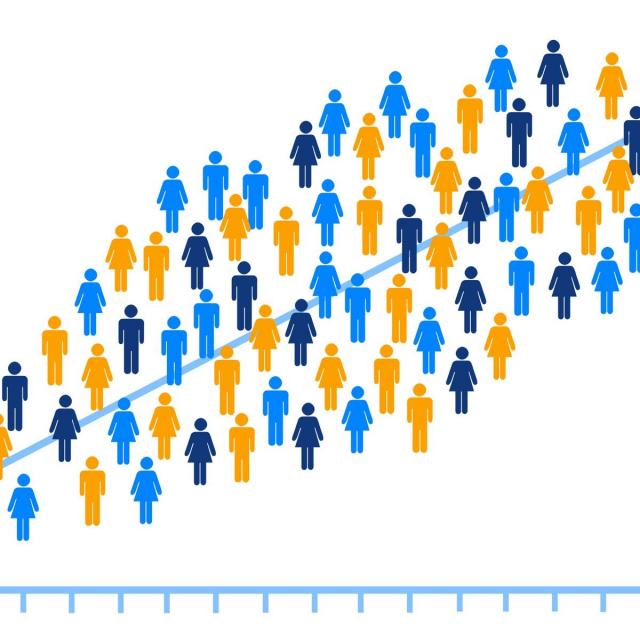
This is the fifth of seven courses in the Google Advanced Data Analytics Certificate. Data professionals use regression analysis to discover the relationships between different variables in a dataset and identify key factors that affect business performance. In this course, you’ll practice modeling variable relationships. You'll learn about different methods of data modeling and how to use them to approach business problems. You’ll also explore methods such as linear regression, analysis of variance (ANOVA), and logistic regression.

Class Deals by MOOC List - Click here and see Coursera's Active Discounts, Deals, and Promo Codes.

Google employees who currently work in the field will guide you through this course by providing hands-on activities that simulate relevant tasks, sharing examples from their day-to-day work, and helping you enhance your data analytics skills to prepare for your career.
Learners who complete the seven courses in this program will have the skills needed to apply for data science and advanced data analytics jobs. This certificate assumes prior knowledge of foundational analytical principles, skills, and tools covered in the Google Data Analytics Certificate.
By the end of this course, you will:
-Explore the use of predictive models to describe variable relationships, with an emphasis on correlation
-Determine how multiple regression builds upon simple linear regression at every step of the modeling process
-Run and interpret one-way and two-way ANOVA tests
-Construct different types of logistic regressions including binomial, multinomial, ordinal, and Poisson log-linear regression models
This course is part of the Google Advanced Data Analytics Professional Certificate.

Syllabus

WEEK 1
Introduction to complex data relationships
You’ll begin by exploring the main steps for building regression models, from identifying your assumptions to interpreting your results. Next, you’ll explore the two main types of regression: linear and logistic. You’ll learn how data professionals use linear and logistic regression to approach different kinds of business problems.

WEEK 2
Simple linear regression
You’ll explore how to use models to describe complex data relationships. You’ll focus on relationships of correlation. Then, you’ll build a simple linear regression model in Python and interpret your results.

WEEK 3
Multiple linear regression
After simple regression, you’ll move on to a more complex regression model: multiple linear regression. You’ll consider how multiple regression builds on simple linear regression at every step of the modeling process. You’ll also get a preview of some key topics in machine learning: selection, overfitting, and the bias-variance tradeoff.

WEEK 4
Advanced hypothesis testing
You’ll build on your prior knowledge of hypothesis testing to explore two more statistical tests: Chi-squared and analysis of variance (ANOVA). You’ll learn how data professionals use these tests to analyze different types of data. Finally, you’ll conduct two kinds of Chi-squared tests, as well as one-way and two-way ANOVA tests.

WEEK 5
Logistic regression
You’ll investigate binomial logistic regression, a type of regression analysis that classifies data into two categories. You’ll learn how to build a binomial logistic regression model and how data professionals use this type of model to gain insights from their data.

WEEK 6
Course 5 end-of-course project
You’ll complete an end-of-course project by building a regression model to analyze a workplace scenario dataset.

Go to Class
MOOC List is learner-supported. When you buy through links on our site, we may earn an affiliate commission.

Related Courses

Accounting Data Analytics with Python (Coursera) Coursera
University of Illinois at Urbana-Champaign

Accounting Data Analytics with Python (Coursera)

This course focuses on developing Python skills for assembling business data. It will cover some of the same material from Introduction to Accounting Data Analytics and Visualization, but in a more general purpose programming environment (Jupyter Notebook for Python), rather than in Excel and the Visual Basic Editor. These concepts are taught within the context of one or more accounting data domains (e.g., financial statement data from EDGAR, stock data, loan data, point-of-sale data).

Jun 22nd 2026
5-12 Weeks
Linear Regression and Modeling (Coursera) Coursera
Duke University

Linear Regression and Modeling (Coursera)

This course introduces simple and multiple linear regression models. These models allow you to assess the relationship between variables in a data set and a continuous response variable. Is there a relationship between the physical attractiveness of a professor and their student evaluation scores? Can we predict the test score for a child based on certain characteristics of his or her mother? In this course, you will learn the fundamental theory behind linear regression and, through data examples, learn to fit, examine, and utilize regression models to examine relationships between multiple variables, using the free statistical software R and RStudio.

Jun 22nd 2026
4 Weeks
Managerial Accounting: Tools for Facilitating and Guiding Business Decisions (Coursera) Coursera
University of Illinois at Urbana-Champaign

Managerial Accounting: Tools for Facilitating and Guiding Business Decisions (Coursera)

In this course, you will explore how to use accounting to allocate resources and incentivize manager and employee behaviors in using these resources. You will also learn how financial and non-financial accounting information facilitates strategic performance measurement and how to integrate this information to continuously improve strategy.

Jun 22nd 2026
4 Weeks
Machine Learning: Regression (Coursera) Coursera
University of Washington

Machine Learning: Regression (Coursera)

Case Study - Predicting Housing Prices. In our first case study, predicting house prices, you will create models that predict a continuous value (price) from input features (square footage, number of bedrooms and bathrooms,...). This is just one of the many places where regression can be applied. Other applications range from predicting health outcomes in medicine, stock prices in finance, and power usage in high-performance computing, to analyzing which regulators are important for gene expression.

Jun 22nd 2026
5-12 Weeks
Predicción de Ventas Pronosticando Tendencias (Coursera) Coursera
Coursera Project Network

Predicción de Ventas Pronosticando Tendencias (Coursera)

En este curso basado en un proyecto y de 2 horas de duración, aprenderás a realizar pronósticos de tendencia y a entender cómo los pronósticos apoyan la toma de decisiones. Aprenderás a utilizar hojas de cálculo para visualizar y realizar un examen estadístico de datos analizando la pendiente de la línea de regresión y creando una gráfica de línea. Al final del curso entenderás cómo evaluar los modelos y cuándo utilizar técnicas de ingeniería para mejorar la exactitud de la previsión.

Jun 22nd 2026
Self-Paced
Web Application Development: Basic Concepts (Coursera) Coursera
University of New Mexico

Web Application Development: Basic Concepts (Coursera)

This is the first course in a Coursera Specialization track involving Web Application Architectures. This course will give you the basic background, terminology and fundamental concepts that you need to understand in order to build modern full stack web applications. A full stack web developer is familiar with each "layer" of the software technologies involved in a web application, including data modeling and database technologies, the web server environment and middleware components, network protocols, the user interface and basic visual design and user interaction concepts.

Jun 22nd 2026
5-12 Weeks
Introducción al Aprendizaje Profundo (Coursera) Coursera
Universidad Austral

Introducción al Aprendizaje Profundo (Coursera)

Este curso te brindará los conocimientos introductorios sobre Aprendizaje Profundo, vas a entender los fundamentos teóricos y su implementación . Se comenzará entendiendo cómo evolucionó el campo hasta llegar a las redes profundas y cuáles son sus principales beneficios frente a otras técnicas de aprendizaje supervisado, así como también sus limitaciones y situaciones en donde no posee un rendimiento superior

Jun 22nd 2026
4 Weeks
Modelos predictivos con aprendizaje automático (Coursera) Coursera
Universidad de los Andes

Modelos predictivos con aprendizaje automático (Coursera)

Este curso te va a brindar conocimientos, tanto teóricos como prácticos, para que puedas construir modelos predictivos utilizando técnicas de aprendizaje automático (en inglés, machine learning). Estos modelos nos permiten anticipar en alguna medida eventos futuros y, en consecuencia, pueden ser utilizados para apoyar la toma de decisiones en las organizaciones y, en general, en cualquier dominio de aplicación. El curso consta de 4 módulos, cada uno de una semana, en los cuales vas a tener la oportunidad de conocer y analizar diferentes casos de estudio con el objetivo de que tengas un panorama amplio de las aplicaciones de los modelos predictivos.

Jun 22nd 2026
4 Weeks
ANOVA and Experimental Design (Coursera) Coursera
University of Colorado Boulder

ANOVA and Experimental Design (Coursera)

This second course in statistical modeling will introduce students to the study of the analysis of variance (ANOVA), analysis of covariance (ANCOVA), and experimental design. ANOVA and ANCOVA, presented as a type of linear regression model, will provide the mathematical basis for designing experiments for data science applications. Emphasis will be placed on important design-related concepts, such as randomization, blocking, factorial design, and causality. Some attention will also be given to ethical issues raised in experimentation.

Jun 22nd 2026
4 Weeks