Reclaiming the Street for Livable Urban Spaces (Coursera)

Reclaiming the Street for Livable Urban Spaces (Coursera)

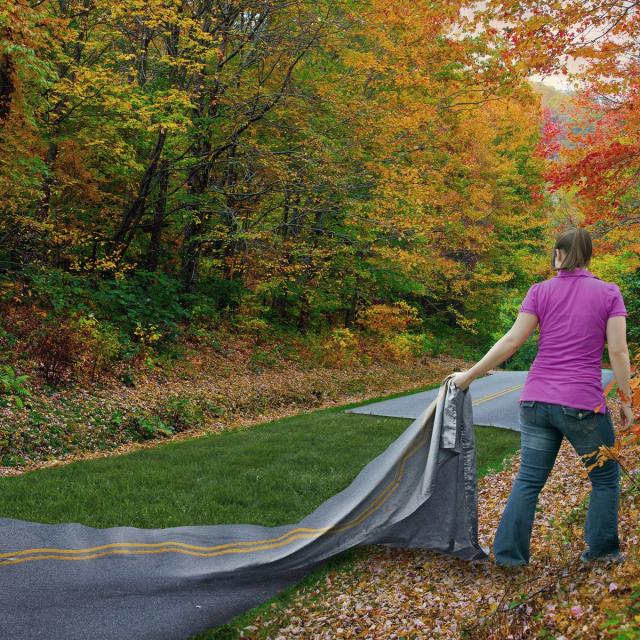
In Reclaiming the Street, you will learn about the mechanisms of change and challenges you to apply this knowledge to start creating vibrant streetscapes in your neighbourhood. This six week course will guide you through seminal academic work on the topics of transition management and street experiments while providing practical insights from practitioners from around the world. A final peer-reviewed project integrates key takeaways from each module of this course to help you write an actionable plan for change.

Class Deals by MOOC List - Click here and see Coursera's Active Discounts, Deals, and Promo Codes.

This online course is supported by the EIT Urban Mobility’s Competence Hub. EIT Urban Mobility is an initiative of the European Institute of Innovation and Technology (EIT) that has been working since January 2019 to encourage positive changes in the way people move around cities in order to make them more sustainable and liveable places.

What You Will Learn

  • Explore the street as a space for experimentation and an arena for transitioning towards a new mobility paradigm
  • Understand how tactical urbanism can be deployed for maximum effectiveness in changing the streetscape
  • Articulate the relationship between citizen activism and the bureaucratic structure
  • Re-imagine the street as a space for people rather than infrastructure for moving traffic

Syllabus

WEEK 1
1 — Understanding Transitions in Mobility
In the wake of the COVID-19 pandemic, we have seen changes to the streetscape happening in cities all around the world. While the fast pace of these changes is promising for building a world less dependent on automobiles, one unanswered question remains: Are these renewed streets here to stay? In this module, we introduce you to the "transitions framework" to understand how change happens in the mobility system at different scales in society, As we progress through this course, your understanding of this framework will help you identify where your efforts can be best applied in creating change.

WEEK 2
2 — Streets as Transition Experiments
How do experiments play out on the street? You will be pleased to discover that creating change in public space can be a bottom-up process driven by temporary initiatives. We examine how temporary experiments can then be solidified into policies and permanent street changes after a successful experiment concludes. Oakland, USA and Milan, Italy are two places where policy makers have announced ambitious plans to transform their streets after witnessing a high level of political support for their experimental initiatives.

WEEK 3
3 — Living World vs. System World
What happens when citizens encounter a bureaucracy? It is no easy feat to instill a system level change in large systems, whether it is government or another large technocratic organization. But even the largest bureaucracies are staffed by individual people, just like you and me. Where front-line individuals of an organization meet their constituents, the results can be particularly interesting. With certain rules and procedures in place, street-level professional have to be creative in how they navigate the conservative system world in order to create change that matters in the dynamic living world. We go to France to understand how activist groups have deployed their tactics to create change in the bureaucracy.

WEEK 4
4 — Redefining Traffic in Cities
What is the role of traffic in our cities? While mobility (virtual and physical) is essential to accessing opportunity, is it possible to achieve mobility without traffic? In this block, you will read an academic paper that visits five cities around the world to explore creative solutions to the problem of traffic. In doing so, we find that by moving people more efficiently, we are able to repurpose the reclaimed space for more valuable uses, even in the middle of a highway. As it turns out, changing the way we talk about traffic, especially moving away from utilitarian language, is a powerful way to change perceptions of traffic for yourself and others.

WEEK 5
5 — Guerilla Style
What can individuals do to change the system? As it turns out, a connected group individuals united in a common goal is far more effective at creating change than any one person alone. You will read about how activists in London and Amsterdam leverage their internal and external relationships to mediate between themselves and the bureaucracy. We then go to New York for a reminder that traffic is not carved in stone. It is a clear sign of change when streets are eerily empty in a famous city known for its gridlock traffic.

WEEK 6
6 — Wrapping up the Course
Go to Class
MOOC List is learner-supported. When you buy through links on our site, we may earn an affiliate commission.

Related Courses

Introduction to Faecal Sludge Management (Coursera) Coursera
École Polytechnique Fédérale de Lausanne

Introduction to Faecal Sludge Management (Coursera)

Do you want learn how to apply concepts of sustainable faecal sludge management (FSM) on a city-wide scale? This course starts with an overview of what faecal sludge is and an introduces you to the engineering fundamentals and required information for the design and selection of technologies. Sanitation solutions are prone to failure if an integrated planning approach that includes stakeholder involvement and the development of appropriate institutional, management and financial arrangements is not implemented.

May 18th 2026
5-12 Weeks
Transformando la Movilidad Urbana: Introducción a la Planeación del Transporte para Ciudades Sostenibles (FutureLearn) FutureLearn
University College London,Transforming Urban Mobility Initiative - TUMI,GIZ,Euroclima+

Transformando la Movilidad Urbana: Introducción a la Planeación del Transporte para Ciudades Sostenibles (FutureLearn)

Descubre las diferentes dimensiones de la movilidad urbana sostenible, incluyendo el marco Evitar-Cambiar-Mejorar ECM. Se recomienda traducir completamente esta página usando la función de traducción del navegador antes de continuar. Aprende cómo los proyectos de movilidad urbana pueden ayudar a crear ciudades sostenibles.

Nov 13th 2023
4 Weeks
Electric Two-and-Three-Wheelers: Steering the Mobility Revolution (FutureLearn) FutureLearn
RWTH Aachen,Transforming Urban Mobility Initiative - TUMI,GIZ,PEM Motion

Electric Two-and-Three-Wheelers: Steering the Mobility Revolution (FutureLearn)

Join this six-week course to explore the surging popularity of electric two-and-three-wheelers across the globe. The electric transportation sector is a rapidly changing industry that relies on innovative leaders to help shape policy and strive to create empowering solutions for the future. This six-week course offers an in-depth look into the surging popularity of electric two-and-three-wheelers across the globe, particularly in the Global South.

Mar 23rd 2026
5-12 Weeks
Strong sustainability and Europe (FUN) FUN
Université Clermont Auvergne

Strong sustainability and Europe (FUN)

Sustainable development, popularized by the Brundtland Report, was defined at the end of the 1980s in three spheres (economic, environmental and social). It is this representation that continues today to be disseminated to the public and to large companies. The objective of this MOOC is to question the major challenges of development for Europe in a perspective of strong sustainability (energy, climate, biodiversity, food, mobility, agriculture, natural resources, education...) and to propose alternatives.

Sep 12th 2022
5-12 Weeks
Hydrogen for Mobility (IFP School) Other Providers
IFP School

Hydrogen for Mobility (IFP School)

Hydrogen is a hot topic nowadays. Why? Because society must find solutions to reduce its impact on climate change and because there is now a political will (in Europe) to develop a hydrogen economy. The mobility sector, and in particular the heavy mobility, is concerned by this transformation. After some general information about hydrogen production and the hydrogen economy, you will gain a deep understanding of the hydrogen solution for mobility. We will explore both the fuel cells and the hydrogen thermal engine solutions as a mean to reduce the environmental footprint of heavy mobility.

Jan 16th 2023
1 Week
Sustainable Transportation Networks and Streetscapes (Coursera) Coursera
Johns Hopkins University

Sustainable Transportation Networks and Streetscapes (Coursera)

This course will evaluate best practices in transportation networks, thoroughfares, and streetscape designs for the effective movement of people, goods, and services in a region. Sustainable public and private streetscape design and application will be reviewed and evaluated for applications for sustainable cities. Considerations are assessed for smart urban planning, growth, and lifestyle. Strategies for creating equitable, healthy, and sustainable communities are also evaluated.

Jun 1st 2026
3 Weeks
Alternative Mobility Narratives (Coursera) Coursera
University of Amsterdam,EIT Urban Mobility

Alternative Mobility Narratives (Coursera)

Ready to imagine a radically different mobility future? This course is about the stories that we tell ourselves about why and how we move. By critically examining our current narratives, we help you think about mobility in a new way. Using systems dynamics modelling, we explore how a mobility innovation (of your choice) impacts our mobility system as a whole, for better or for worse. This course will invite you to reflect on our mainstream mobility narrative built on engineering and economics. But warning: you may end up never looking at mobility in the same way again!

Jun 8th 2026
5-12 Weeks
Street Experiments for Sustainable and Resilient cities (Coursera) Coursera
Technische Universität München - TUM,EIT Urban Mobility

Street Experiments for Sustainable and Resilient cities (Coursera)

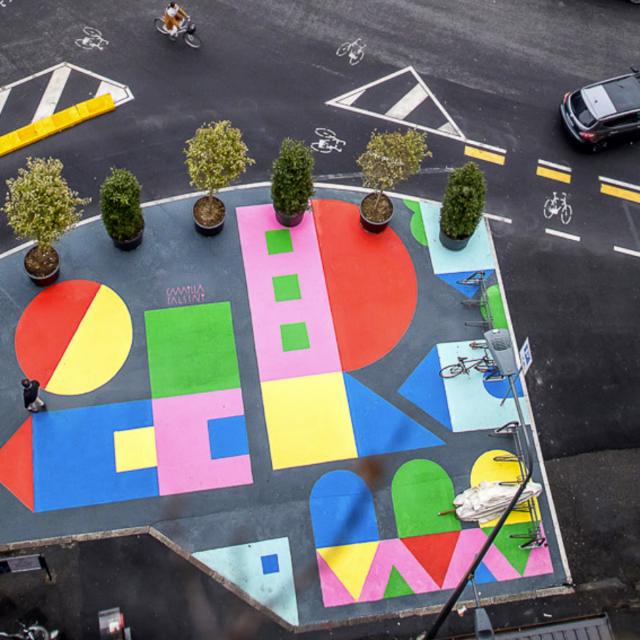
Our streetscape, despite its feeling of permanence in our environment, is an ideal venue for experimentation. We have come to accept traffic movement as the default function for the street. Therefore, we need to rethink its design and space distribution, go back to its original and basic function and see them as public spaces - Transform them into places for social activities, where conversations can take place and places where kids can play.

Jun 8th 2026
4 Weeks
Robotics: Mobility (Coursera) Coursera
University of Pennsylvania

Robotics: Mobility (Coursera)

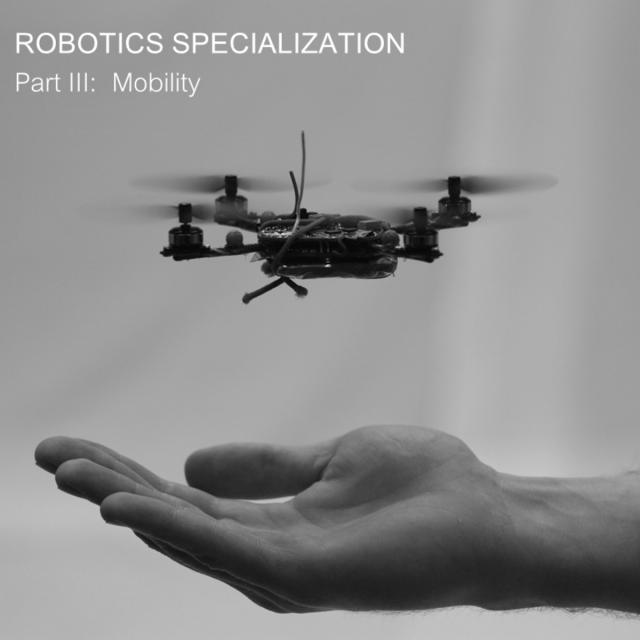
How can robots use their motors and sensors to move around in an unstructured environment? You will understand how to design robot bodies and behaviors that recruit limbs and more general appendages to apply physical forces that confer reliable mobility in a complex and dynamic world. We develop an approach to composing simple dynamical abstractions that partially automate the generation of complicated sensorimotor programs.

Jan 6th 2025
4 Weeks