Questions, Present Progressive and Future Tenses (Coursera)

Questions, Present Progressive and Future Tenses (Coursera)

In this course, “Questions, Present Progressive and Future Tenses,” you will learn about question words in English and how to form questions in the simple present. Then you will learn how to form the present progressive to express ideas about things that are happening right now. You will look at the differences between the simple present and present progressive. Finally, you will learn how to use “to be going to” and the present progressive to talk about the future and how to use “can” to talk about ability.

Class Deals by MOOC List - Click here and see Coursera's Active Discounts, Deals, and Promo Codes.

Course 2 of 3 in the Learn English: Beginning Grammar Specialization

Syllabus

WEEK 1
Information Questions Simple Present
We will start this week with question words. You will learn how to ask information questions in the simple present. Information questions are questions where the answer is not "yes" or "no." The answer is some information. For example, “Where are you?” is an information question because the answer is not “yes.” It is, “I’m at school.”

WEEK 2
Count/Noncount Nouns & Present Progressive
This week, you will learn more about nouns: count nouns and non-count nouns. This will help you ask questions like “How many brothers do you have?” and “How much time do you need?” Then we will look at the present progressive. This is another verb tense in English. The present progressive tells about things that are happening now. You will learn about how to form it and also how to make the negative.

WEEK 3
Present Progressive Question & Signal Words
This week is all about asking questions with the present progressive. You will learn how to ask yes/no questions and information questions. Then we will compare simple present and present progressive so you can see when to use each. You will learn about signal words and the difference between sentences like “I speak English” and “I am speaking English.”

WEEK 4
Future Forms & Can
Now that you know how to form the present progressive, this week you will see how we use “be going to” and the present progressive to talk about the future. You will also learn how to use “can” to talk about what you can and can’t do.

Go to Class
MOOC List is learner-supported. When you buy through links on our site, we may earn an affiliate commission.

Related Courses

Techniques for Teaching Adjectives and Adjective Clauses (Coursera) Coursera
University of California, Irvine

Techniques for Teaching Adjectives and Adjective Clauses (Coursera)

This is the second course in the Teach English: Intermediate Grammar specialization. In this course, you will learn how to effectively teach adjectives, adjective phrases, and adjective clauses to your students. You will learn what makes this grammar difficult for students and how to make it easier for them. You will also learn a variety of activities and methods for teaching this content in a fun and interesting way.

Oct 19th 2026
4 Weeks
Business English for Cross-cultural Communication (Coursera) Coursera
The Hong Kong University of Science and Technology - HKUST

Business English for Cross-cultural Communication (Coursera)

This course aims to prepare you for working in an cross-cultural Business setting. We'll learn about common cross-cultural theories and how they are relevant to everyday business practices in a globalised world. By combining all of your vocabulary, reading, speaking, and writing skills that you acquired in the previous three courses, you will learn how language plays an important role in cross-cultural communication.

Oct 19th 2026
5-12 Weeks
English and Academic Preparation - Grad Track (Coursera) Coursera
Rice University

English and Academic Preparation - Grad Track (Coursera)

The English and Academic Preparation – Grad Track course is for students with a (minimum) advanced level of English. It is designed to help international students strengthen their English while developing academic skills necessary for success in graduate studies at an American university. Ideally, prospective students have completed or are near completion of a bachelor’s degree in their country and would like to come to the United States to study for a master’s or doctorate degree.

Nov 2nd 2026
4 Weeks
Children Acquiring Literacy Naturally (Coursera) Coursera
University of California, Santa Cruz

Children Acquiring Literacy Naturally (Coursera)

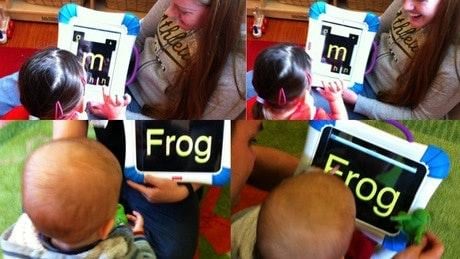
In this short course you will explore the possibility that children might acquire written language in a way that is similar to how they acquire spoken language—without instruction. You will encounter various aspects of behavioral science and technology that are relevant to this proposition. You will have the opportunity to learn the the perceptual, cognitive, and neurological capacities of children during their first years of life. You will advance your understanding of children and how they learn language. You will also be more attuned to current advances in the technology of human machine interactions, and what these phenomena imply for learning to read at an early age.

Oct 26th 2026
3 Weeks
Writing for Young Readers: Opening the Treasure Chest (Coursera) Coursera
Commonwealth Education Trust

Writing for Young Readers: Opening the Treasure Chest (Coursera)

This course is for curious students and aspiring authors with a passion for writing for young readers. Participate in a dynamic online community of writers as you experiment with your own writing and develop your voice. This course will guide you with a combination of video lectures, online readings, peer reviews, and guest appearances from world-renowned children’s authors. As you work through the writing exercises, you will give and receive feedback from your peers and gain tools and techniques for improving your writing.

Oct 19th 2026
5-12 Weeks
English for Effective Business Speaking (Coursera) Coursera
The Hong Kong University of Science and Technology - HKUST

English for Effective Business Speaking (Coursera)

This course aims to improve your Business English speaking skills by developing your use of vocabulary, grammar, pronunciation, spoken communication skills within a Business context, and your ability to deliver professional business speeches for specific purposes. Skills learned in this course will be used in the cross-cultural communications course and help prepare you to deliver the professional business presentation in the Capstone project.

Oct 19th 2026
5-12 Weeks
Teaching EFL/ESL Reading: A Task Based Approach (Coursera) Coursera
University of London,UCL Institute of Education

Teaching EFL/ESL Reading: A Task Based Approach (Coursera)

This course explores ways of teaching reading skills in English as Second and Foreign Language (ESL/EFL) using a task-based approach. You will be introduced to the concept of task and the key principles of task-based language teaching (TBLT) and learning. TBLT uses communicative tasks as the key unit for creating language learning activities. You will also examine the role of reading in real-life and in second and foreign language teaching and current thinking about the interface between TBLT and second language reading.

Oct 26th 2026
5-12 Weeks
Translation in Practice (Coursera) Coursera
Nanjing University

Translation in Practice (Coursera)

This course offers you basic but valuable techniques used by a good translator in the translation between English and Chinese. We’ll discuss what is translation, what is good translation, and learn about how to produce good translations. All the examples used in this course are taken from the course instructor's own translations of various genres and topics of writing.

Nov 2nd 2026
5-12 Weeks
Writing in English at University (Coursera) Coursera
Lund University

Writing in English at University (Coursera)

Acquiring good academic research and writing skills early on is essential for your success both at university and in your professional life. This course aims: - to give you an understanding of the conventions of academic writing in English and to teach you the components and benefits of what is called process writing. - to help you to put together your own “toolbox” of academic writing skills, as well as to give you a chance to test out these tools and to reflect on your own development as a writer. - to encourage reflection on discipline specific conventions; although the course deals with generic skills, you will be able to apply these generic skills to meet the particular needs of your own discipline.

Nov 2nd 2026
4 Weeks
Writing Winning Resumes and Cover Letters (Coursera) Coursera
University of Maryland, College Park

Writing Winning Resumes and Cover Letters (Coursera)

How can you bring your resume to the top of the pile? How can you present yourself to prospective employers using the language they already speak inside their company? This course will give you answers to those questions. You will learn how to convert a boring resume into a dynamic asset statement that conveys your talents in the language that an employer understands.

Oct 19th 2026
4 Weeks