Primeros Auxilios Psicológicos (Coursera)

Primeros Auxilios Psicológicos (Coursera)

Este curso de primeros auxilios psicológicos, o primera ayuda psicológica (PAP), busca mostrarte uno de los modos de rescate y asistencia de primera línea para las personas afectadas por incidentes críticos y potencialmente traumáticos, como son los incendios, inundaciones, actos de terrorismo y otras situaciones similares.

Class Deals by MOOC List - Click here and see Coursera's Active Discounts, Deals, and Promo Codes.

La prestación del apoyo básico, seguridad física y atención, inmediatamente después de un evento crítico, se consideran importantes para la reducción de los efectos negativos a corto, mediano y largo plazo de los desastres y otras situaciones de emergencia. La PAP es un modo de rescate y asistencia que pueden aplicar tanto rescatistas profesionales como personas sin formación profesional.

A su vez, se persiguen los siguientes objetivos generales:
• Reconocer las características de los desastres.
• Conocer la respuesta de estrés de las personas ante situaciones de peligro.
• Aprender sobre los trastornos mentales.
• Conocer cuáles son y qué características tienen los trastornos mentales asociados a los desastres.
• Conocer las características de la intervención de primeros auxilios psicológicos: fundamentos, principios, y objetivos.
• Conocer qué características de las personas pueden ayudar a actuar más efectivamente en el rescate de personas afectadas por desastres.

Syllabus

WEEK 1
Los desastres
¿Qué son los desastres? Este es el tema central al que te abocarás esta semana.
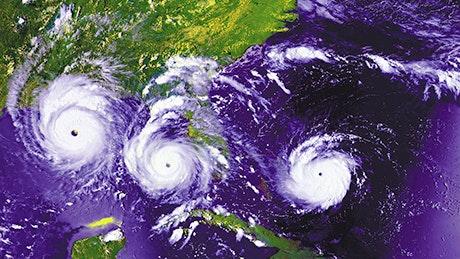
Los desastres pueden tomar muchas formas. Algunos de ellos son naturales, como un tornado, una inundación o un incendio. Otros son consecuencia de las acciones de los seres humanos, como los atentados terroristas. Nos interesan los desastres porque como eventos de alto impacto pueden causar consecuencias negativas en la salud física y mental de las personas afectadas. Conocer sobre los posibles desastres también puede ayudar para que las comunidades intenten tener una preparación.

WEEK 2
Los trastornos mentales y los desastres
En esta semana explorarás cómo, naturalmente, los desastres pueden tener un impacto negativo en el ser humano a corto, mediano o largo plazo. Uno de los desenlaces de los desastres es que pueden desencadenar en el ser humano un tipo de malestar, llamado trastorno mental. Los trastornos mentales han sido estudiados por largo tiempo y pueden pensarse como la contraparte de los trastornos físicos o médicos comunes, ya que pueden provocar un grado de sufrimiento o deterioro de la vida diaria de las personas. Actualmente, existen dos clasificaciones de los trastornos mentales que son muy relevantes para la clínica y la investigación psicológicas. Por una parte, el Manual diagnóstico y estadístico de los trastornos mentales (DSM-5) , por otra, la Clasificación internacional de enfermedades, que es una publicación de la Organización Mundial de la Salud. Dentro de esos manuales encontramos algunos de los trastornos más frecuentes provocados por los desastres, por ejemplo, el trastorno de estrés postraumático, la depresión y la ansiedad generalizada.

WEEK 3
Tratamientos para trastornos mentales vinculados a desastres
La semana anterior aprendiste qué son los trastornos mentales y dos sistemas de clasificación de estos. En esta semana verás que hay tratamientos para ayudar a las personas que han sufrido impactos psicológicos negativos y que mucho tiempo después permanecen con malestar psicológico persistente.

WEEK 4
Primeros auxilios psicológicos
En esta semana explorarás el concepto de “primeros auxilios psicológicos” o primera ayuda psicológica (PAP), considerándolos como un modo de asistir y rescatar a las personas afectadas por desastres en los momentos iniciales de esa situación. Es algo que se hace en el terreno con la persona afectada. Como modo de asistencia a las personas afectadas por desastres, la PAP tiene el respaldo de importantes y reconocidas instituciones a nivel mundial, como la Organización Mundial de la Salud, la Organización del Tratado del Atlántico Norte o el Instituto Nacional de la Salud Mental de EE. UU. La PAP puede ser ofrecida inclusive por personas sin formación académica universitaria profesional en Psicología, Medicina o carreras afines, pero formadas en la PAP. La PAP puede considerarse como un tipo de rescate humano y racional destinado a las personas afectadas por desastres de modo que permita prevenir o reducir los efectos psicológicos negativos desencadenados por los desastres y prevenir los trastornos mentales a corto, mediano y a largo plazo.

Go to Class
MOOC List is learner-supported. When you buy through links on our site, we may earn an affiliate commission.

Related Courses

Machine Design Part I (Coursera) Coursera
Georgia Institute of Technology

Machine Design Part I (Coursera)

“Machine Design Part I” is the first course in an in-depth three course series of “Machine Design.” The “Machine Design” Coursera series covers fundamental mechanical design topics, such as static and fatigue failure theories, the analysis of shafts, fasteners, and gears, and the design of mechanical systems such as gearboxes. Throughout this series of courses we will examine a number of exciting design case studies, including the material selection of a total hip implant, the design and testing of the wing on the 777 aircraft, and the impact of dynamic loads on the design of an bolted pressure vessel. In this first course, you will learn robust analysis techniques to predict and validate design performance and life.

Sep 14th 2026
5-12 Weeks
Less Stress, Better Health (Coursera) Coursera
American Psychological Association

Less Stress, Better Health (Coursera)

Stress is a natural part of the human experience. However, stress can also be damaging to people’s physical and psychological health. This course provides an introduction to stress in general and then explores the psychological, physiological, and social consequences of stress. It ends with information on how you can combat the negative effects of stress and build resilience so you can not just survive stress, but also use it to help you grow.

Aug 31st 2026
5-12 Weeks
Literature and Mental Health: Reading for Wellbeing (FutureLearn) FutureLearn
The University of Warwick

Literature and Mental Health: Reading for Wellbeing (FutureLearn)

Find out how poems, plays and novels can help us understand and cope with deep emotional strain in this free online course. The great 18th century writer Dr Samuel Johnson, who suffered from severe bouts of depression, said “the only end of writing is to enable the reader better to enjoy life or better to endure it.” This free online course will explore how enjoying literature can help us to endure life.

No sessions available
5-12 Weeks
Humanitarian Response to Conflict and Disaster (edX) EdX
HarvardX,Harvard University

Humanitarian Response to Conflict and Disaster (edX)

Learn the principles guiding humanitarian response to modern emergencies, and the challenges faced in the field today. From the Syrian refugee crisis to the West Africa Ebola outbreak, humanitarian emergencies have reached unprecedented dimensions and proportions. As need for humanitarian aid grows, how can efforts to alleviate human suffering evolve with it? This course from the Harvard Humanitarian Initiative and HarvardX seeks to prepare learners to recognize and analyze emerging challenges in the humanitarian field.

Self Paced
Self-Paced
Introduction to Clinical Psychology (edX) EdX
University of Queensland,UQx

Introduction to Clinical Psychology (edX)

Learn about the principles underlying psychological therapy and the features and treatment of common mental disorders, including anxiety, depression and schizophrenia. Have you ever wondered what causes mental illness, or why we react to stress the way we do? Or what to expect as you get older? Clinical psychology is the study of psychological disorders and the treatments designed to improve the day-to-day lives of people suffering from them.

Self Paced
Self-Paced
Post-Traumatic Stress Disorder (PTSD) in the Global Context (FutureLearn) FutureLearn
University of Glasgow

Post-Traumatic Stress Disorder (PTSD) in the Global Context (FutureLearn)

Learn how to identify, assess the risk for, prevent and treat PTSD in a range of contexts. Learn about PTSD - its symptoms, prevalence, causes and treatment. Post-Traumatic Stress Disorder (PTSD) is the mental disorder most commonly associated with exposure to trauma. PTSD results from exposure to traumas which pose a threat of serious harm or death to an individual or people close to that individual. This includes conflict-related traumas, interpersonal traumas such as sexual assault, and exposure to serious accidents, such as a car accident or a house fire.

Self Paced
4 Weeks
Mindfulness_An Approach to Stress Reduction (Coursera) Coursera
Korea Advanced Institute of Science and Technology - KAIST

Mindfulness_An Approach to Stress Reduction (Coursera)

An essential guide to cultivating a healthy mindset and a stress-free lifestyle through practicing the art of mindfulness meditation—a discipline that ultimately leads to a profound understanding ourselves and our surroundings. Mindfulness is a simple, yet effective practice achievable by all people of all ages. It alleviates stress and negativity, while it restores a calm and serene lifestyle. Learning the practice of mindfulness is straightforward and its benefits come fast. In this course, we provide essential tips through sample guided meditations to get you started on living a happier and less stressful life. Take a deep breath, relax, and focus your attention.

Sep 14th 2026
5-12 Weeks
Understanding and Managing the Stresses of Police Work (Coursera) Coursera
University of Toronto

Understanding and Managing the Stresses of Police Work (Coursera)

This course has two goals. First, we want to inform officers how their stress system works and why they sometimes feel as they do. With this as a foundation we then describe some strategies officers can use to manage this system, giving themselves much needed breaks from the stress response and overall empowering them with a greater sense of control over how their bodies react to stress.

Aug 24th 2026
3 Weeks
Engineering of Structures: Shear and Bending (Coursera) Coursera
Dartmouth College

Engineering of Structures: Shear and Bending (Coursera)

This course deals with shear and bending. Shear is a set of parallel, non-collinear forces acting across an element and bending is the curved form taken by a slender element when subjected to loads perpendicular to the element. These forces are easy to understand. You will study how stress and bending force acts for different structures and also, identify what role these forces play in their designs.

Aug 31st 2026
3 Weeks
Disaster, Crisis, and Emergency Preparedness Communication (Coursera) Coursera
The State University of New York

Disaster, Crisis, and Emergency Preparedness Communication (Coursera)

This course will introduce you to basic concepts of emergency management, planning, and crisis risk communication. You will understand the definitions of and operational challenges associated with disasters and public health emergencies. You will identify important components of risk communication, and you will identify and evaluate the ways social characteristics shape vulnerabilities to crises and health outcomes.

Aug 24th 2026
4 Weeks
Disaster Recovery Planning for Organizations (Coursera) Coursera
Coursera Instructor Network

Disaster Recovery Planning for Organizations (Coursera)

"Disaster Recovery Planning" is an informative course that delves into the importance of DRP, Disaster Recovery Planning. With the world going ever deeply into tech, a lot of data servers have the potential of a disasterous incident making this DRP course the exact information you'll need. We will cover what a DRP is, how to develop, implement, and maintain said DRP. The benefit here is that the lessons will not just be organization focused but can also be personally focused. Any data and lessons from here can be done personally as well.

Aug 31st 2026
1 Week
Speak English Professionally: In Person, Online & On the Phone (Coursera) Coursera
Georgia Institute of Technology

Speak English Professionally: In Person, Online & On the Phone (Coursera)

Do you want to speak better English? This course will help you reach that goal. Speak English Professionally: In person, Online and On the Phone will boost your English speaking skills. In this 5 week course, you will learn how to identify and make a strong personal introduction. You will develop and demonstrate the speaking skills for group discussions: how to agree or disagree, how to clarify, restate and summarise. You will develop and demonstrate the speaking skills for group discussions: how to agree or disagree, how to clarify, restate and summarize.

Aug 24th 2026
5-12 Weeks