EdX

Performative Modelling (edX)

Performative Modelling (edX)

This course focuses on evaluating alternative spatial configurations to support evidence-based decision making. You will learn methods for calculating various spatial performance metrics related to the built environment that can be used for comparative analysis of design options.

Class Deals by MOOC List - Click here and see EdX's Active Discounts, Deals, and Promo Codes.

This course is the last in our “Spatial Computational Thinking” program. This “Performative Modelling” course focuses on evaluating alternative spatial configurations to support evidence-based decision making. You will learn methods for calculating various spatial performance metrics related to the built environment that can be used for comparative analysis of design process.
This course will build on the previous three courses that covered procedural, semantic, and generative modelling. In this course, you will switch modes from generating to evaluating spatial performance. Thus, you will be creating procedures for evaluating alternative spatial configurations with respect to a set of performance indicators. This will once again require an increase in coding complexity, together with a new set of strategies for managing that complexity.
In this course, you will learn how to create your own reusable and customised function libraries. You will use this powerful technique to create a set of generative and performative functions. The generative functions will be used to generate alternative spatial configurations for building designs. The performative functions will be used to evaluate various performance metrics. You will then combine these functions, evaluating each spatial configuration against each performance metric. Finally, you will develop procedures for visualizing and exporting the performance results in order to support decision making.
In the process, you will learn a powerful technique, the ability to import one flowchart into another flowchart and to use it as a function. This allows you to execute larger computational processes with many more procedures hidden inside it.
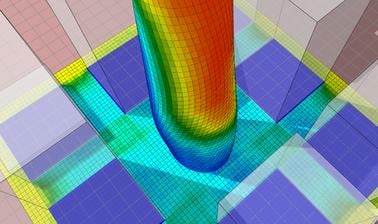
The modelling exercises and assignments during this course will mainly focus on evaluating alternative spatial configurations for buildings within the urban environment. A site will be selected, and procedures will be developed for calculating performance metrics using morphological and raytracing analysis methods. The morphological analysis includes plot ratio, compacity ratio, passive zone proportion, etc, while the raytracing analysis includes sky view factor, sun exposure factor, viewsheds, etc. The various metrics will then be weighted and aggregated, in order to allow alternative options to be easily compared.
Completing the four courses that make up the “Spatial Computational Thinking” program will provide you with the fundamental knowledge and skills required to tackle a wide variety computational design challenges using digital technologies.
This course is part of the Spatial Computational Thinking Professional Certificate.

What you'll learn

Learning algorithmic thinking:

  • How to evaluate alternative spatial configurations using morphological attributes and performance indicators
  • Use abstraction as a way of selectively exposing the parameters that are most relevant to the problem being investigated
  • Use encapsulation as a way of managing problem complexity

Learning performative modelling:

  • Analysing performance indicators using morphological analysis and raytracing analysis
  • Understanding morphological analysis: plot ratio, compacity ratio, passive zone proportion, etc
  • Understanding raytracing analysis: sky view factor, sun exposure factor, viewsheds, etc
  • Evaluating alternative spatial configurations based on multiple performance metrics
  • Strategies for supporting decision making using weighted performance metrics
  • Integrating non-spatial data formats into spatial information modeling workflows
  • Strategies for data visualization

Learning coding:

  • Understanding how to break down large procedures into a set of smaller functions
  • Understanding how to document functions to support reuse
  • Understanding how to create and share libraries of functions that can be reused

Learning Möbius Modeller:

  • Difference between local and global functions
  • Creating flowcharts that can be imported as global functions
  • Strategies for implementing with global functions
  • Working with the geospatial viewer
Go to Class
MOOC List is learner-supported. When you buy through links on our site, we may earn an affiliate commission.

Related Courses

Introduction to Java Programming: Starting to code in Java (edX) EdX
Universidad Carlos III de Madrid - UC3M,UC3Mx

Introduction to Java Programming: Starting to code in Java (edX)

Learn to program with Java in an easy and interactive way! In this introductory Java programming course, you will be introduced to powerful concepts such as functional abstraction, the object oriented programming (OOP) paradigm and Application Programming Interfaces (APIs). Examples and case studies will be provided so that you can implement simple programs on your own or collaborate with peers.

Self Paced
Self-Paced
Introduction to Python (Coursera) Coursera
Arizona State University

Introduction to Python (Coursera)

This specialization introduces the basics of the Python programming language and teaches how to implement solutions to real-world problems using Python syntax. Topics in this course range from utilizing integrated development environments (IDEs) to implementing Python syntax in scripts. Some of the position titles that may benefit from this course are computer scientist, computer engineer, software engineer, software developer, software tester, electrical engineer, mechanical engineer, chemical engineer and aerospace engineer.

Jul 27th 2026
5-12 Weeks
Automate Cybersecurity Tasks with Python (Coursera) Coursera
Google

Automate Cybersecurity Tasks with Python (Coursera)

This is the seventh course in the Google Cybersecurity Certificate. These courses will equip you with the skills you need to apply for an entry-level cybersecurity job. You’ll build on your understanding of the topics that were introduced in the sixth Google Cybersecurity Certificate course. In this course, you will be introduced to the Python programming language and apply it in a cybersecurity setting to automate tasks.

Jul 27th 2026
4 Weeks
Algorítmica Básica (edX) EdX
Tecnológico de Monterrey,TecdeMonterreyX

Algorítmica Básica (edX)

Aprende los fundamentos del pensamiento algorítmico, estructuras de datos y los principios básicos de programación con aplicación a los negocios. Los algoritmos pueden ser utilizados para la solución de problemas de negocio. En este curso aprenderás los conceptos básicos de algoritmos y el manejo de estructuras de datos.

Self Paced
Self-Paced
Introduction to Visual Basic Programming (Coursera) Coursera
LearnQuest

Introduction to Visual Basic Programming (Coursera)

This course is the second course in a series that aims to prepare you for a role working as a programmer. In this course, you will be introduced to the five main concepts in procedural programming: user input, console output, variable declaration and assignment, decision branching and iteration. Labs will allow the students to apply the material in the lectures in simple computer programs designed to re-enforce the material in the lesson.

Jul 27th 2026
4 Weeks
Algoritmos y Programación en R (edX) EdX
Tecnológico de Monterrey,TecdeMonterreyX

Algoritmos y Programación en R (edX)

Aprende los fundamentos del pensamiento algorítmico, estructuras de datos y los principios básicos de programación con aplicación a los negocios. Los algoritmos pueden ser utilizados para la solución de problemas de negocio. En este curso aprenderás los conceptos básicos de algoritmos y el manejo de estructuras de datos.

Self Paced
Self-Paced
How to Win Coding Competitions: Secrets of Champions (edX) EdX
ITMO University,ITMOx

How to Win Coding Competitions: Secrets of Champions (edX)

Enhance programming skills to boost your career and win prizes led by ITMO University, the only 6-time winner of the world’s top coding cup. Want to be the programmer hot tech companies are looking for? Take your programming skills to the next level and prove your excellence by learning how to succeed in programming competitions.

No sessions available
5-12 Weeks
Excel for Everyone: Data Management (edX) EdX
The University of British Columbia,UBCx

Excel for Everyone: Data Management (edX)

Further your Excel skills to manage larger datasets and more complex data wrangling, management and modelling. This intermediate Excel course builds on the teachings of the introductory Core Foundations course, teaching you to leverage the power of data calculations and reports to make informed personal or organizational decisions.

Self Paced
Self-Paced
JavaScript Interview Challenges (Coursera) Coursera
Scrimba

JavaScript Interview Challenges (Coursera)

Your essential tech interview preparation pack! Practice solving problems and honing the skills you need to succeed in a frontend coding interview. Are you applying for frontend developer roles? Do you wish to test out your JavaScript knowledge? Do you love solving code challenges? If any of the above applies to you, JavaScript Interview Challenges should be your next Scrimba course!

Jul 27th 2026
3 Weeks
Introduction to Java Programming: Writing Good Code (edX) EdX
Universidad Carlos III de Madrid - UC3M,UC3Mx

Introduction to Java Programming: Writing Good Code (edX)

Learn to program in an easy and interactive way and enter the fascinating world of computer science. This is an introductory course to learn programming with Java designed to teach how to code good programs in Java, understanding “good” as both correct and efficient. Basic principles of software engineering will be introduced to make it easier for our future self and others to reuse code. Ethical issues and the intellectual property of our programs will also be addressed in the last part of this course. Examples and case studies will be provided, so that learners can implement simple but increasingly complex programs in Java.

Self Paced
Self-Paced
Information Theory (Coursera) Coursera
The Chinese University of Hong Kong

Information Theory (Coursera)

At the completion of this course, the student should be able to: demonstrate knowledge and understanding of the fundamentals of information theory; appreciate the notion of fundamental limits in communication systems and more generally all systems; develop deeper understanding of communication systems; apply the concepts of information theory to various disciplines in information science.

Aug 10th 2026
13-24 Weeks