NFV Acceleration: An Introduction to OPNFV (Linux Foundation)

Offered by Linux Foundation,
NFV Acceleration: An Introduction to OPNFV (Linux Foundation)

Learn how Network Functions Virtualization (NFV) is moving the industry from fixed-function, proprietary devices to flexible, software-driven environments, and how OPNFV (Open Platform for NFV) can help make the transition easier. Open source networking projects are transforming how service providers and enterprises develop, deploy, and scale their networks and next-generation services.

Is your organization embarking on an NFV transformation journey? Do you believe open source software will play a critical role in this journey? Are you unclear how to integrate and test large, complex open source projects for your NFV use case? If yes, this course is for you.
This course offers an introduction to The Linux Foundation OPNFV project (Open Platform for NFV), providing the basics of Network Function Virtualization (NFV). It delves into the challenges OPNFV solves, with an overview of related projects and industry use cases. We will also discuss how you can benefit from OPNFV.
The Linux Foundation Open Platform for NFV project (OPNFV) facilitates the development and evolution of NFV components across various open source ecosystems. Through system level integration, deployment, and testing, OPNFV creates a reference NFV platform to accelerate the transformation of enterprise and service provider networks.
This course is designed to provide a high-level understanding and business perspective of the OPNFV project and a guide for navigating, participating, and benefiting from the OPNFV community. The course is also meant for vendors that wish to determine how to position or sell their products into the NFV ecosystem including verification testing.

What you’ll learn:

  • The basics of NFV
  • The problems solved by OPNFV
  • An overview of the upstream projects integrated by OPNFV
  • The workings of various OPNFV projects
  • OPNFV use cases and how to get involved in OPNFV

Course Syllabus:

  • Chapter 1. NFV Basics and OPNFV Introduction
  • Chapter 2. Upstream Projects Integration
  • Chapter 3. Feature Projects
  • Chapter 4. Integration Projects
  • Chapter 5. Testing Projects
  • Chapter 6. Use Cases and Getting Involved
  • Final Exam
Note: This course is currently not available.

Related Courses

IoT Communications and Networks (Coursera) Coursera
Institut Mines-Telecom

IoT Communications and Networks (Coursera)

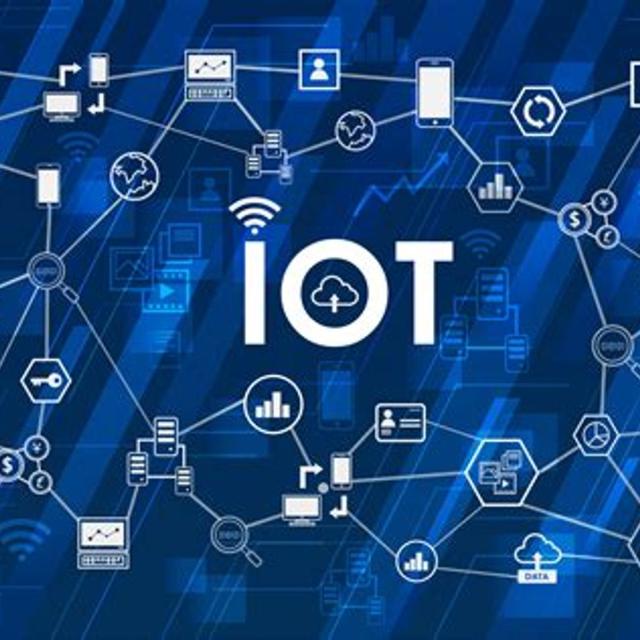
By presenting the building blocks of the IoT network architecture, this MOOC will help learners adapt to the fast changing communications and networking environment of IoT. The IoT world represents billions of sophisticated objects, such as sensors, actuators and meters, that are deployed nearly everywhere, in homes, hospitals, factories, cities, and are connected to the Internet. However, they come with limited capacity in terms of memory storage, computational power and energy; how can these objects then ensure network reliability and timely transmission?

Jun 22nd 2026
4 Weeks
Network Systems Foundations (Coursera) Coursera
University of Colorado Boulder

Network Systems Foundations (Coursera)

Welcome! Throughout this course, Network Systems Foundations, you will delve into the fundamental layers of network communication. You will start with a thorough discussion of the Link Layer and its crucial role, moving on to the intricacies of Internet Protocol (IP) and router data planes, and then navigate through the complexities of the transport layer, application layer, and network security.

Jun 8th 2026
5-12 Weeks
Artificial Intelligence in Marketing (Coursera) Coursera
University of Virginia

Artificial Intelligence in Marketing (Coursera)

AI is everywhere! By harnessing the power of Artificial Intelligence, businesses and marketers have amazing growth potential, and the opportunities to enhance marketing with AI are always expanding. But how can businesses use AI tools to drive their success and gain sustainable competitive advantages? What are the challenges faced by businesses as they implement AI into their marketing strategies? In this course, developed at the Darden School of Business at the University of Virginia, and delivered by Professor of Business Administration Raj Venkatesan, you will explore an important frontier of digital transformation in marketing.

Jun 8th 2026
4 Weeks
Introduction to Data Networks and the Internet - Bachelor's (Coursera) Coursera
Illinois Tech

Introduction to Data Networks and the Internet - Bachelor's (Coursera)

This course covers current and evolving data network technologies, protocols, network components, and the networks that use them, focusing on communication to and from the Internet and Local area networks. Course content includes Internet architecture, organization, and protocols including Ethernet, 802.11, routing, switching, OSI and TCP models, DNS, SNMP, DHCP, and more.

Jun 22nd 2026
5-12 Weeks
Cyber Incident Response (Coursera) Coursera
Infosec

Cyber Incident Response (Coursera)

The Cyber Incident Response course will give students an understanding of how incidents are responded to at a high level, as well as allow them to build important technical skills through the hands-on labs and projects. This course starts with a high-level discussion of what happens at each phase of responding to an incident, followed by a technical deep dive into some of the more exciting parts of memory, network, and host analysis and forensics. This course is for anyone wishing to apply learned forensics and offensive knowledge such as ethical hacking to the incident response process.

Jun 15th 2026
3 Weeks
Introduction to Data Networks and the Internet - Master's (Coursera) Coursera
Illinois Tech

Introduction to Data Networks and the Internet - Master's (Coursera)

This course covers current and evolving data network technologies, protocols, network components, and the networks that use them, focusing on communication to and from the Internet and Local area networks. Course content includes Internet architecture, organization, and protocols including Ethernet, 802.11, routing, switching, OSI and TCP models, DNS, SNMP, DHCP, and more.

Jun 22nd 2026
5-12 Weeks
Social and Economic Networks: Models and Analysis (Coursera) Coursera
Stanford University

Social and Economic Networks: Models and Analysis (Coursera)

Learn how to model social and economic networks and their impact on human behavior. How do networks form, why do they exhibit certain patterns, and how does their structure impact diffusion, learning, and other behaviors? We will bring together models and techniques from economics, sociology, math, physics, statistics and computer science to answer these questions.

Jun 8th 2026
5-12 Weeks
Intel® Network Academy - Network Transformation 102 (Coursera) Coursera
Intel Corporation

Intel® Network Academy - Network Transformation 102 (Coursera)

Welcome to the Intel® Network Academy – a comprehensive training program on network transformation. In this program, we will be covering the topic areas of software defined infrastructure (SDI) network functions virtualization (NFV), software-defined networking (SDN) and beyond. Network Transformation 102 covers topics such as VNF Operations & Development, Cryptography, and Hyperscan technology, students will dive into the benefits of Intel hardware and software and explore how to accelerate compute-intensive operations with Intel® QuickAssist Technology (Intel® QAT).

Jun 8th 2026
4 Weeks
International Cyber Conflicts (Coursera) Coursera
The State University of New York

International Cyber Conflicts (Coursera)

By nature, cyber conflicts are an international issue that span across nation-state borders. By the end of the course, you will be able to apply the knowledge gained for analysis and management of international cyber incidents and conflicts including for activities such as development of policy related to cybercrime and cyberwarfare. Management of cyber incidents and conflicts requires an interdisciplinary perspective including an understanding of: 1) characteristics of the cyber threats and conflicts themselves, 2) international efforts to reduce and improve cyber security, and 3) psychological and sociopolitical factors.

Jun 8th 2026
5-12 Weeks