Multilevel Modeling (Coursera)

Multilevel Modeling (Coursera)

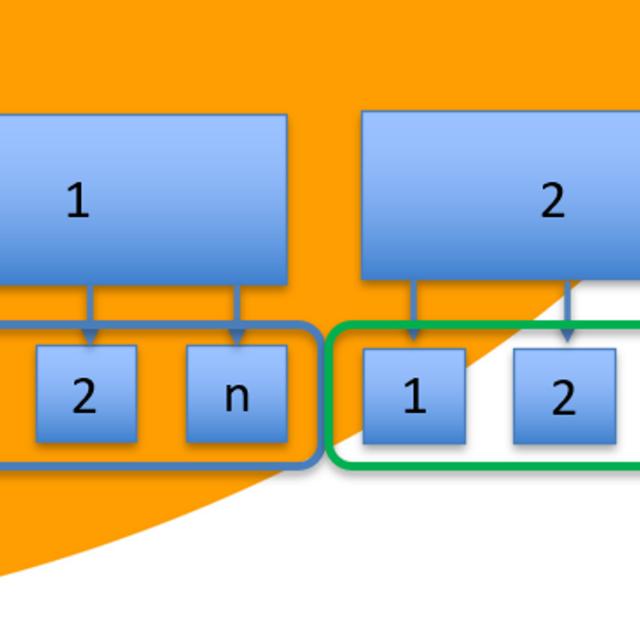
In this course, PhD candidates will get an introduction into the theory of multilevel modelling, focusing on two level multilevel models with a 'continuous' response variable. In addition, participants will learn how to run basic two-level model in R. The objective of this course is to get participants acquainted with multilevel models. These models are often used for the analysis of ‘hierarchical’ data, in which observations are nested within higher level units (e.g. repeated measures nested within individuals, or pupils nested within schools).

Class Deals by MOOC List - Click here and see Coursera's Active Discounts, Deals, and Promo Codes.

In this type of data causes of outcomes (e.g. the performance of pupils in schools) are located both at the level of the individual (e.g., own and parental resources), and at a higher, contextual, level shared by some of the individuals (e.g. characteristics of the class and of the teacher). Because of this, the assumption of 'independent observations' is violated with hierarchical data, but multilevel modelling can easily account for that. Moreover, multilevel modelling can easily deal with missing data (in most circumstances).

Syllabus

WEEK 1: Errata
WEEK 2: Introduction to Multilevel Modeling (MLM)
WEEK 3: Random Slopes and Cross-Level Interactions
WEEK 4: Putting it all Together
Go to Class
MOOC List is learner-supported. When you buy through links on our site, we may earn an affiliate commission.

Related Courses

Machine Learning Foundations: A Case Study Approach (Coursera) Coursera
University of Washington

Machine Learning Foundations: A Case Study Approach (Coursera)

Do you have data and wonder what it can tell you? Do you need a deeper understanding of the core ways in which machine learning can improve your business? Do you want to be able to converse with specialists about anything from regression and classification to deep learning and recommender systems? In this course, you will get hands-on experience with machine learning from a series of practical case-studies.

Jun 15th 2026
5-12 Weeks
Data Science Companion (Coursera) Coursera
MathWorks

Data Science Companion (Coursera)

The Data Science Companion provides an introduction to data science. You will gain a quick background in data science and core machine learning concepts, such as regression and classification. You’ll be introduced to the practical knowledge of data processing and visualization using low-code solutions, as well as an overview of the ways to integrate multiple tools effectively to solve data science problems.

Jun 19th 2026
4 Weeks
Computational Thinking for K-12 Educators Capstone (Coursera) Coursera
University of California, San Diego

Computational Thinking for K-12 Educators Capstone (Coursera)

In this capstone project course, you will learn to support your students in successfully completing the Advanced Placement Principles Create Task -- however this task can be useful for any course as a culminating, student-designed final programming project. You will learn to interpret and practice applying to real sample student work the Create Task rubric and have the option to modify it for your own setting. You'll prepare resources to help students through the challenges that come with doing an open-ended project that still needs to meet certain specifications.

Jun 17th 2026
4 Weeks
Computational Thinking for K-12 Educators: Abstraction, Methods, and Lists (Coursera) Coursera
University of California, San Diego

Computational Thinking for K-12 Educators: Abstraction, Methods, and Lists (Coursera)

How do gamers cause things to happen when they hit buttons on their controller? How does the computer keep track of gamer's scores? This class teaches the concepts of nested loops, events, and variables. For each concept, we'll start by helping you connect real-world experiences you are already familiar with to the programming concept you are about to learn. Next, through a cognitively scaffolded process we'll engage you in developing your fluency with problem solving with nested loops, events, and variables in a way that keeps frustration at a minimum.

Jun 17th 2026
5-12 Weeks
Assessing Achievement with the ELL in Mind (Coursera) Coursera
Arizona State University

Assessing Achievement with the ELL in Mind (Coursera)

In this course, you will learn how to design assessments around the needs of your ELL students and their language level. You will learn how to incorporate language and content requirements for both formative and summative assessment types. You will learn to assess your ELL students through the use of project and task-based assignments.

Jun 15th 2026
5-12 Weeks
e-Learning Ecologies: Innovative Approaches to Teaching and Learning for the Digital Age (Coursera) Coursera
University of Illinois at Urbana-Champaign

e-Learning Ecologies: Innovative Approaches to Teaching and Learning for the Digital Age (Coursera)

For three decades and longer we have heard educators and technologists making a case for the transformative power of technology in learning. However, despite the rhetoric, in many ways and at most institutional sites, education is still relatively untouched by technology. Even when technologies are introduced, the changes sometimes seem insignificant and the results seem disappointing. If the print textbook is replaced by an e-book, do the social relations of knowledge and learning necessarily change at all or for the better?

Jun 15th 2026
4 Weeks
Critical Thinking Skills for University Success (Coursera) Coursera
The University of Sydney

Critical Thinking Skills for University Success (Coursera)

In this course, you will learn how to develop your Critical Thinking Skills to help you achieve success in your university studies. After completing this course, you will be able to: 1. Use critical thinking and argumentation in university contexts to improve academic results ; 2. Understand the importance and function of critical thinking in academic culture ; 3. Use a variety of thinking tools to improve critical thinking ; 4. Identify types of argument, and bias within arguments, in order to better evaluate the strength of arguments; 5. Use evidence to support claims in arguments ; 6. Apply critical thinking and argumentation to real world problems and issues

Jun 15th 2026
5-12 Weeks
Sexualidad y educación (Coursera) Coursera
Universidad de los Andes

Sexualidad y educación (Coursera)

La mayor parte de las personas tenemos inquietudes sobre cómo, cuándo y para qué educar a niñas, niños, jóvenes y adultos acerca de la sexualidad. Ya sea como madres, padres, cuidadores, profesores, profesionales de la salud, interesados en los medios de comunicación o en el tema de la sexualidad, con frecuencia nos planteamos preguntas como las siguientes: ¿Para qué educar sobre sexualidad, si existe abundante información al respecto? ¿La educación de la sexualidad debería brindarla la familia o la escuela? ¿A qué edad es adecuado iniciar la educación de la sexualidad? ¿La educación de la sexualidad aumenta la curiosidad sobre este tema?

Jun 15th 2026
5-12 Weeks
The Data Scientist's Toolbox (Coursera) Coursera
Johns Hopkins University

The Data Scientist's Toolbox (Coursera)

In this course you will get an introduction to the main tools and ideas in the data scientist's toolbox. The course gives an overview of the data, questions, and tools that data analysts and data scientists work with. There are two components to this course. The first is a conceptual introduction to the ideas behind turning data into actionable knowledge. The second is a practical introduction to the tools that will be used in the program like version control, markdown, git, GitHub, R, and RStudio.

Jun 15th 2026
4 Weeks
Teaching Impacts of Technology: Workplace of the Future (Coursera) Coursera
University of California, San Diego

Teaching Impacts of Technology: Workplace of the Future (Coursera)

In this course you’ll focus on how the Internet has enabled new careers and changed expectations in traditional work settings, creating a new vision for the workplace of the future. This will be done through a series of paired teaching sections, exploring a specific “Impact of Computing” in your typical day and the “Technologies and Computing Concepts” that enable that impact, all at a K12-appropriate level.

Jun 17th 2026
4 Weeks