Mastering Web3 with Waves (Coursera)

Mastering Web3 with Waves (Coursera)

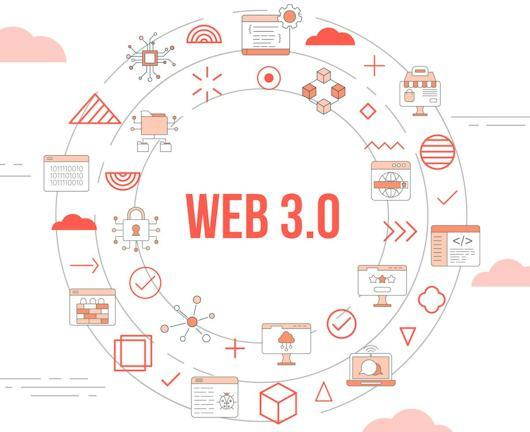
We are on the threshold of transitioning to the next generation of the internet, Web 3.0, which will be a more transparent and largely decentralized version of the web. To survive and prosper in this new decentralized environment, you’ll need to master new skills, such as building decentralized applications (dApps). Mastering Web 3.0 with Waves is a very practical course. Upon completing it, you’ll be able to build your very first decentralized application (dApp) using the Ride programming language and the Waves blockchain.

Class Deals by MOOC List - Click here and see Coursera's Active Discounts, Deals, and Promo Codes.

Over the course of six weeks, you’ll learn about the evolution of the Web, digital assets, distributed ledgers, consensus algorithms and cryptocurrencies. You’ll also become familiar with HTML, JavaScript, Git, GitHub, smart contracts and smart assets, and non-fungible tokens (NFTs). Finally, you’ll create your own project, the Coupon Bazaar dApp.
Meanwhile, the course doesn’t require substantial developing experience and is just as suitable for beginner developers as it is for those who have been developing regular apps for years.
Each of the six weekly modules includes video tutorials, quizzes of 14 to 18 questions, and practical assignments.
Sign up for the course and learn vital Web 3.0 skills!

Syllabus

WEEK 1
Web 3.0, decentralisation, blockchain and crypto
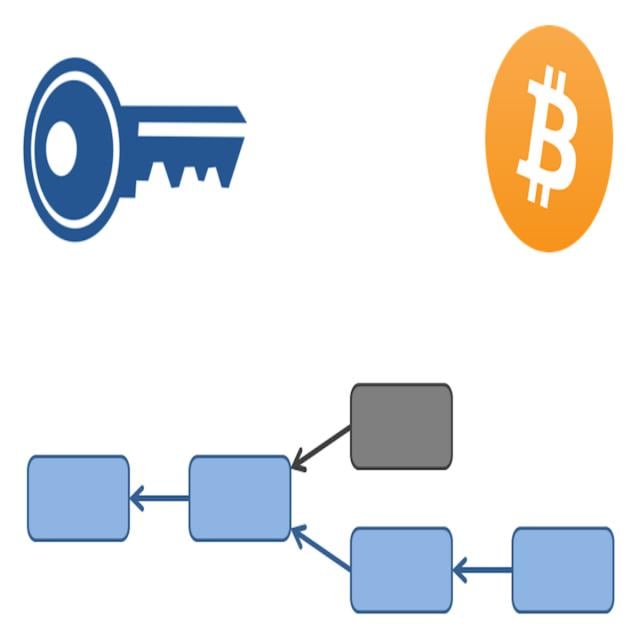
This module is focused on the main concepts related to Web 3.0, such as the evolution of the Web, digital assets, the basics of blockchain technology, digital signatures, distributed ledgers and consensus algorithms. You will also study the basics of cryptocurrencies, focusing on the concepts of transparency and liquidity, as well as crypto exchange operation. The WAVES token and its applications will be discussed as an example.

WEEK 2
Preparation: Required Tools and Tutorials
This module aims to provide you with preparatory materials and help you to install tools required for the course’s subsequent modules. We will discuss such widespread technologies as HTML, JavaScript, Git, and GitHub. These tools will be required for the final project as well as for any real-world development activities, since users should be able to interact with your apps via a user interface.

WEEK 3
Introduction to Smart Contracts and Smart Accounts
In this module, you will find an overview of basic ‘smart’ concepts. You will learn what smart contracts are, how they operate and some of their major applications. You will also analyze the simplest ‘smart’ entity in the Waves protocol, smart accounts, and ways of using the Ride programming language to improve the security of financial transactions. This module will also highlight decentralized applications (dApps) and their use cases.

WEEK 4
Practicing with RIDE for dApps
This module will be devoted to building smart contracts, with a special focus on dApps. You’ll also learn how to work with the main Waves JavaScript libraries – waves-transactions and waves-crypto. Upon completion of this module, you’ll understand the differences between regular contracts and smart contracts, the advantages of smart contracts and using Ride to develop decentralized applications. We’ll also explore a commit-reveal voting service.

WEEK 5
Tokenisation and Smart Assets
This module will explain what tokenization is, how it works and what benefits it offers. Upon completion of this module, you will be able to create smart assets and issue non-fungible tokens (NFTs), as well as improving your mastery of Ride.

WEEK 6
Launching your own "Coupon Bazaar" Web 3 dApp
In this module, we’ll introduce the concept of data oracles and explain why we need them for real-world blockchain applications. You’ll also learn about decentralized application storage. Upon completion of this module, you’ll know how to fetch data from a blockchain node, sign and broadcast transactions, use Waves Keeper and run tokenless onboarding for new users. And, last but not least, you’ll be able to create your final project – the ‘Coupon Bazaar’ dApp.
Go to Class
MOOC List is learner-supported. When you buy through links on our site, we may earn an affiliate commission.

Related Courses

What is the Metaverse? (Coursera) Coursera
Meta

What is the Metaverse? (Coursera)

The metaverse isn’t just for gamers or developers, it will be for everyone. In this free course from the experts at Meta, you’ll learn what the metaverse is, what it means for our world today and into the future, and the opportunities it presents for both professionals and businesses. Understand the metaverse fundamentals. Experts will guide you through a broad range of topics spanning the metaverse ecosystem, from communication and collaboration to NFTs and cryptocurrency, from avatars and devices to platforms and game engines. You’ll learn about augmented reality (AR), virtual reality (VR), extended reality, NFTs, blockchain, web3, cryptocurrency, and more.

Aug 3rd 2026
5-12 Weeks
Decentralized Applications (Dapps) (Coursera) Coursera
University at Buffalo,The State University of New York

Decentralized Applications (Dapps) (Coursera)

This third course of the Blockchain specialization prepares you to design and develop end-to-end decentralized applications (Dapps) – which provide anyone with access to the blockchain’s features and services. You will use Truffle IDE, smart contracts, a simple web client and a MetaMask client. You will learn about the architecture of a Dapp: the front-end client interface, backed by the blockchain and smart contracts.

Aug 17th 2026
4 Weeks
Legal Tech and the Digital Transformation of Law (Coursera) Coursera
Universidad Austral

Legal Tech and the Digital Transformation of Law (Coursera)

The digital revolution changed the way we communicate and trade. Now, it is coming into the world of law. This program will give you a broad overview of the main trends that are affecting the legal industry: the birth of the legal tech market and the application of technology in law; the role of artificial intelligence in the automation of the work of lawyers; blockchain technology and its impact on the way we sign and execute contracts; initiatives to ensure access to justice through virtual courts and robot judges.

Aug 10th 2026
5-12 Weeks
New Technologies for Business Leaders (Coursera) Coursera
Rutgers University

New Technologies for Business Leaders (Coursera)

This introductory course is developed for high-level business people (and those on their way) who want a broad understanding of new Information Technologies and understand their potential for business functions (e.g. marketing, supply change management, finance). This is not a course for people looking for guidance on how to become a deep technical expert or implement these technologies.

Aug 3rd 2026
5-12 Weeks
Applying Data Analytics in Accounting (Coursera) Coursera
University of Illinois at Urbana-Champaign

Applying Data Analytics in Accounting (Coursera)

This course explores business analytic applications in accounting. First, it presents a survey of technology topics in accounting, including process mining, blockchain and applications in audit, tax, and assurance. Next, the course explores visualization and basic analytics in audit and control testing using R and Alteryx. Next, the course examines the uses of text analysis in accounting and conducts text analysis using R and RStudio. Finally, the course examines robot process automation in general using UiPath and its applications in accounting.

Aug 3rd 2026
4 Weeks
Blockchain Scalability and its Foundations in Distributed Systems (Coursera) Coursera
The University of Sydney

Blockchain Scalability and its Foundations in Distributed Systems (Coursera)

Blockchain promises to disrupt industries once it will be efficient at large scale. In this course, you will learn how to make blockchain scale. You will learn about the foundational problem of distributed computing, consensus, that is key to create blocks securely. By illustrating limitations of mainstream blockchains, this course will indicate how to improve the technology in terms of security and efficiency. In particular, this course will help you: understand security vulnerabilities of mainstream blockchains; design consensus algorithms that tolerate attacks, and; design scalable blockchain systems.

Aug 3rd 2026
5-12 Weeks
Blockchain Basics (Coursera) Coursera
University at Buffalo,The State University of New York

Blockchain Basics (Coursera)

This first course of the Blockchain specialization provides a broad overview of the essential concepts of blockchain technology – by initially exploring the Bitcoin protocol followed by the Ethereum protocol – to lay the foundation necessary for developing applications and programming. You will be equipped with the knowledge needed to create nodes on your personal Ethereum blockchain, create accounts, unlock accounts, mine, transact, transfer Ethers, and check balances.

Aug 17th 2026
4 Weeks
How Entrepreneurs in Emerging Markets can master the Blockchain Technology (Coursera) Coursera
University of Cape Town

How Entrepreneurs in Emerging Markets can master the Blockchain Technology (Coursera)

In this course, you will gain a thorough understanding of the blockchain and distributed ledger technologies, including an introduction to the necessary foundations in cryptography. The course will discuss blockchain as a distributed ledger and introduce distributed consensus as a mechanism to maintain the integrity of the blockchain. The other revolutionary technologies that are changing the world as we speak are artificial intelligence and machine learning. You will learn about the three major types of AI algorithms: supervised and unsupervised machine learning, as well as reinforcement learning.

Aug 3rd 2026
4 Weeks
Advanced Blockchain Architectures (Coursera) Coursera
LearnQuest

Advanced Blockchain Architectures (Coursera)

The Advanced Blockchain Architectures course is ideal for individuals with a basic understanding of digital technology as well as developers or security professionals wishing to expand their blockchain knowledge. It provides an in-depth exploration of Blockchain architecture, emphasizing technical components and complex features like cryptography and node management.

Aug 3rd 2026
5-12 Weeks
Blockchain Theory and Applications Ⅱ (Coursera) Coursera
Pohang University of Science and Technology - POSTECH

Blockchain Theory and Applications Ⅱ (Coursera)

This course is the second part of the two parts course on Blockchain Theory and Applications. This course will provide important aspects of blockchain and cryptocurrency. It will introduce how to create decentralized applications (DApps), EOS, one of the popular third-generation blockchains, consensus algorithms, Hyperledger projects, token economy, cryptocurrencies, and cryptocurrency exchanges.

Aug 10th 2026
5-12 Weeks
Fundamentals of waves and vibrations (Coursera) Coursera
École Polytechnique

Fundamentals of waves and vibrations (Coursera)

Waves are everywhere. On water of course, but also in the air as you hear a plane, and under your feet during an earthquake certainly. Vibrations, too, are everywhere In your bike as you go over a bump, in you guitar as you play, and of course in your smartphone. You can guess that there is something in common behind all this. This is exactly the purpose of this course !

Aug 3rd 2026
5-12 Weeks
Blockchain Opportunity Analysis (Coursera) Coursera
INSEAD

Blockchain Opportunity Analysis (Coursera)

In this fourth and final course of the specialization, you will synthesize your learning into a project deliverable called a Blockchain Opportunity Analysis. The goals of this course are twofold: One, it’s for you to identify a specific need or problem in your chosen industry that can potentially be solved using blockchain technology. Two, it’s for you to investigate possible solutions to this problem, including how these solutions might be executed.

Aug 3rd 2026
5-12 Weeks