Manage Security Operations (Coursera)

Offered by Microsoft,
Manage Security Operations (Coursera)

Manage Security Operations, the sixth course in the Microsoft Azure Security Engineer Associate Professional Certificate program, equips you with vital skills to protect Azure resources and data, ensuring regulatory compliance. There are various tools available to manage security operations. You will learn to configure and manage Azure Monitor. You will also learn to enable and manage Microsoft Defender for Cloud. In addition, you will configure and monitor Microsoft Sentinel.

Class Deals by MOOC List - Click here and see Coursera's Active Discounts, Deals, and Promo Codes.

By the end of this course, you will be able to:

  • Configure and monitor metrics and logs in Azure Monitor.
  • Manage applications by using Azure Monitor Application Insights.
  • Create basic Azure Monitor log queries to extract information from log data.
  • Enable Azure Monitor alerts.
  • Configure properties for diagnostic logging.
  • Implement, configure, and deploy Microsoft Defender for Cloud.
  • Monitor your security status with Microsoft Defender for Cloud.
  • Implement just-in-time VPN access to protect against brute-force attacks.

This course is part of the Microsoft Azure Security Engineer Associate (AZ-500) Professional Certificate.

What you'll learn

  • Configure and monitor metrics and logs in Azure Monitor.
  • Manage applications by using Azure Monitor Application Insights.
  • Implement, configure, and deploy Microsoft Defender for Cloud.
  • Implement just-in-time VPN access to protect against brute-force attacks.

Syllabus

Configure and manage Azure Monitor
In this module, you will learn how to use Azure monitor, Defender for Cloud, and Sentinel to monitor your organization's services. You will explore how to use features of Azure Monitor logs that contain records that show when resources are created or modified. You will also learn to use a full-stack monitoring strategy to improve learner’s ability to identify and mitigate issues across all the layers of their applications and infrastructure to improve the customer experience. In addition, you will learn to configure and monitor metrics and logs and integrate Azure Monitor Application Insights with your applications. You will explore how to use Azure Monitor Application Insights to check the health of applications and resolve issues faster. You will also learn how to enable Log Analytics that helps you monitors cloud and on-premises environments to maintain availability and performance.

Enable and manage Microsoft Defender for Cloud
In this module, you will learn how to implement and customize Microsoft Defender for Cloud and how to design and plan an effective Defender for Servers deployment. You will learn how to manage and implement security policies and recommendations to secure and harden your resources. You will explore the brute force attacks and how to implement Just-in-time VM access to protect from brute force attacks. You will also learn about malware threats and how to configure malware detection to protect computers and network from malware.

Configure and monitor Microsoft Sentinel
In this module, you will gain an understanding about Microsoft Sentinel and how it works. You will learn about how to enable Microsoft Sentinel for end-to-end security operations. You will learn how to transform or customize data at ingestion time in Microsoft Sentinel. You will learn to use Microsoft Sentinel for instant visualization and analysis of data. You will also learn to use Azure Monitor workbooks to visualize and monitor data. You will explore anomaly detection analytics rules in Microsoft Sentinel. You will learn how to enable rules to create incidents. In addition, you will learn to create custom analytics rules to detect threats. You will learn how to map data fields to entities in Microsoft Sentinel. You will also learn to use playbooks together with automation rules to automate incident response and remediate security threats detected by Microsoft Sentinel. You will explore about how to investigate incidents with Microsoft Sentinel as well as use it to understand the scope and find the root cause of a potential security threat. In addition, you will learn how to use the threat modeling tool develop threat models as a backbone of your security process.

Project and graded assessment
In this module, you will attempt a course-level ungraded project and graded assessment.


Go to Class
MOOC List is learner-supported. When you buy through links on our site, we may earn an affiliate commission.

Related Courses

Cyber Threats and Attack Vectors (Coursera) Coursera
University of Colorado System

Cyber Threats and Attack Vectors (Coursera)

Data breaches occur nearly every day. From very large retailers, down to your fantasy football website, and anywhere in between, they have been compromised in some way. How did the attackers get in? What did they do with the data they compromised? What should I be concerned with in my own business or my systems? This course is the second course in the Practical Computer Security. It will discuss types of threats and attack vectors commonly seen in today’s environment.

Oct 12th 2026
5-12 Weeks
AWS Database Specialty Certification (Coursera) Coursera
EDUCBA

AWS Database Specialty Certification (Coursera)

This course offers a comprehensive journey through the world of databases and their management on the AWS cloud platform. From understanding the core concepts of databases to mastering advanced topics like migration, automation, and security, participants will gain a solid foundation in database design, deployment, and management using AWS services.

Oct 26th 2026
5-12 Weeks
Risk in Modern Society (Coursera) Coursera
Leiden University,LDE Centre for Safety and Security

Risk in Modern Society (Coursera)

Risk has become one of the defining features of modern society. Almost daily, we are preoccupied with assessing, discussing, or preventing a wide variety of risks. It is a cornerstone notion for businesses and organizations, but also for nation states and their many levels of government. And even for individuals, risk and the avoidance or embracing thereof, is a key theme. The course Risk in Modern Society sheds light on the broad concept of risk.

Oct 26th 2026
5-12 Weeks
How to Get Into Blockchain (Coursera) Coursera
University of Leeds

How to Get Into Blockchain (Coursera)

Blockchain technologies, the driving force behind cryptocurrencies, have the potential to revolutionise the exchange of value, ownership and transactions by providing trust, security and transparency. The blockchain industry is booming and it's projected to grow so if you are looking for a lucrative career path, then a specialisation in blockchain technologies is one of the best tech career moves. This online course teaches you how to navigate the fascinating world of blockchain technologies.

Oct 26th 2026
2 Weeks
Digital Shield: Cybersecurity for Data and System Protection (Coursera) Coursera
Universidad Anáhuac

Digital Shield: Cybersecurity for Data and System Protection (Coursera)

Digital Shield: Cybersecurity for Data and Systems Protection" is a course designed to provide a solid introduction to the protection of sensitive data and the infrastructure supporting various information systems. This MOOC was created in collaboration with CYBERPRO Global, a leading international provider of cyber education programs with over a decade of experience in training security personnel and delivering large-scale technological projects. Its aim is to educate participants on the fundamental concepts of information security and cybersecurity, including techniques and tactics necessary to protect information and computer systems from potential threats.

Oct 19th 2026
5-12 Weeks
Blockchain Security (Coursera) Coursera
Infosec

Blockchain Security (Coursera)

This course introduces blockchain security, including a description of how the blockchain works at each level of the blockchain ecosystem. The instructor begins with the building blocks that create the structure of blockchain, the cryptography that it uses for security, and the role of hash functions in the blockchain and how they can be attacked. In the next module, the instructor describes what blockchain consensus is, why it’s needed, its underlying theory (Byzantine Fault Tolerance and Security via Scarcity), some of the common consensus algorithms, and the security issues inherent to each variant.

Oct 26th 2026
5-12 Weeks
5G Network Fundamentals (Coursera) Coursera
Institut Mines-Telecom

5G Network Fundamentals (Coursera)

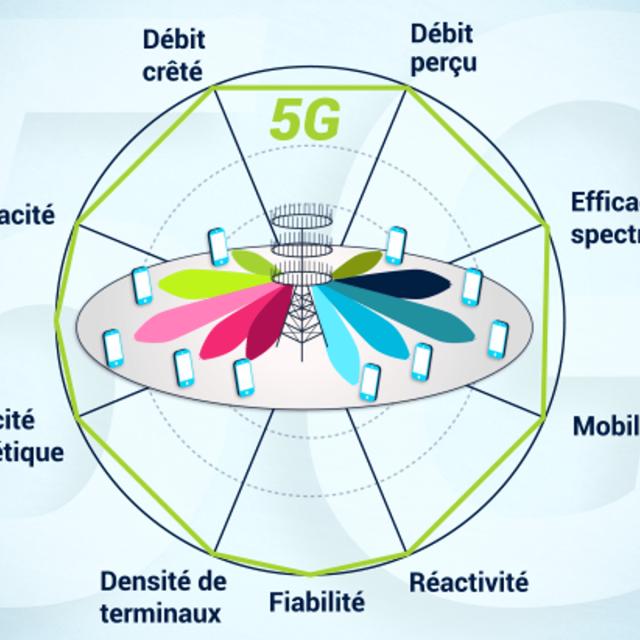
This MOOC presents the services and the architecture of 5G networks, the main principles of the new radio interface (NR), data flow management, security and the new Service-Based Architecture (SBA). In recent years, operators have been deploying 5G technology on commercial mobile networks. The latter is announced as a major technological breakthrough with speeds beyond Gbit/s, very low latencies and above all a distribution in many sectors of activity (industry, transport, medicine, etc.).

Oct 26th 2026
5-12 Weeks
Cyber Security Fundamentals (Coursera) Coursera
University of London

Cyber Security Fundamentals (Coursera)

This course is intended to provide a general introduction to key concepts in cyber security. It is aimed at anyone with a good general knowledge of information and communications technology. The nature, scope and importance of cyber security are explained, and key concepts are justified and explored. This includes examining the types of threat that cyber security must address, as well as the range of mechanisms, both technological and procedural, that can be deployed.

Oct 18th 2026
3 Weeks
Security for Artificial Intelligence Software and Services (Coursera) Coursera
Board Infinity

Security for Artificial Intelligence Software and Services (Coursera)

The "Security Basics for Artificial Intelligence Software and Services" course provides an in-depth exploration of security measures and best practices in the context of AI. Spanning two comprehensive modules, the course begins with an introduction to the fundamentals of AI security, including ethical considerations and common threats. It then progresses to practical strategies for implementing robust security in AI development, such as secure coding, vulnerability assessment, and adherence to compliance standards.

Oct 26th 2026
2 Weeks