Making Babies in the 21st Century (FutureLearn)

Making Babies in the 21st Century (FutureLearn)

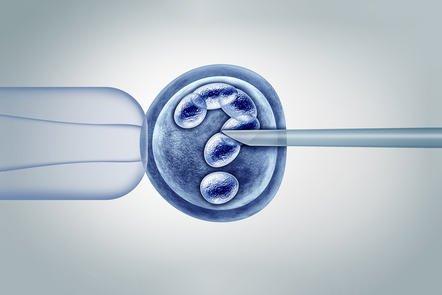
Discover the opportunities provided by reproductive technologies and fertility treatments – and the ethical challenges they pose. Explore how assisted reproduction is impacting baby-making in the 21st century. Following the journey of someone making use of technology to conceive, this course will take you through six different areas of assisted reproduction, as well as the science behind them and its impact.

Class Deals by MOOC List - Click here and see FutureLearn's Active Discounts, Deals, and Promo Codes.

As you explore human reproduction in the age of technology, you’ll explore the social, ethical, and legal challenges of powerful new genetic techniques creating new opportunities in the field of reproduction.
Learning with experts at UCL’s Institute for Women’s Health, you’ll explore how technology is changing the way babies are made and family life is constructed, appreciate the key ethical dilemmas that these new technologies bring, and gain awareness of the social aspects of the relevant ethical challenges.

Syllabus

Week 1: Seeking fertility
Week 2: Freezing eggs
Week 3: Using gametes
Week 4: Crossing borders
Week 5: Genetic testing
Week 6: Genome editing

Learning on this course
You can take this self-guided course and learn at your own pace. On every step of the course you can meet other learners, share your ideas and join in with active discussions in the comments.

What will you achieve?
By the end of the course, you'll be able to...

  • Following the course, learners will be able to synthesise information from a number of different fields.
  • Critically assess the accuracy and value of information about assisted fertility that is provided in the public domain (i.e., on the internet).
  • Be able to confidently contribute to the vital societal conversation around the use of reproductive and genetic technologies.
  • Demonstrate knowledge of the science and ethics-legal aspects of assisted fertility.
  • Develop a deeper understanding of the ways in which fertility medicine is changing the way babies are born and the way families are constructed.
  • Be able to explain how each of the technologies covered in the course are changing the way people think about fertility and families.
  • Be able to reflect critically on the advantages and disadvantages of the new reproductive technologies.

Who is the course for?
This course is designed for anyone interested in learning more about reproductive technology, including medical and healthcare students, clinicians and nurses working in women’s health, scientists and biotechnologists involved in reproductive technology and medicine, and couples and individuals seeking advice and information about assisted reproduction.
Healthcare professionals might find the Certificate of Achievement for this course useful for providing evidence of Continuing Professional Development (CPD), or commitment to their career.


Go to Class
MOOC List is learner-supported. When you buy through links on our site, we may earn an affiliate commission.

Related Courses

An Introduction to Medical Ethics: The Impact of Disability Screening (FutureLearn) FutureLearn
University of Manchester

An Introduction to Medical Ethics: The Impact of Disability Screening (FutureLearn)

Gain a clearer understanding of ethics and the ethical issues surrounding prenatal screening of disabilities. Build your confidence to address ethical questions. Ethics play an important role in healthcare, and need to be considered by health professionals and patients alike. On this course, you will get a practical introduction to ethics, and develop the reasoning skills needed to deal with ethical questions.

Feb 8th 2021
4 Weeks
Ethical Management and Decision Making (FutureLearn) FutureLearn
The University of Law,University of Law Business School

Ethical Management and Decision Making (FutureLearn)

Get to grips with how to manage ethically with this MOOC developed by the University of Law Business School. Learn how to manage within an ethical manner. In today’s working world, the terms ‘corporate responsibility’ and ‘sustainability’ are more important than ever. Corporations and organisations are increasingly about doing what is best for the community, the society and the environment. This three-week course from the University of Law Business School will teach you how to manage people within an effective manner, and also explore how not to manage people within a business.

Available Now
3 Weeks
Global Impact: Business Ethics (Coursera) Coursera
University of Illinois at Urbana-Champaign

Global Impact: Business Ethics (Coursera)

Global business ethics is the study and analysis of how ethics and global business are connected. How we should treat each other and our organizations in global and local contexts is the topic of this course. Business ethics and corporate responsibility are inherent in global commerce. Commerce is about markets, and markets entail exchanges between people and groups of people. So commerce is about human relationships, and indeed, it could not be otherwise.

Jun 29th 2026
4 Weeks
Combining and Analyzing Complex Data (Coursera) Coursera
University of Maryland, College Park

Combining and Analyzing Complex Data (Coursera)

In this course you will learn how to use survey weights to estimate descriptive statistics, like means and totals, and more complicated quantities like model parameters for linear and logistic regressions. Software capabilities will be covered with R® receiving particular emphasis. The course will also cover the basics of record linkage and statistical matching—both of which are becoming more important as ways of combining data from different sources. Combining of datasets raises ethical issues which the course reviews. Informed consent may have to be obtained from persons to allow their data to be linked. You will learn about differences in the legal requirements in different countries.

Jun 29th 2026
4 Weeks
Community Based Research: Getting Started (FutureLearn) FutureLearn
University College London

Community Based Research: Getting Started (FutureLearn)

Learn the skills you need to carry out research in your own community using the 'citizen science' approach of UCL's RELIEF Centre. Community based research means involving a community in all stages of a research process - this kind of research can give people the power to transform their lives. On this course you will learn the basics of community based research by examining the citizen science methodology used by the RELIEF Centre in Lebanon.

Oct 10th 2022
3 Weeks
Research Ethics and Vulnerability: Ethical Research in Adults with Impaired Decision-Making Capacity (FutureLearn) FutureLearn
University of Malaya

Research Ethics and Vulnerability: Ethical Research in Adults with Impaired Decision-Making Capacity (FutureLearn)

Learn how to conduct ethical research with adults who have impaired decision-making capacity. Effectively protect research participants with impaired decision-making capacity. It is your responsibility to protect research participants. Those who have impaired decision-making capacity are incapable of giving informed consent. They may not be able to protect their own interests and merit special consideration by researchers and research ethics committees.

May 16th 2022
2 Weeks
Corporate Lawyers: Ethics, Regulation and Purpose (FutureLearn) FutureLearn
University of Birmingham

Corporate Lawyers: Ethics, Regulation and Purpose (FutureLearn)

Explore the role and purpose of corporate lawyers, examining how they are regulated and the ethical challenges they face. Imagine you are a lawyer advising a client wanting to take over a large company. From your discussions with the client, you think it likely that, after they buy the company, several thousand of the company’s employees will be made redundant by your client. Such redundancies will be perfectly legal.

No sessions available
3 Weeks
Interpreting for Refugees: Contexts, Practices and Ethics (FutureLearn) FutureLearn
University of Glasgow

Interpreting for Refugees: Contexts, Practices and Ethics (FutureLearn)

Learn skills to meet the challenges of interpreting for refugees and share your experiences with other interpreters in the sector. Learn about humanitarian interpreting and the role of the interpreter. On this course, you’ll discover the role of the interpreter and explore the specific challenges of interpreting for refugees. You’ll cover topics like cultural awareness, ethics and emotional reflexivity when working in situations that require cross-cultural communication.

Available now
3 Weeks
Military Ethics: An Introduction (FutureLearn) FutureLearn
UNSW Sydney - University of New South Wales

Military Ethics: An Introduction (FutureLearn)

We explore the ethical responsibilities that weigh on military professionals, who are ‘managers of violence’. Military professionals are unusual in having the use of lethal force as a central, defining feature of their role, and unique in the level of force that they are authorized to use. This fact places a considerable ethical weight on military practitioners as well as the civilian decision-makers who authorize military missions.

No sessions available
5-12 Weeks
Leadership tools for ethical problem-solving (FutureLearn) FutureLearn
Nottingham Trent University

Leadership tools for ethical problem-solving (FutureLearn)

Learn how to lead values-driven action in your organisation and to manage ethical risks systematically and collaboratively. Develop essential leadership skills to manage ethical risks. On this three-week course, you’ll discover how to manage and lead effectively within your organisation. You’ll learn how to identify and overcome ethical dilemmas as you develop your understanding of leadership issues and trends in organisations.

Jan 16th 2023
3 Weeks
Ethics in Engineering: Stories About Epic Engineering Fails (FutureLearn) FutureLearn
University of Michigan

Ethics in Engineering: Stories About Epic Engineering Fails (FutureLearn)

Discover the impacts of engineering failures as you uncover historical cases and the key factors that led to disastrous results. Explore unique case studies in engineering ethics. On this four-week course, you’ll examine different historical case studies and understand how they led to classic engineering failures.

Jan 24th 2022
4 Weeks