Learn To Build Microservices Driven Apps (Eduonix)

Learn To Build Microservices Driven Apps (Eduonix)

Learn to create microservice driven software in node. We are redesigning the way we create our apps, they need to be built and deployed quickly. We now require multiple teams working on multiple different apps, which is why a microservice architecture is so popular. Microservices is an architectural style that structures an application as a collection of loosely coupled services, which makes it easier for small teams to develop, deploy and scale their respective services independently. This is why building a microservice-based architecture is a great skill to have on hand.

And that’s exactly what this course will equip you with! We have designed a complete course around how you can build microservice-based web applications from scratch using nothing but ExpressJS and MongoDB.

No jargons and no fluff! This no-nonsense course starts at the very beginning to help you breakdown the basic concepts that you need to learn how to start building microservices. You will even learn how to install the different services that you need to install such as Mongoose, MongoDB, mLab, etc.
Our main focus is to not only strengthen your knowledge behind the subject, but also be comfortable enough to actually start working on the technology. Using a project-based approach, the course will take you step-by-step through the entire process of building the microservices, to ensure that you understand the fundamentals correctly. This will allow you to integrate this amazing technology in your other project.
The course will cover some NodeJS related technologies such as ExpressJS, MongoDB, Mongoose and mLAB. We will use ExpressJS as the primary framework for building the project. MongDB will be preferred database, Mongoose will help in object modeling, and lastly mLAB will host our entire project.

What you’ll learn in this course:

  • Setting up the project
  • connecting to mLAB
  • Defining the book model
  • Making Post Request To Book Service
  • Saving Books To Database
  • Listing Books
  • Deleting Books
  • Customers Service
  • Defining Order Model
  • Creating And Listing Orders
  • Talking With Other Services

This complete beginners course will help you not only become familiar with NodeJS and building microservices in NodeJS, but also will set you up building more complex projects on NodeJS using Express and MongoDB.
At the end of this course, you will have not only have mastered the art of building a microservice with NodeJs, but you will also have an entire project ready to add to your portfolio! And if you get stuck, we are here at every step of the way to help you.
So, what are you waiting for? Enroll now and learn how to build microservices easily with NodeJS!

Go to Class
MOOC List is learner-supported. When you buy through links on our site, we may earn an affiliate commission.

Related Courses

Build and Implement Microservices Patterns (Coursera) Coursera
NIIT StackRoute

Build and Implement Microservices Patterns (Coursera)

Do you think an e-commerce application can be created as one large application? Imagine there is an ongoing sale, or some new features are to be added. How, according to you are the changes made visible on the application? Microservices is a cloud-based architectural approach. It contains loosely coupled, and independently deployable smaller services that are put together cohesively to develop and work on larger, and more complex applications.

Aug 24th 2026
2 Weeks
Learn To Build An Elearning Website Using NodeJS (Eduonix) Eduonix
Eduonix Learning Solutions Pvt. Ltd.

Learn To Build An Elearning Website Using NodeJS (Eduonix)

Learn Node.JS programming basics by building an elearning website from the ground up in this Node JS online course. Node.JS is a brilliant and powerful server side platform that can help developers create backends and server-side applications such as login pages, etc. Node.JS is an open-source cross-platform runtime environment. This is a free course with a MOOC List coupon.

Self Paced
Self-Paced
Learn MEAN Stack By Building A ToDo App (Eduonix) Eduonix
Eduonix Learning Solutions Pvt. Ltd.

Learn MEAN Stack By Building A ToDo App (Eduonix)

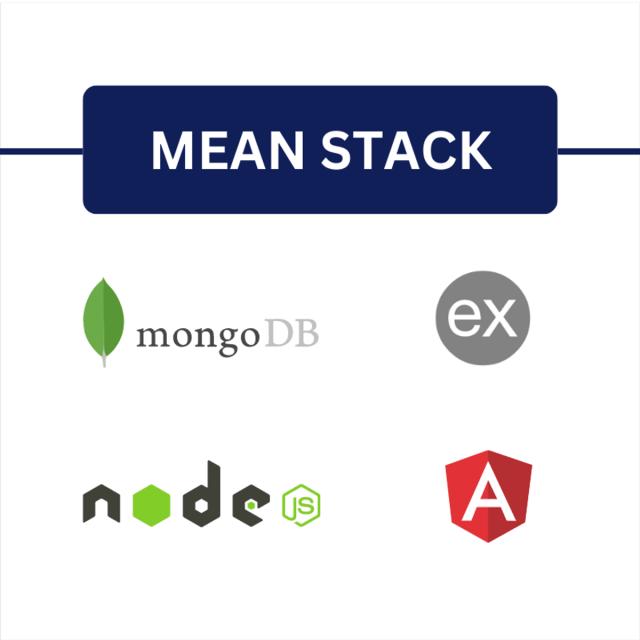
Learn the MEAN Stack & even AngularJS by making a ToDo App that lets you add & edit ToDos in this MEAN Stack course. The MEAN Stack are a prominent set of JavaScript technologies that are often used within web development. The name itself, is created by using the first initials of four different technologies that have been combined together – MongoDB, Express, Angular, and NodeJS. The stack is free and open-source and has been used to build dynamic web sites and applications. The stack is written in JavaScript, allowing the developer to code using the same language for both server-side and client-side.

Self Paced
Self-Paced
Introduction to Node.js (edX) EdX
Linux Foundation,LinuxFoundationX

Introduction to Node.js (edX)

Get started with Node.js, the most popular open source JavaScript runtime. Discover the ways in which Node.js helps in everyday computing scenarios, from service-mocking, rapid-prototyping and real-time applications, to Command Line Interfaces (CLI).

Self Paced
Self-Paced
DevOps Capstone Project (Coursera) Coursera
IBM

DevOps Capstone Project (Coursera)

In this course you will apply your skills and knowledge acquired during previous courses in the PC to demonstrate your proficiency in DevOps practices by developing, testing, deploying, monitoring, and enhancing a secure microservices-based application on Cloud, over the course of several sprints, using a variety of Agile, Cloud Native, and CI/CD technologies and tools.

Aug 24th 2026
5-12 Weeks
Desarrollo del lado servidor: NodeJS, Express y MongoDB (Coursera) Coursera
Universidad Austral

Desarrollo del lado servidor: NodeJS, Express y MongoDB (Coursera)

En este curso trabajarás del lado servidor, en el backend, desarrollando el soporte que toda aplicación necesita para lidiar con la persistencia de la información, el setup de un servidor web, la creación de una API REST, autenticación y autorización, y la integración de librerías de terceros. Utilizarás Express para el servidor web, y una base de datos NoSQL orientada a documentos: MongoDB. Aprenderás de ODM con Mongoose y harás las típicas tareas CRUD sobre Mongo. Finalmente pondrás productivo tu sitio en Heroku.

Aug 24th 2026
4 Weeks