Introduction to Quality Improvement in Healthcare (Coursera)

Introduction to Quality Improvement in Healthcare (Coursera)

This course introduces you to the concepts, theories and application of Quality Improvement (QI) in healthcare from a global perspective. You will hear from patients, clinicians and academics what quality improvement means to them, and how they work together to deliver change. Studying the challenges, they faced and strategies they utilised to overcome those challenges, you will learn to apply and critique core QI methods, from experts in the field.

Class Deals by MOOC List - Click here and see Coursera's Active Discounts, Deals, and Promo Codes.

By the end of this module you will be able to:

  1. Recognise the characteristics of different approaches to quality improvement in order to critique them and make decisions as to when to deploy them.
  2. Explain the necessary components of a structured approach to quality improvement in order to apply key quality improvement methods to support the planning, design, implementation and evaluation of improvement efforts.

Syllabus

WEEK 1
Healthcare Quality and Quality Improvement
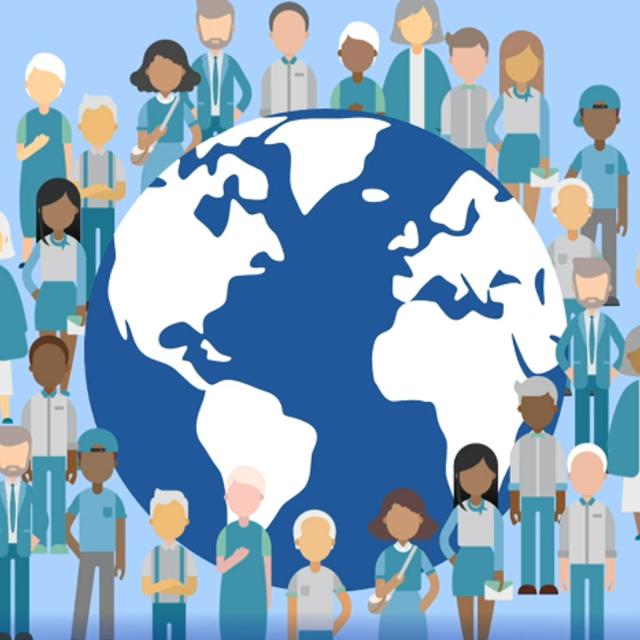
In this module you will learn what is meant by quality in healthcare and why quality improvement is needed, and gain a high level appreciation for some important approaches to quality improvement. You will hear from a patient perspective about the implications of poor quality healthcare, and see some evidence of the global scale of the problem. You will learn about a well-studied example of a quality improvement initiative, the Michigan Keystone project. In addition, you will participate in activities to enable you to reflect on your own knowledge and experience of quality, and quality improvement, in health and care systems.

WEEK 2
Engaging and Empowering Stakeholders with a Shared Vision
In this second module of the course you will be introduced to stakeholder engagement and empowerment including the importance of community, patient and public involvement. You will engage with lived experiences of service users and communities working together with clinicians and academics to improve health and healthcare. You will learn about the importance of good leadership and building a shared vision, and how to practically develop a programme theory for improvement through the Action Effect method.

WEEK 3
Healthcare Processes: Mapping and Implementing Changes
This third module provides an introduction to process mapping and the Plan-Do-Study-Act Cycle as tools to support QI in practice. These methods are core in many approaches to improvement, used to understand and then improve processes of care. You will hear from experts in the field about their use of these methods, and their experiences leading quality improvement in practice, including during the COVID-19 pandemic. You will learn about challenges they encountered and strategies they used to overcome them.

WEEK 4
Long Term Success and the Importance of Context
In this fourth module you will consider issues relating to the long term success of improvement initiatives – what influences whether improvement is sustained once achieved? You will apply an evidence-based tool promoting long term success to example QI initiatives. The context in which an improvement initiative takes place has a significant impact on both implementation and outcomes. Considering two contrasting case studies, one set in rural Guatemala and one in the USA, you will learn how to identify different elements of context and their interaction. In the later part of the module you will learn about common challenges and obstacles that QI teams face when designing and implementing their QI projects, including the role of fidelity in the application of quality improvement methods.
Go to Class
MOOC List is learner-supported. When you buy through links on our site, we may earn an affiliate commission.

Related Courses

Medical Technology and Evaluation (Coursera) Coursera
University of Minnesota

Medical Technology and Evaluation (Coursera)

Innovations in medical technologies are one of the leading areas of economic growth in the world. Whether new technologies take the form of pharmaceutical, medical device, biotechnology, information technology of some combination of these innovations, the opportunities for both private enterprise and social welfare are substantial. However, these innovations are not without cost, and require reimbursement from either a privately or publicly financed health care delivery system to enter the marketplace.

Jun 15th 2026
4 Weeks
Healthcare Delivery Providers (Coursera) Coursera
University of Minnesota

Healthcare Delivery Providers (Coursera)

Welcome to the exciting world of Healthcare Delivery Providers! This second course in the Healthcare Marketplace Specialization will help you understand the various providers of healthcare across the U.S. delivery continuum. We will explore the unique value proposition of the various providers- from hospitals and clinics to physicians to community based providers. We will dissect this important value chain using various lenses such as- site of care delivery, people who provide the care and payers who pay for care. You will also learn about the challenges facing these providers and the innovations they are creating in order to help transform this important industry.

Jun 15th 2026
5-12 Weeks
Data Science in Stratified Healthcare and Precision Medicine (Coursera) Coursera
University of Edinburgh

Data Science in Stratified Healthcare and Precision Medicine (Coursera)

An increasing volume of data is becoming available in biomedicine and healthcare, from genomic data, to electronic patient records and data collected by wearable devices. Recent advances in data science are transforming the life sciences, leading to precision medicine and stratified healthcare. In this course, you will learn about some of the different types of data and computational methods involved in stratified healthcare and precision medicine.

Jun 15th 2026
5-12 Weeks
Healthcare Organizations and the Health System (Coursera) Coursera
Rutgers University

Healthcare Organizations and the Health System (Coursera)

Have you ever been in a healthcare waiting room and thought about how the organization could be more efficient? For example, have you found yourself thinking about how to reduce the amount of time spent waiting? Or do you work in a healthcare organization and find yourself thinking about how to improve the organization? If you have, this course is for you. Course content includes an overview of healthcare organizations, their administration and management, and their governance.

Jun 15th 2026
4 Weeks
Healthcare Innovation: What Does Success Look Like and How to Achieve It? (Coursera) Coursera
Imperial College London

Healthcare Innovation: What Does Success Look Like and How to Achieve It? (Coursera)

This course focuses on the factors involved in the adoption of innovation - features, organizations, country of origin, cognitive, normative and affective aspects, change agents. Using real-world health innovations, you'll assess what impacts their scaleability to new contexts, how organizational and human characteristics affect adoption, to what extent diffusion of an innovation is influenced by unconscious bias.

Jun 15th 2026
4 Weeks
Preventative Healthcare for the Newborn Baby (Coursera) Coursera
University of Colorado System

Preventative Healthcare for the Newborn Baby (Coursera)

In this course, you will learn some medical interventions and skills to keep newborns healthy in the days and weeks after they have been born. We’ll tell you about medicines like Vitamin K and erythromycin and how they can prevent serious illnesses. We’ll also introduce screening tests like hearing screening and newborn blood screening that help to make sure that babies are set up for success right from the start. But we will start off by talking about jaundice, looking at the simple ways to identify and treat this common presentation and prevent any harm to babies.

Jun 15th 2026
5-12 Weeks
The Oral Cavity: Portal to Health and Disease (Coursera) Coursera
University of Pennsylvania

The Oral Cavity: Portal to Health and Disease (Coursera)

This course will focus on the interprofessional realtionship of dentistry and medicine. For each session, the medical specialist will present a broad overview of specific disease entity which will be followed by a dental educator discussing the relevant oral manifestations and implications. The final module of each session will be devoted to the interaction between the dental and other health care professionals.

Jun 15th 2026
5-12 Weeks
Designing for Sustainment: Keeping Improvement Work on Track (Patient Safety IV) (Coursera) Coursera
Johns Hopkins University

Designing for Sustainment: Keeping Improvement Work on Track (Patient Safety IV) (Coursera)

Keeping patient safety and quality improvement projects on track, on time, and on budget is critical to ensuring their success. In this course, students will be introduced and given the opportunity to apply a series of tools to guide and manage patient safety and quality initiatives. These include tools for defining what success looks like, developing a change management plan, and conducting a pre-mortem to identify risks for project failure. This course will also provide tools for engaging stakeholders to ensure key players are invested in your project’s success.

Jun 15th 2026
4 Weeks
Comparative Health Systems (Coursera) Coursera
University of Pennsylvania

Comparative Health Systems (Coursera)

This course uses comparative analysis of health care systems to gain a better understanding of health care systems in several high-income, middle-income and low-income countries. One focus of analysis in this course will therefore be to develop a better knowledge of these health care systems. A second focus will be to use to this analysis to gain a better understanding of the health care system in the United States.

Jun 15th 2026
4 Weeks
Guided Imagery (Coursera) Coursera
University of Minnesota

Guided Imagery (Coursera)

In this course, you will learn how you can use imagery and imagery interventions to help with symptom management and healing, as well as to enhance overall health and wellbeing. You will experience a variety of imagery interventions and evaluate how they might be helpful in providing relief or enhancing quality of life.

Jun 17th 2026
5-12 Weeks