International Organizations for Interpreters (Coursera)

Offered by University of Geneva,
International Organizations for Interpreters (Coursera)

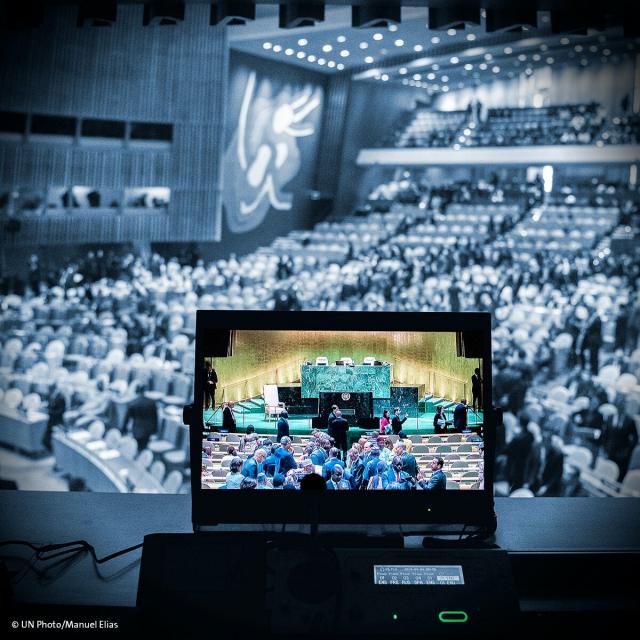
This course is primarily aimed at students of conference interpreting, or people who wish to begin studying conference interpreting. It is based on a long-standing lecture course given by the oldest interpreting school in the world, the Faculty of Translation and Interpreting at the University of Geneva. Our course looks at organizations from a viewpoint which very few people ever get to see; international organizations seen from the interpreting booth. You will learn about the history, development, structure and functions of international organizations, and of course the question of multilingualism.

Class Deals by MOOC List - Click here and see Coursera's Active Discounts, Deals, and Promo Codes.

The purpose of this course is to help you, as a budding interpreter or translator, to gain basic knowledge about the institutions which may be your future employers, and to give you the essential tools that you will need to easily and efficiently prepare yourself for working at an international organization. Naturally, Geneva – renowned for its uniquely high concentration of international organizations – takes centre stage in this course. Throughout this course, we will take you with us to visit a number of these organizations, and to benefit from interviews with various experts who will give us an insider’s view of multilateralism, multilingualism and the other topics broached in the course.

Syllabus

WEEK 1
International Geneva
Welcome to Module 1 of our course. In this Module you will find out how Geneva became a centre of multilateralism, learn about the main international organizations in Geneva, and learn how to identify different kinds of international organization.

WEEK 2
History, Evolution and Trends
Welcome to Module 2 of our course. In this Module you will learn about the founding of the first international organizations and the growth of the multilateral system. We will focus in particular on the League of Nations, the International Labour Organization (ILO) and the UN system as a whole.

WEEK 3
The Structure of International Organizations
Welcome to Module 3 of our course. In this Module you will learn about the legal status of international organizations and the functions of their basic texts. We will then examine the structure of organizations, focussing on identifying the various kinds of body found within them. Finally, you will learn about the different kinds of entity that make up the UN system, in particular the UN specialized agencies.

WEEK 4
The Competencies and Functioning of International Organizations
Welcome to Module 4 of our course. In this Module you will learn about the mandates and roles of international organizations. We will look at the tendency of organizations' mandates to gradually expand, and the problems that can ensue. You will also learn how international organizations make decisions.

WEEK 5
Multilingualism in International Organizations
Welcome to Module 5 of our course. The Module focusses on topics that are of particular interest to future conference interpreters: languages and multilingualism. You will first learn how the current multilingual system at the UN came to be, which, of course, would not have been possible without simultaneous interpreting. You will learn about the founding of our profession, and the important distinction between official and working languages. We will then examine two important issues linked to multilingualism: the increasing dominance of English and the cost of multilingualism within international organizations.

WEEK 6
Conclusion
Welcome to the final Module of our course. This Module will help you assess the benefits and shortcomings of international organizations. We will look at the numerous flaws of international organizations, and the cost of the multilateral system — including typical IO budgets — but we will also assess the importance of international organizations and the multilateral system as a whole.
Go to Class
MOOC List is learner-supported. When you buy through links on our site, we may earn an affiliate commission.

Related Courses

What future for education? (Coursera) Coursera
University of London,UCL Institute of Education

What future for education? (Coursera)

Through this course you will start to critically examine your own ideas about education, teaching and learning. The critique will be developed through engagement with theories and ideas developed through educational research. You will be encouraged to use these ideas to challenge or support your own ideas about education. Each week we will focus on one key question, using video lectures, key readings and challenges to explore some commonplace notions about education.

Jun 22nd 2026
5-12 Weeks
Political Economy of Institutions and Development (Coursera) Coursera
Leiden University

Political Economy of Institutions and Development (Coursera)

This course is part of the SDG initiative addressing the UN Sustainable Development Goals, specifically for the following SDGs [1, 8, 10 and 16]. We hope you will join in our efforts to reach the SDG’s in small but measurable and actionable ways, cooperating with Development Done Differently. Expand your impact. You can create a better world. In today’s world, politics and economics are interconnected, but what is the nature of this connectivity?

May 18th 2026
5-12 Weeks
Understanding Multilingual Children's Language Development (FutureLearn) FutureLearn
University of Reading

Understanding Multilingual Children's Language Development (FutureLearn)

Discover the benefits of multilingualism to enhance your practice in classroom, clinical, and home settings. Discover the value of multilingual environments at school and at home. Most people in the world speak more than one language and schools across the globe are becoming more and more multilingual as families move around. On this three-week course, you’ll gain the skills to support and nurture multilingual children.

Mar 6th 2023
3 Weeks
Educación Supranacional: Descubriendo la Agenda Educativa de los Organismos Internacionales (edX) EdX
Universidad Autonoma de Madrid,UAMx

Educación Supranacional: Descubriendo la Agenda Educativa de los Organismos Internacionales (edX)

Análisis reflexivo y crítico de las políticas educativas de diferentes organismos internacionales y de su impacto ... Es imposible estudiar hoy los sistemas educativos contemporáneos sin adoptar su perspectiva supranacional. Las agendas educativas nacionales se ven influenciadas por las propuestas de los organismos internacionales (OI). Este curso ofrece una visión crítica de las acciones educativas principales OI y de cómo influyen en las reformas nacionales, para promover reflexión sobre la generación de corrientes educativas globales.

Self Paced
Self-Paced
Introduction to Global Governance (edX) EdX
KU Leuven University,KULeuvenX

Introduction to Global Governance (edX)

Critical introduction to the concept, importance and analysis of global governance. In particular, this course provides an overview of the main actors involved in global governance and how these actors manage current key global challenges. Many of the most pressing challenges we are experiencing today are global. Consider climate change, supply chains, or cybersecurity for example – these challenges, like many others, don’t stop or start at the borders of any particular country.

Self Paced
Self-Paced
Microeconomics: When Markets Fail (Coursera) Coursera
University of Pennsylvania

Microeconomics: When Markets Fail (Coursera)

Perfect markets achieve efficiency: maximizing total surplus generated. But real markets are imperfect. In this course we will explore a set of market imperfections to understand why they fail and to explore possible remedies including as antitrust policy, regulation, government intervention. Examples are taken from everyday life, from goods and services that we all purchase and use. We will apply the theory to current events and policy debates through weekly exercises. These will empower you to be an educated, critical thinker who can understand, analyze and evaluate market outcomes.

Jun 23rd 2026
5-12 Weeks
A Life of Happiness and Fulfillment (Coursera) Coursera
Indian School of Business - ISB

A Life of Happiness and Fulfillment (Coursera)

What are the determinants of a happy and fulfilling life? This is surely one of life’s biggest questions, and a question that has interested many of our ancestors. Buddha famously gave up his kingdom in search of happiness. Several Greek philosophers (from Aristotle to Epicurus and Plato to Socrates) had their own views on what it takes to be happy. And of course, we all have our own theories about happiness too.

Jun 22nd 2026
5-12 Weeks
Analizando las Políticas Económicas (Coursera) Coursera
IE Business School

Analizando las Políticas Económicas (Coursera)

Este curso utiliza un enfoque no técnico para analizar la forma en la que los gobiernos utilizan políticas económicas para influenciar la economía de sus países. Al finalizar el curso el participante hablará con propiedad sobre temas tan importantes como la deuda y el déficit de los países, podrá examinar las políticas fiscales y monetarias así como las reformas estructurales de los países.

Jun 22nd 2026
5-12 Weeks
Chinese Politics Part 1 - China and Political Science (Coursera) Coursera
The Hong Kong University of Science and Technology - HKUST

Chinese Politics Part 1 - China and Political Science (Coursera)

This course offers a conceptual framework for understanding China that highlights the intersection of politics and economics. It shows that rather than develop into a full blown market economy, state and party officials at all levels of the political system maintain significant influence in economic development. Such a “political” economy has had both positive and negative outcomes, which we will assess in detail.

Jun 22nd 2026
5-12 Weeks
Qualitative Research Methods (Coursera) Coursera
University of Amsterdam

Qualitative Research Methods (Coursera)

In this course you will be introduced to the basic ideas behind the qualitative research in social science. You will learn about data collection, description, analysis and interpretation in qualitative research. Qualitative research often involves an iterative process. We will focus on the ingredients required for this process: data collection and analysis.

Jun 22nd 2026
5-12 Weeks
Constitutional Struggles in the Muslim World (Coursera) Coursera
University of Copenhagen

Constitutional Struggles in the Muslim World (Coursera)

Learn what motivates the restive Muslim youth from Tunis to Tehran, what political positions Islamists from Mali to Chechnya are fighting for, where the seeming obsession with Islamic law comes from, where the secularists have vanished to, and whether it makes sense to speak of an Islamic state. This course is a survey of the constitutional ideas and institutions that have developed since the mid 19th century throughout predominantly Muslim countries, but its focus will lie on the actors that have dominated this discourse and shaped its outcomes. We will look at the large body of classical writings on the Islamic state only in so far as it is necessary to understand the contemporary debate, but concentrate on the legal and political developments of the 20th and 21st centuries.

Jun 22nd 2026
5-12 Weeks