EdX

The Industry and Profession in Construction Management (edX)

The Industry and Profession in Construction Management (edX)

Learn the different sectors of the industry and the profession by looking at the nature of the industry, future trends, and opportunities. Understand the different sectors of the industry and the role of each participant, specifically the Owner, Designer, and Construction Manager.

Class Deals by MOOC List - Click here and see EdX's Active Discounts, Deals, and Promo Codes.

The industry and profession in construction management is big business. The construction industry will continue to play a key role in society.
Opportunities in construction management are endless. The course covers some of the following topics:

  • Characteristics that define the construction industry.
  • Four major sectors of construction management projects.
  • Current trends within the construction industry and role in society.
  • Skills to lead construction, specifically the Owner, Designer, and Construction Manager, and key stakeholders.

This course concentrates on the people who fill the roles of owner, designer, and construction manager, and must understand the following:

  • Responsibility and authority of the key construction management participants.
  • How is the construction industry changing?
  • Construction companies need leaders.
  • Continuous quality improvement.
  • The three forms of business organizations.
  • Characteristics of an effective construction management leader.
  • The art and science of organizing and leading a construction management project.
  • How the life of a facility goes through phases starting out as an idea combined with money and a project is born.
  • Understand planning, design, and construction tasks and how people are involved in the lifecycle of a building.
  • Analyze the need for the facility and whether it is economically feasible. This is life-cycle cost analysis.
  • Differentiate construction workers , their construction trade , and work experience.
  • What is the employment growth in the construction industry?
  • Differences in building construction projects and infrastructure projects.
  • How to use project management techniques in construction management.
  • Best practices in communication skills and field operations.
  • Construction methods and materials.
  • The role of civil engineering and other engineering disciplines.
  • Improving your construction experience and benefiting from real world lessons learned.
  • Architects design the project. Construction management professionals build the project at the construction site. All parties need to work in harmony to fulfill the functions that must be performed.

This course is part of the Construction Management Professional Certificate.

What you'll learn

  • Understand the roles and responsibilities of being a construction manager
  • Distinguish the principal characteristics that define the construction management industry.
  • Differentiate between the major sectors of construction projects.
  • Current trends within the construction industry.
  • Differentiate between the roles and responsibilities of key construction participants.
  • Appraise the basic models for organizing project teams.
  • Describe the principal tasks in the life cycle of a project.
  • Various construction jobs and their individual career path
  • Differences between general contractors and construction managers
  • Understand the role of civil engineers, other engineers, and the architect in the construction process

Syllabus

  • Week 1: Construction industry.
  • Week 2: Construction project participants.
  • Week 3: Organizing and leading the construction project.
  • Week 4: Project chronology and lifecycle.
Go to Class
MOOC List is learner-supported. When you buy through links on our site, we may earn an affiliate commission.

Related Courses

Sports Turf Management: Best Practices (Coursera) Coursera
University of Illinois at Urbana-Champaign

Sports Turf Management: Best Practices (Coursera)

The Sports Turf Management: Best Practices course will cover the construction, management, and challenges in maintaining athletic fields intended for football, soccer, and baseball. You will learn the fundamental management practices for maintaining athletic fields, such as fertilization, irrigation, mowing, and pest control. An overview of athletic field construction, highlighting the advantages and disadvantages of native soil versus modified soil fields, will be provided. Lastly, you will explore the effects of traffic and compaction on athletic fields and the development of artificial turf.

Jun 22nd 2026
5-12 Weeks
Electric Industry Operations and Markets (Coursera) Coursera
Duke University

Electric Industry Operations and Markets (Coursera)

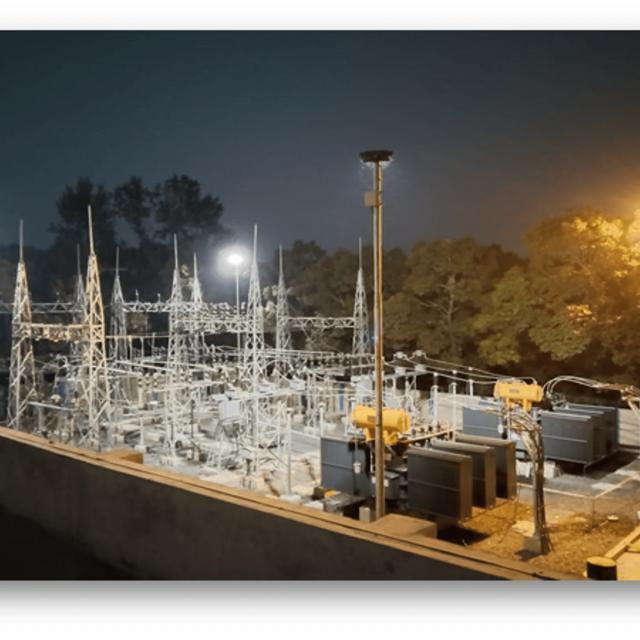
This is a two week course. In the first week you will learn about the core activities that the Industry executes to bring electricity to customers. We will review what electricity is, how it is generated, how it is transmitted, how it comes into buildings, and how consumption of electricity instantly feeds back on the transmission and generation of electricity.

Jun 1st 2026
2 Weeks
Industrial Policy in the 21st Century: The Challenge for Africa (edX) EdX
SDGAcademyX,SDG Academy

Industrial Policy in the 21st Century: The Challenge for Africa (edX)

Why is there so little industry in Africa? Does it matter? What can we do about it? Hear from economist John Page about the continent’s options for industrialization and the future of economic growth in Africa. In this course from the United Nations University World Institute for Development Economics Research (UNU-WIDER), brought to you by the SDG Academy, you will hear from researcher John Page and other leading voices in development economics about the range of activities known “industries without smokestacks,” and learn how industrial policy that promotes the growth of these industries presents a win-win scenario for economic development in Africa.

Self Paced
Self-Paced
Digital Skills: Artificial Intelligence (FutureLearn) FutureLearn
Accenture

Digital Skills: Artificial Intelligence (FutureLearn)

Discover the ability of artificial intelligence to transform your everyday life and reshape the way you work. Identify the skills you will need to work with AI in the future. Artificial intelligence (AI) is used in many businesses to improve the way employees work. On this course, you will learn more about the past, present and future of artificial intelligence and explore its potential in the workplace.

Aug 15th 2022
3 Weeks
Construction Ethics and Compliance (FutureLearn) FutureLearn
Chartered Institute of Building Academy

Construction Ethics and Compliance (FutureLearn)

Find out how to stay ethical, compliant and professional in the construction industry, with this free online course from the CIOB. Some of the largest construction firms in the world have faced the prospect of multi-million fines for significant breaches of ethics and compliance recently – from bribery and collusion to modern slavery. Ethics is defined as a set of moral principles that govern a person’s behaviour or the conducting of an activity, but what does that mean for an individual or an organisation working in construction?

Jul 6th 2020
5-12 Weeks
International Entertainment and Sports Marketing (Coursera) Coursera
Yonsei University

International Entertainment and Sports Marketing (Coursera)

This course will provide learners with a fundamental understanding of the characteristics and marketing strategies related to two key global industries, sports and entertainment. The growth in both industries have been fueled by their ability to innovate via CCCI, i.e. cross-country and cross-industry expansion. There will be a graded quiz that will consists of 10 questions during the first two weeks (together worth 50% of the grade) and a final quiz that contains 20 questions (worth 50% of the grade) in the third week.

Jun 22nd 2026
3 Weeks
The Construction Industry: The Way Forward (Coursera) Coursera
Columbia University

The Construction Industry: The Way Forward (Coursera)

This course provides an introduction on types of the construction projects as well as the main concern of the productivity challenge in the construction industry. Through case studies, you will learn the industry characteristics and its unique environment that led to such productivity performance as well as touch base on other several examples of challenges we are facing internally in the industry.

Jun 15th 2026
5-12 Weeks
Construction Scheduling (Coursera) Coursera
Columbia University

Construction Scheduling (Coursera)

Learners will discover the key project scheduling techniques and procedures including; how to create a network diagram, how to define the importance of the critical path in a project network, and defining project activities float. Also covered are the fundamentals of Bar Charts, Precedence Diagrams, Activity on Arrow, PERT, Range Estimating, and linear project operations and the line of balance.

Jun 15th 2026
5-12 Weeks
Planning of Metro Rail Systems (Coursera) Coursera
L&T EduTech

Planning of Metro Rail Systems (Coursera)

This course has been created for Civil and Transportation Engineers. The "Planning of Metros " course is intended for entry level graduates, those who want to comprehend and navigate the concepts in planning of Metro rail systems. Throughout this course, participants will learn about the fundamental principles of Metro Rail planning in six modules. Tailored by industrial experts, this course is for the consumption of entry level Engineers in the Indian Subcontinent.

Jun 15th 2026
5-12 Weeks
AI in Practice: Preparing for AI (edX) EdX
Delft University of Technology,DelftX

AI in Practice: Preparing for AI (edX)

Learn to recognize and understand the implications of Artificial Intelligence for organizations, and the importance of compliance and ethics when AI is applied in practice. This course is not about difficult algorithms and complex programming; it is a course for anyone interested in learning about the benefits and implications of AI when applied in practical settings.

Self Paced
Self-Paced