EdX

The Future of Mining? (edX)

The Future of Mining? (edX)

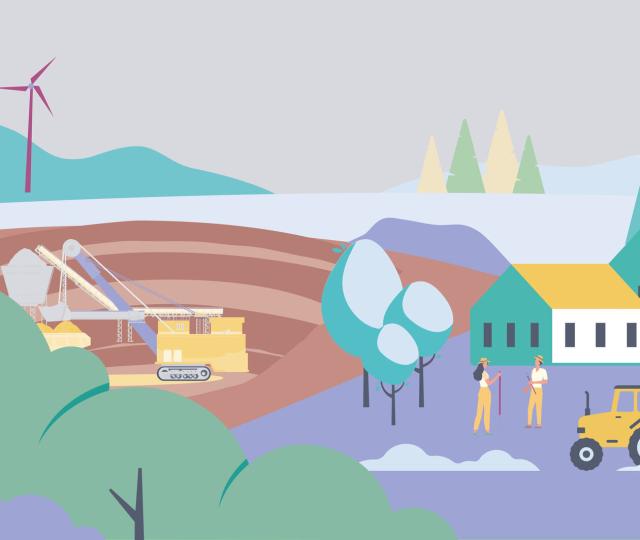
Building scenarios to explore the possible futures for the mining sector in 2040. What will the mining and minerals sector look like in 2040? This course aims to explore the risks, challenges and opportunities facing the mining industry over the next few decades.

Class Deals by MOOC List - Click here and see EdX's Active Discounts, Deals, and Promo Codes.

You will learn about scenario planning and how to use this approach as a strategic tool to consider a range of possible futures for the minerals sector, against the backdrop of uncertain future environments.

You will also explore the current significant challenges for the sector as well as the impact of rapidly changing technologies, and how these combine with changing societal expectations and global trends in several possible futures.
This interactive course incorporates videos, expert insights, simulations, discussions and scenarios to deepen your current understanding of the sector, and to encourage you to develop your own ideas about possible future directions.

What you'll learn

  • The role of minerals in society and their contribution to sustainable development.
  • The current issues and challenges confronting the sector.
  • Emerging technologies and their impact across the value chain.
  • The contribution of mining to the concept of the circular economy.
  • New frameworks and policies for resource developments in the 21st century.

Course Syllabus

Module 0: Getting started
Meet your peers and the course contributors from around the world and complete an introductory survey. Learn about types of mines and the fascinating history of mining. An introduction to scenario planning and how organisations are using this as a tool to adjust to unpredictable futures.

Module 1: Mineral resources in modern society
The role of metals in society and changing production and consumption trends in the resources sector. We examine the intersection of population growth, the changes in resource intensity linked to economic growth, and the effect of innovation and the adoption of new technology.

Module 2: The big issues
The current issues and challenges confronting the mining industry, including social and political dimensions; and what needs to change in the way mining is integrated into medium to long term planning for water management, rehabilitation and mine closure

Module 3: Mining futures
An examination of emerging technologies and their impact across the value chain and why it is an exciting time for the mining industry, which is in the midst of a profound digital transformation.

Module 4: Re-thinking resources
A focus on mining's contribution to the concept of the circular economy. What are resources, are we running out of metals and how can we create value from mining waste?

Module 5: Breaking new ground
A review of some of the new dialogues surrounding the role of mining in the 21st century. Smart sharing of infrastructure, and national and transnational frameworks for realising improved outcomes from mining development. An analysis of possible future scenarios that offer a plausible glimpse into the future and the challenge of how well your organisation is prepared for one of these possible futures.


Go to Class
MOOC List is learner-supported. When you buy through links on our site, we may earn an affiliate commission.

Related Courses

Découvrir la science politique (edX) EdX
LouvainX,Université Catholique de Louvain - UCL

Découvrir la science politique (edX)

Décrypter des enjeux politiques actuels à partir d’une boîte à outils: des notions importantes, une démarche analytique et une perspective critique. Le politique nous concerne tous : chaque jour, des décisions publiques sont adoptées qui impactent notre quotidien. Dans quel contexte ces décisions sont-elles adoptées ? Au 21ème siècle, de nombreux paradoxes brouillent la vision que nous pouvons en avoir.

Self Paced
Self-Paced
Electrotechnique II (edX) EdX
École Polytechnique Fédérale de Lausanne,EPFLx

Electrotechnique II (edX)

Découvrez les systèmes alternatifs triphasés et leurs charges associées ainsi que les régimes transitoires, base des alimentations à découpage. Ce cours traite des systèmes alternatifs triphasés, piliers de l'alimentation électrique industrielle et de certains types de machines électriques. Les charges triphasées associées, symétriques ou dissymétriques, seront étudiées ainsi que les puissances actives, réactives et apparentes qui en découlent. Des méthodes de compensation de la puissance réactive seront développées.

Self Paced
Self-Paced
Text Mining and Analytics (Coursera) Coursera
University of Illinois at Urbana-Champaign

Text Mining and Analytics (Coursera)

This course will cover the major techniques for mining and analyzing text data to discover interesting patterns, extract useful knowledge, and support decision making, with an emphasis on statistical approaches that can be generally applied to arbitrary text data in any natural language with no or minimum human effort.

Jul 27th 2026
5-12 Weeks
Introduction aux ressources minérales : un enjeu pour la planète (FUN) FUN
Institut Mines-Telecom

Introduction aux ressources minérales : un enjeu pour la planète (FUN)

Les besoins en matières premières minérales sont croissants et de plus en plus diversifiés ! Alors que la mine s’est longtemps imposée à son territoire, elle doit donc désormais composer avec lui. L’industrie extractive et de première transformation est fortement sollicitée pour y subvenir. Créatrice de richesses mais parfois source de bouleversements, elle a la capacité d’influer fortement sur les trajectoires de développement des territoires. Son impact environnemental et sociétal peut être considérable et ses traces difficiles à effacer même longtemps après la fermeture des installations.

No sessions available
5-12 Weeks
Sustainable Management in the Extractive Industry (FutureLearn) FutureLearn
SUMEX

Sustainable Management in the Extractive Industry (FutureLearn)

Explore the importance of sustainability in the extractive industry and what the solutions along 5 key action areas are. On this six-week course, you’ll discover the most pressing issues and practical challenges faced by decision makers within the extractive industry. You’ll critically reflect on sustainability, discover best practice strategies, and learn how to respond to sustainability challenges faced by the mineral resource extraction sector.

Aug 14th 2023
5-12 Weeks
Electrotechnique I (edX) EdX
École Polytechnique Fédérale de Lausanne,EPFLx

Electrotechnique I (edX)

Découvrez les circuits électriques linéaires. Apprenez à les maîtriser et à les résoudre, dans un premier temps en régime continu puis en régime alternatif. Ce cours définit les notions de base des circuits électriques composés des trois éléments passifs (résistance, inductance et condensateur), linéaires et des sources de tension et de courant.

Self Paced
Self-Paced
Digital Transformation of Mining (edX) EdX
Curtin University,CurtinX

Digital Transformation of Mining (edX)

This course provides learners with an overview of applications of digital technology across the value chain, including automation, monitoring and remote operations, to optimise the value extracted from a minerals deposit. It will also investigate how digitisation of the sector will likely change the required mining skills of the workforce, enhancing the safe exploitation of an orebody.

Self Paced
Self-Paced
Justice (edX) EdX
HarvardX,Harvard University

Justice (edX)

Justice, one of the most famous courses taught at Harvard College, is an introduction to moral and political philosophy, offering an opportunity to discuss contemporary dilemmas and controversies. Taught by lauded Harvard professor Michael Sandel, Justice explores critical analysis of classical and contemporary theories of justice, including discussion of present-day applications.

Self Paced
Self-Paced
Improving Global Health: Focusing on Quality and Safety (edX) EdX
HarvardX,Harvard University

Improving Global Health: Focusing on Quality and Safety (edX)

An introduction to the emerging field of global healthcare quality. Access to healthcare services is critical – but is it enough? We are at a critical inflection point in global health. We have seen improvements in access to care, but struggle to improve human health. A key component of this equation is quality of care. Improving access to healthcare is only as useful as the quality of care provided. Many agree that quality is important – but what is it? How do we define it? How do we measure it? And most importantly, how might we make it better?

Self Paced
Self-Paced