Fundamentals of Materials Science (Coursera)

Fundamentals of Materials Science (Coursera)

Materials are the physical foundations for the development of science and technology. The human civilizations are historically designated by the evolution of materials, such as the Stone Age, the Bronze Age and the Iron Age. Nowadays, materials science and technology support most of the industrial sectors, including aerospace, telecommunications, transportation, architecture, infrastructure and so on. Fundamentals of Materials Science is a core module for undergraduates majored in materials science and engineering.

Class Deals by MOOC List - Click here and see Coursera's Active Discounts, Deals, and Promo Codes.

This English course will be taught by Prof. Guo Qiang, Prof. Reddy and Prof. Liu Jing from Shanghai Jiao Tong University. An integrated approach of combining metallic, ceramic and polymeric materials will be adopted in this course, for the attendants to attain a deep understanding on the correlation of composition, microstructure, processing and properties in materials science. Let’s gather in this course and explore the wonderland of materials together.

Syllabus

Week 1
In week 1, you will get a brief introduction to materials science, as well as part 1 of module 1 including atomic bonding in solids, crystal lattices, and crystal structures of metals.

Week 2
In week 2, we will continue with part 2 of module 1 including crystallographic points, directions & planes, the crystal structure of ceramics, polymorphism & allotropy, the structure of polymers, and round up with the characterization of crystal structures.

Week 3
In week 3, we will start with part 1 of module 2 including the equilibrium concentration of point defects, point defects in ionic solids, the concept of dislocations, and their geometry.

Week 4
In week 4, we will finish module 2 including dislocations in real crystals, their motion, elastic properties, forces, and finally surfaces & interfaces.

Week 5
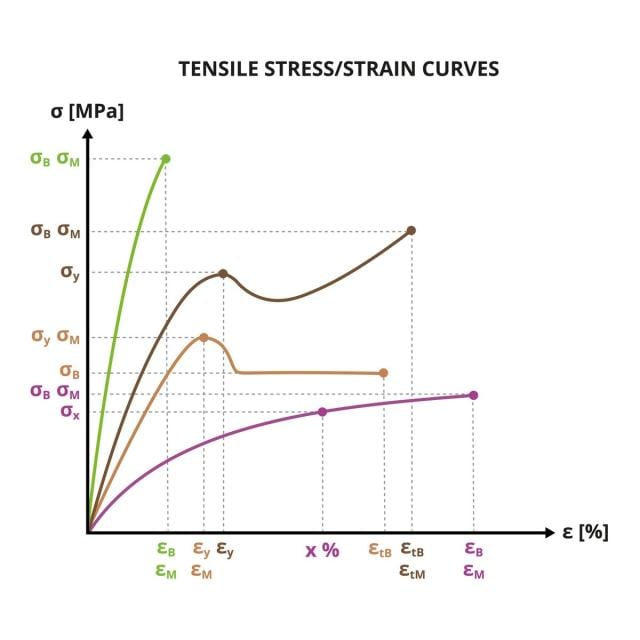
In week 5, we will start with part 1 of module 3 including stress-strain curves, elastic & viscoelastic properties, slip mechanism, and twinning & kinking.

Week 6
In week 6, we will continue with part 2 of module 3 including grain refinement, solid solution strengthening, second phase & work hardening, and property evolution.

Week 7
In week 7, we will finish module 3 including all about the mechanical properties of ceramics, polymers, and composites.

Week 8
In week 8, we will introduce you in module 4 to the concepts of the kinetics of recovery and recrystallization, grain growth after recrystallization, and finally dynamic recovery and dynamic recrystallization.

Week 9
In week 9, we will introduce you to part 1 of module 5 including the diffusion phenomena, Fick's law, solutions to diffusion functions, and Kirkendall & Darken.

Week 10
In week 10, we will finish module 5 including the thermodynamics of diffusion, atomic mechanisms of diffusion, and factors that affect diffusion.

Week 11
In week 11, we will introduce part 1 of module 6 including the basics and thermodynamics of phase diagrams, as well as the effect of pressure on free energy, and free energy of binary systems.

Week 12
In week 12, we will continue with part 2 of module 6 including the graphic construction of phase diagrams, Gibbs phase rule. and the evolution of different phase diagrams.

Week 13
In week 13, we will continue with part 3 of module 6 including the spinodal decomposition, the lever rule, binary phase diagrams, and we will talk about the differences of steels and cast irons with the iron-carbon phase diagram.

Week 14
In week 14, we will finish module 6 including the continue of our talk about the differences of steels and cast irons with the iron-carbon phase diagram, and we will talk about ternary phase diagrams.

Week 15
In week 15, we will introduce part 1 of module 7 including the basics of phase transformations and solidification, nucleation, heterogeneous vs homogenous nucleation, and the temperature time transformation.

Week 16
In week 16, we will finish module 6 introducting phase transformations in steels and alloy steels, precipitation, and precipitation in Al alloys.
Go to Class
MOOC List is learner-supported. When you buy through links on our site, we may earn an affiliate commission.

Related Courses

Interagir com sistemas operativos (Coursera) Coursera
Google

Interagir com sistemas operativos (Coursera)

Neste curso, através de uma combinação de palestras em vídeo, demonstrações e experiências práticas, vai adquirir conhecimentos acerca dos componentes principais de um sistema operativo e como realizar tarefas críticas, como gerir software e utilizadores e configurar hardware. Vamos terminar com um exemplo de como este conteúdo pode surgir no contexto de uma entrevista.

Jun 8th 2026
5-12 Weeks
Object-Oriented Hierarchies in Java (Coursera) Coursera
LearnQuest

Object-Oriented Hierarchies in Java (Coursera)

Object-Oriented Hierarchies in Java is the third of a series of courses in the Core Java Specialization. The Core Java Specialization is part of a series of programming specializations, derived from LearnQuest's private Java Bootcamps, designed to provide the skill set necessary to be hired as an IT developer using Java in many corporate environments.

Jun 8th 2026
5-12 Weeks
Object-Oriented Programming and GUI with Python (Coursera) Coursera
Arizona State University

Object-Oriented Programming and GUI with Python (Coursera)

In this course we will implement object-oriented programming into Python programs; outline the importance of why and how we use object-oriented programming; and learn how to use inheritance when designing a program. We will also look at how to build a graphical user interface for a basic program.

Jun 15th 2026
3 Weeks
Thermodynamique : applications (Coursera) Coursera
École Polytechnique Fédérale de Lausanne

Thermodynamique : applications (Coursera)

Ce cours complète le MOOC « Thermodynamique : fondements » qui vous permettra de mettre en application les concepts fondamentaux de la thermodynamique. Pour atteindre cet objectif, le Professeur J.-Ph. Ansermet de l’Ecole Polytechnique Fédérale de Lausanne s’est entouré d’experts et de spécialistes des différents domaines d’application provenant de diverses institutions partenaires du réseau RESCIF. Vous pourrez ainsi voir l’usage de la thermodynamique en chimie, en ingénierie et en physique.

Jun 8th 2026
5-12 Weeks
Quantum Mechanics (Coursera) Coursera
University of Colorado Boulder

Quantum Mechanics (Coursera)

Course 2 of Statistical Thermodynamics presents an introduction to quantum mechanics at a level appropriate for those with mechanical or aerospace engineering backgrounds. Using a postulatory approach that describes the steps to follow, the Schrodinger wave equation is derived and simple solutions obtained that illustrate atomic and molecular structural behavior. More realistic behavior is also explored along with modern quantum chemistry numerical solution methods for solving the wave equation.

Jun 8th 2026
3 Weeks
Chemical Engineering Thermodynamics 2 (Coursera) Coursera
Korea Advanced Institute of Science and Technology - KAIST

Chemical Engineering Thermodynamics 2 (Coursera)

An appreciation of thermodynamics is required to become a chemical and biomolecular engineer. Thermodynamics can assess the viability of a process and is one of the curriculum's most essential topics. The principles are utilized in following engineering courses (kinetics, mass transfer, design, materials) and are applicable to numerous engineering disciplines. The increased emphasis on energy usage and transformation as a result of rising demand, diminishing supply, and global warming necessitates that the engineers who will tackle these issues have a firm grasp of thermodynamics.

Jun 8th 2026
5-12 Weeks
3D Interaction Design in Virtual Reality (Coursera) Coursera
University of London,Goldsmiths, University of London

3D Interaction Design in Virtual Reality (Coursera)

This course will teach you about one of the most important aspects of VR, how you interact with a VR world. Virtual Reality is completely different from an on screen app or game. You are completely immersed in a VR world, so it doesn't make sense to interact only through buttons or menus. You will get the most out of VR if you can interact with the world just as you would with the real world: with your natural body movements.

Jun 8th 2026
4 Weeks
Object-Oriented Python: Inheritance and Encapsulation (Coursera) Coursera
Codio

Object-Oriented Python: Inheritance and Encapsulation (Coursera)

Code and run your first python program in minutes without installing anything! This course is designed for learners with limited coding experience, providing a solid foundation of not just python, but core Computer Science topics that can be transferred to other languages. The modules in this course cover inheritance, encapsulation, polymorphism, and other object-related topics. Completion of the prior 3 courses in this specialization is recommended.

Jun 8th 2026
4 Weeks
Fundamentals of Macroscopic and Microscopic Thermodynamics (Coursera) Coursera
University of Colorado Boulder

Fundamentals of Macroscopic and Microscopic Thermodynamics (Coursera)

Course 1 first explores the basics of both macroscopic and microscopic thermodynamics from a postulatory point of view. In this view, the meaning of temperature, thermodynamic pressure and chemical potential are especially clear and easy to understand. In addition, the development of the Fundamental Relation and its various transformations leads to a clear path to property relations and to the concept of ensembles needed to understand the relationship between atomic and molecular structural properties and macroscopic properties.

Jun 8th 2026
3 Weeks
Chemical Engineering Thermodynamics 1 (Coursera) Coursera
Korea Advanced Institute of Science and Technology - KAIST

Chemical Engineering Thermodynamics 1 (Coursera)

An appreciation of thermodynamics is required to become a chemical and biomolecular engineer. Thermodynamics can assess the viability of a process and is one of the curriculum's most essential topics. The principles are utilized in following engineering courses (kinetics, mass transfer, design, materials) and are applicable to numerous engineering disciplines. The increased emphasis on energy usage and transformation as a result of rising demand, diminishing supply, and global warming necessitates that the engineers who will tackle these issues have a firm grasp of thermodynamics.

Jun 8th 2026
5-12 Weeks
Material Behavior (Coursera) Coursera
Georgia Institute of Technology

Material Behavior (Coursera)

Have you ever wondered why ceramics are hard and brittle while metals tend to be ductile? Why some materials conduct heat or electricity while others are insulators? Why adding just a small amount of carbon to iron results in an alloy that is so much stronger than the base metal? In this course, you will learn how a material’s properties are determined by the microstructure of the material, which is in turn determined by composition and the processing that the material has undergone.

Jun 15th 2026
5-12 Weeks
Ceramics and Composites (Coursera) Coursera
Arizona State University

Ceramics and Composites (Coursera)

This course will introduce the major types of ceramics and their applications. We will learn about the different methods used for glass strengthening; the factors that determine a ceramic’s crystal structure; the key characteristics of composite materials; and the different structures of fiber-reinforced composite materials. We will discuss reasons for creating various types of composites.

Jun 15th 2026
5-12 Weeks