Foundations of IoT Systems and Industrial Automation (Coursera)

Offered by LearnQuest,
Foundations of IoT Systems and Industrial Automation (Coursera)

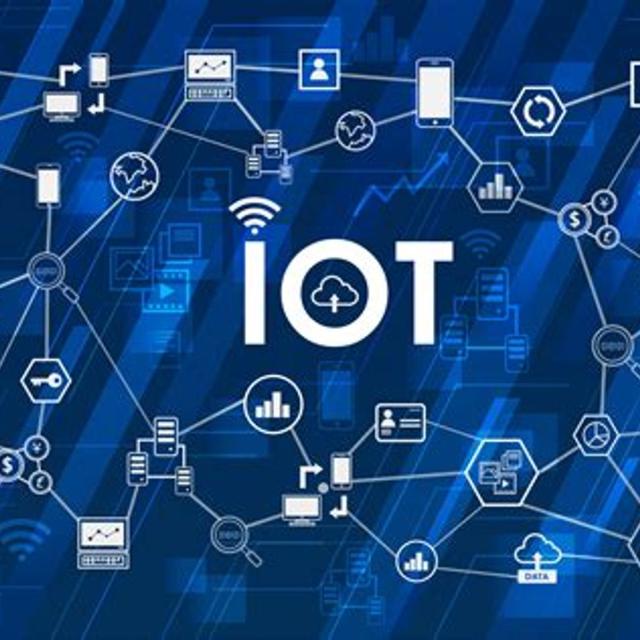
This comprehensive course offers learners a deep dive into the world of IoT systems and their integration with Industrial Automation. Uncover the historical roots and architectural nuances of IoT, emphasizing the pivotal role of sensor technologies and diverse communication tools. Through this exploration, participants will establish a solid foundation in IoT concepts, understanding how its components collaborate, exploring various sensor types, and evaluating communication protocols.

Class Deals by MOOC List - Click here and see Coursera's Active Discounts, Deals, and Promo Codes.

The course then extends its focus to Industrial Automation, shedding light on its far-reaching impact across various sectors. From the core components of Industry 4.0 to the practical applications of automation in manufacturing and logistics, participants gain valuable insights into the transformative technologies driving industrial progress. This dual exploration sets the stage for a holistic understanding of how Industrial Automation and IoT collaborate, shaping the future of industries.
This introductory course is designed for all learners interested in building a strong foundation for IoT systems and industrial automation concepts. The course imparts best practices for navigating complexities in data management, analytics, security, and privacy concerns, providing practical insights crucial for safeguarding and optimizing IoT implementations. By the course's conclusion, participants will possess the skills and knowledge necessary to navigate the evolving landscapes of IoT systems and Industrial Automation effectively.
This course is part of the IoT Systems and Industrial Applications with Design Thinking Specialization.

Syllabus

Welcome & Module 1: Introduction to IoT Systems
This module is designed to provide learners with a comprehensive introduction to IoT systems. It covers the history and architecture of IoT, the significance of sensor technologies, and various communication tools. Learners will gain knowledge in how IoT components work together, explore sensor types, and compare communication protocols. This module sets a strong foundation for understanding the core concepts of IoT systems.

Module 2: Introduction to Industrial Automation and Applications
This module explores Industrial Automation and its widespread applications. Learners will understand its role in various sectors and the technologies driving it. From components of Industry 4.0 to automation in manufacturing and logistics, learners will gain insights into the diverse applications of this transformative technology. This module sets the stage for learners to comprehend the dynamic landscape of Industrial Automation in conjunction with IoT.

Module 3: Implementing Industrial IoT Solutions and Best Practices
In this module, learners will explore the challenges and risks inherent in implementing industrial IoT solutions, equipping themselves with the knowledge to overcome hurdles. Best practices will be shared for successfully implementing IoT systems across diverse sectors, empowering learners with strategies to ensure efficient execution. Practical insights will be offered on data management, analytics, security, and privacy concerns, critical for safeguarding IoT implementations.
Go to Class
MOOC List is learner-supported. When you buy through links on our site, we may earn an affiliate commission.

Related Courses

Programming Mobile Applications for Android Handheld Systems: Part 2 (Coursera) Coursera
University of Maryland, College Park

Programming Mobile Applications for Android Handheld Systems: Part 2 (Coursera)

This course introduces you to the design and implementation of Android applications for mobile devices. You will build upon concepts from the prior course, including handling notifications, using multimedia and graphics and incorporating touch and gestures into your apps.

Jun 8th 2026
5-12 Weeks
Internet of Things Capstone V2: Build a Mobile Surveillance System (Coursera) Coursera
University of California, San Diego

Internet of Things Capstone V2: Build a Mobile Surveillance System (Coursera)

In the Capstone project for the Internet of Things specialization, you will design and build your own system that uses at least 2 sensors, at least 1 communication protocol and at least 1 actuator. You will have a chance to revisit and apply what you have learned in our courses to achieve a robust, practical and/or fun-filled project. We absolutely encourage you to design whatever you can think up! This is your chance to be creative or to explore an idea that you have had. But if you don’t have your own idea, we provide the description of a surveillance system, for you to build. We will participate in the Capstone with you by building a surveillance system that features an off-grid solar powered workstation that will serve as a hub to multiple surveillance sensors.

Jun 8th 2026
4 Weeks
Salesforce Integration (Coursera) Coursera
University of California, Irvine

Salesforce Integration (Coursera)

Salesforce Integration explores why data management is so important, how Salesforce can help organize and display reported data to gain insight into trends and patterns, and how to automate manual business procedures. Learners will specifically practice creating custom automation process, building work flows, and performing data modeling. The course includes in-depth readings and practical application activities within Salesforce's Trailhead education platform, peer discussion opportunities, demonstration videos, and peer review assignments.

Jun 8th 2026
3 Weeks
The Raspberry Pi Platform and Python Programming for the Raspberry Pi (Coursera) Coursera
University of California, Irvine

The Raspberry Pi Platform and Python Programming for the Raspberry Pi (Coursera)

The Raspberry Pi is a small, affordable single-board computer that you will use to design and develop fun and practical IoT devices while learning programming and computer hardware. In addition, you will learn how to set up up the Raspberry Pi environment, get a Linux operating system running, and write and execute some basic Python code on the Raspberry Pi. You will also learn how to use Python-based IDE (integrated development environments) for the Raspberry Pi and how to trace and debug Python code on the device.

Jun 8th 2026
4 Weeks
Salesforce Capstone: Organization Integration (Coursera) Coursera
University of California, Irvine

Salesforce Capstone: Organization Integration (Coursera)

In Salesforce Capstone: Organization Integration, the final course of the Salesforce Fundamentals Specialization, learners will complete the Business Administration Specialist Superbadge as their main project. This project asks learners to combine all the skills and knowledge areas that they have collected from the previous three courses. Skill areas to be demonstrated include cleaning and importing account data, adding users and managing access, building email templates for new marketing needs, configuring UI tools for a new product type, generating reports and dashboards, managing and applying Chatter tools, and participating in the deployment of Salesforce within an organization.

Jun 8th 2026
1 Week
Introduction and Programming with IoT Boards (Coursera) Coursera
Pohang University of Science and Technology - POSTECH

Introduction and Programming with IoT Boards (Coursera)

Internet of Things (IoT) is an emerging area of information and communications technology (ICT) involving many disciplines of computer science and engineering including sensors/actuators, communications networking, server platforms, data analytics and smart applications. IoT is considered to be an essential part of the 4th Industrial Revolution along with AI and Big Data. This course will be very useful to senior undergraduate and graduate students as well as engineers who are working in the industry.

Jun 8th 2026
5-12 Weeks
GIS Data Formats, Design and Quality (Coursera) Coursera
University of California, Davis

GIS Data Formats, Design and Quality (Coursera)

In this course, the second in the Geographic Information Systems (GIS) Specialization. What you will learn: design data tables and use separating and joining data in a relational database; write query strings to subset data; create and work with raster data; create web maps.

Jun 8th 2026
4 Weeks
Enterprise and Infrastructure Security (Coursera) Coursera
New York University

Enterprise and Infrastructure Security (Coursera)

This course introduces a series of advanced and current topics in cyber security, many of which are especially relevant in modern enterprise and infrastructure settings. The basics of enterprise compliance frameworks are provided with introduction to NIST and PCI. Hybrid cloud architectures are shown to provide an opportunity to fix many of the security weaknesses in modern perimeter local area networks.

Jun 8th 2026
4 Weeks
UI Automation and Selectors (Coursera) Coursera
UiPath

UI Automation and Selectors (Coursera)

The UI Automation and Selectors course provides a deep understanding of the different methods used while interacting with the User Interface of different applications like Excel, Word, CRM, Websites while building automation projects. It introduces the Recording feature and the different recordings available in Studio to record user actions and generate workflows. It will also provide knowledge about Selectors and how they are beneficial while building automation projects.

Jun 8th 2026
2 Weeks
M2M & IoT Interface Design & Protocols for Embedded Systems (Coursera) Coursera
University of Colorado Boulder

M2M & IoT Interface Design & Protocols for Embedded Systems (Coursera)

This course can also be taken for academic credit as ECEA 5348, part of CU Boulder’s Master of Science in Electrical Engineering degree. M2M and IoT Interface Design and Protocols is the third of three classes in the Embedded Interface Design (EID) specialization, an online version of the on-campus EID class taught in graduate embedded systems design. This course is focused on connecting devices to each other and to the cloud to create prototypes and actual systems that flow data from devices to consumers. The class includes an introduction to M2M (Machine-to-Machine) and IoT (Internet of Things) concepts, using the cloud to develop IoT systems (specifically AWS (Amazon Web Services) and its IoT framework), a review of common communications protocols at every level of connected devices, and other IoT design concerns such as security, message queuing approaches, and the use and design of APIs and microservices .

Jun 8th 2026
4 Weeks
Research Data Management and Sharing (Coursera) Coursera
University of Edinburgh,University of North Carolina

Research Data Management and Sharing (Coursera)

This course will provide learners with an introduction to research data management and sharing. After completing this course, learners will understand the diversity of data and their management needs across the research data lifecycle, be able to identify the components of good data management plans, and be familiar with best practices for working with data including the organization, documentation, and storage and security of data. Learners will also understand the impetus and importance of archiving and sharing data as well as how to assess the trustworthiness of repositories.

Jun 8th 2026
5-12 Weeks