First Order Optical System Design (Coursera)

First Order Optical System Design (Coursera)

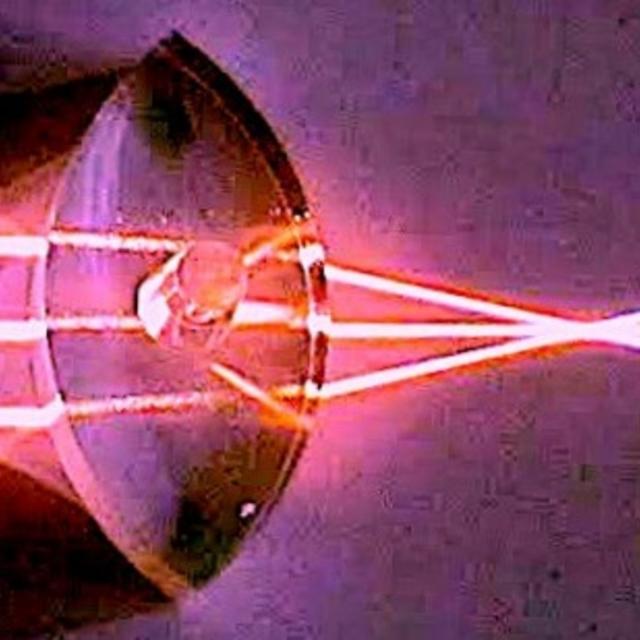
This course can also be taken for academic credit as ECEA 5600, part of CU Boulder’s Master of Science in Electrical Engineering degree. Optical instruments are how we see the world, from corrective eyewear to medical endoscopes to cell phone cameras to orbiting telescopes. When you finish this course, you will be able to design, to first order, such optical systems with simple mathematical and graphical techniques.

Class Deals by MOOC List - Click here and see Coursera's Active Discounts, Deals, and Promo Codes.

This first order design will allow you to develop the foundation needed to begin all optical design as well as the intuition needed to quickly address the feasibility of complicated designs during brainstorming meetings. You will learn how to enter these designs into an industry-standard design tool, OpticStudio by Zemax, to analyze and improve performance with powerful automatic optimization methods.
What You Will Learn

  • be able to design, to first order, such optical systems with simple mathematical and graphical techniques

Course 1 of 3 in the Optical Engineering Specialization.

Syllabus

WEEK 1
Introduction to Geometrical Optics
This module introduces rays, which we use to describe the motion of light through air and materials. The course overview describes the goals of this course and gives tips on how to make the best use of the course materials to be successful. The lectures introduce the material. The in-video questions, lab demonstrations, PhET interactive demonstration, practice problems, and homework assignment allow you to get actively involved in learning the material.

WEEK 2
Optical System Design in OpticStudio
In this module, you will learn how to enter the description of an optical system into OpticStudio, analyze the performance of that system using various calculations and plots, and finally optimize that design by defining a merit function and search variables.

WEEK 3
First Order Ray Tracing
This module applies Snell's Laws to the curved interfaces of lenses and mirrors. You will learn the graphical and mathematical tools you need to calculate image size and location for thin lens and mirror systems. This foundation is essential to build more complex optical systems.

WEEK 4
Thick Optics and Mirrors
This module extends the analysis of the previous module to include the effects of real, thick lenses. You will learn how to input this factor into your optical system analysis and design.

WEEK 5
First-Order Ray Tracing of Multi-Element Systems
For multiple element optical systems, the mathematical tools introduced in this module will make analysis faster and more efficient. In this module, you will learn how to cascade multiple lens systems using matrix multiplication.

Go to Class
MOOC List is learner-supported. When you buy through links on our site, we may earn an affiliate commission.

Related Courses

Motors and Motor Control Circuits (Coursera) Coursera
University of Colorado Boulder

Motors and Motor Control Circuits (Coursera)

This is our second course in our specialization on Embedding Sensor and Motors. To get the most out of this course, you should first take our first course entitled Sensors and Sensor Circuits. Our first course gives you a tutorial on how to use the hardware and software development kit we have chosen for the lab exercises. This second course assumes that you already know how to use the kit.

Jun 22nd 2026
5-12 Weeks
Sustainability through Soccer: Systems-Thinking in Action (Coursera) Coursera
University of Virginia

Sustainability through Soccer: Systems-Thinking in Action (Coursera)

This course takes learners on a journey through a progression of systems-thinking and sustainability concepts. Using the beautiful game of soccer as an analogy, we'll work together to illuminate real-world interdependencies (such as between climate change and human rights), building the chain of concepts in a fun, accessible way. Soccer nerds and newbies alike will be entertained and, ultimately, rewarded with the epiphanies that come from seeing in systems more clearly.

Jun 22nd 2026
4 Weeks
Machine Design Part I (Coursera) Coursera
Georgia Institute of Technology

Machine Design Part I (Coursera)

“Machine Design Part I” is the first course in an in-depth three course series of “Machine Design.” The “Machine Design” Coursera series covers fundamental mechanical design topics, such as static and fatigue failure theories, the analysis of shafts, fasteners, and gears, and the design of mechanical systems such as gearboxes. Throughout this series of courses we will examine a number of exciting design case studies, including the material selection of a total hip implant, the design and testing of the wing on the 777 aircraft, and the impact of dynamic loads on the design of an bolted pressure vessel. In this first course, you will learn robust analysis techniques to predict and validate design performance and life.

Jun 22nd 2026
5-12 Weeks
Digital Thread: Implementation (Coursera) Coursera
University at Buffalo,The State University of New York

Digital Thread: Implementation (Coursera)

There are opportunities throughout the design process of any product to make significant changes, and ultimately impact the future of manufacturing, by embracing the digital thread. In this course, you will dig into the transformation taking place in how products are designed and manufactured throughout the world. It is the second of two courses that focuses on the "digital thread" – the stream that starts at the creation of a product concept and continues to accumulate information and data throughout the product life cycle.

Jun 22nd 2026
5-12 Weeks
Control of Nonlinear Spacecraft Attitude Motion (Coursera) Coursera
University of Colorado Boulder

Control of Nonlinear Spacecraft Attitude Motion (Coursera)

This course trains you in the skills needed to program specific orientation and achieve precise aiming goals for spacecraft moving through three dimensional space. First, we cover stability definitions of nonlinear dynamical systems, covering the difference between local and global stability. We then analyze and apply Lyapunov's Direct Method to prove these stability properties, and develop a nonlinear 3-axis attitude pointing control law using Lyapunov theory. Finally, we look at alternate feedback control laws and closed loop dynamics.

Jun 22nd 2026
4 Weeks
Diode - pn Junction and Metal Semiconductor Contact (Coursera) Coursera
University of Colorado Boulder

Diode - pn Junction and Metal Semiconductor Contact (Coursera)

This course presents in-depth discussion and analysis of pn junction and metal-semiconductor contacts including equilibrium behavior, current and capacitance responses under bias, breakdown, non-rectifying behavior, and surface effect. You'll work through sophisticated analysis and application to electronic devices.

Jun 28th 2026
4 Weeks
Optical Efficiency and Resolution (Coursera) Coursera
University of Colorado Boulder

Optical Efficiency and Resolution (Coursera)

This course can also be taken for academic credit as ECEA 5601, part of CU Boulder’s Master of Science in Electrical Engineering degree. Optical instruments are how we see the world, from corrective eyewear to medical endoscopes to cell phone cameras to orbiting telescopes. This course will teach you how to design such optical systems with simple mathematical and graphical techniques.

Jun 15th 2026
5-12 Weeks
Converter Circuits (Coursera) Coursera
University of Colorado Boulder

Converter Circuits (Coursera)

This course introduces more advanced concepts of switched-mode converter circuits. Realization of the power semiconductors in inverters or in converters having bidirectional power flow is explained. Power diodes, power MOSFETs, and IGBTs are explained, along with the origins of their switching times. Equivalent circuit models are refined to include the effects of switching loss. The discontinuous conduction mode is described and analyzed. A number of well-known converter circuit topologies are explored, including those with transformer isolation.

Jun 22nd 2026
4 Weeks
MBSE: Model-Based Systems Engineering (Coursera) Coursera
University at Buffalo,The State University of New York

MBSE: Model-Based Systems Engineering (Coursera)

This Model-Based Systems Engineering (MBSE) course and the Digital Thread courses featured earlier in this specialization bring together the concepts from across digital manufacturing and design, forming a vision in which the geometry of a product is just one way of describing it. MBSE is where the model resulting from the evolution of system requirements, design, analysis, verification and validation activities is the focus of design and manufacturing.

Jun 22nd 2026
4 Weeks
Creativity, Innovation, and Change (Coursera) Coursera
Pennsylvania State University

Creativity, Innovation, and Change (Coursera)

Our lives are being disrupted by pandemics, global warming, wars, political chaos, and technological innovations. We must prepare for an unpredictable and unknown future - and this is the goal of the course on Creativity, Innovation and Transformation (CIT)! CIT is an upgrade of the former Creativity, Innovation and Change (CIC) course, which is now streamlined and updated with a new module on Transformation.

Jun 22nd 2026
4 Weeks
Biosphere 2 Science for the Future of Our Planet (Coursera) Coursera
University of Arizona

Biosphere 2 Science for the Future of Our Planet (Coursera)

Are you ready to take an incredible journey around Planet Earth and beyond? In this course, you will delve into a world of innovative science and learn from a team of Biosphere 2 and University of Arizona researchers. From plants and soils, to oceans and rainforests, the Moon, Mars, and more, this course is an exciting opportunity for anyone interested in science and Earth stewardship.

Jun 22nd 2026
5-12 Weeks