Embark on a transformative journey through the digital landscape with our comprehensive course on Digital Transformation and Persuasive Technologies. Explore the intricate dynamics of social media business models and the profound impacts of artificial intelligence on user behavior. Learn to balance risks and benefits while analyzing the attention economy and algorithmic persuasion prevalent in today's digital world. Delve into the future digital age, uncovering the potential of AI, the Metaverse, and Blockchain technology.
Class Deals by MOOC List - Click here and see Coursera's Active Discounts, Deals, and Promo Codes.
Discover the transformative power of blockchain in revolutionizing information storage and property rights systems, alongside practical applications like cryptocurrency and smart contracts. Gain insights into the evolution of the web and its implications for digital interactions. Join us in mastering the essentials of digital transformation and prepare to thrive in the evolving digital landscape!
This course is part of the Digital Technology and Social Change Specialization.
Syllabus
Getting Started & The Social Media Business Model
After this module, you will be able to discuss the business model of social media and its potential impacts on user well-being and societal dynamics. You will explore the increasing role of artificial intelligence and persuasive technologies in shaping user behavior on social media platforms and examine strategies to balance risks and benefits associated with these technologies. You'll be able to explore how the attention economy has evolved beyond attention, focusing on the users’ persuasion of preset goals and be able to explore the operational structure of persuasive technologies, focusing on the dynamic of persuasion prevalent in social media, to understand how algorithms utilize user data for targeted behavioral changes and personalized advertising.
Risks of Persuasive Technology
After this module, you will be able to identify the goals and impact of recommender algorithms and analyze the ethical implications of algorithmic design, focusing on unintended consequences and potential negative effects. You will be able to explore how to shape human decision-making processes and how recommender algorithms take advantage of our biases. You'll be able to recognize how algorithms leverage cognitive biases to influence user behavior and the implications for information spread and examine negativity bias and its influence on human behavior in online interactions and social media. You'll also be able to explore the impact of the law of primacy, prevalent in ranked results, on decision-making in the digital realm and discuss why it is impossible to predict the behavior of social media algorithms, even for those who programmed them.
Artificial Intelligence (AI) and Its Limits
After this module, you will be able to identify and discuss the key components currently shaping the future digital age, including Artificial Intelligence (AI), the Metaverse, and Blockchain. You'll be able to recognize the historical transition from traditional knowledge processes to the current machine learning paradigm, emphasizing the role of data, goals, and algorithms in reshaping problem-solving approaches. You will be able to analyze the implications and applications of digital innovations, such as Blockchain's impact on property rights systems and the transformative potential of the Metaverse. You will also be able to differentiate between different types of neural networks, especially deep neural nets, like recurrent, convolutional, and transformer nets and how they are used and be able to comprehend the pivotal role of deep learning within AI, acknowledging its impact on solving complex problems and its contribution to Large Language Models (LLMs).
Digital Twins & Blockchain
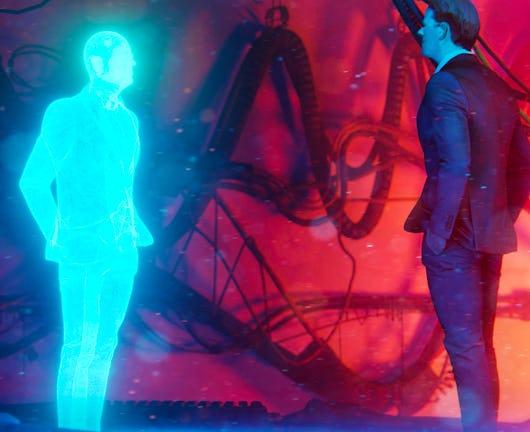
After this module, you will be able to identify and discuss the concept of digital twins and their role exploring capturing real-world dynamics in industry and policy-making, as well as, analyze the transformative potential of digital twins in decision-making processes in business. You will be able to explore the evolution of the word wide web with respect to what is referred to as Web 1.0, Web 2.0, and Web 3.0. and discover why the blockchain is such a big deal and what exactly is its contribution to the revolution of information storage. You'll be able to realize how the blockchain can provide solutions to property rights problems that were not solvable before and analyze practical applications of blockchain, including storing monetary values on it (aka cryptocurrency), art (aka NFTs), and contractual information (aka smart contracts), and their impact on ownership and business. Finally, you'll be able to discuss why the blockchain is so much more than crypto, and discover additional applications, such as with DAOs (Decentralized Autonomous Organizations).