EdX

Data Warehousing and BI Analytics (edX)

Offered by IBM,
Data Warehousing and BI Analytics (edX)

This course introduces you to designing, implementing and populating a data warehouse and analyzing its data using SQL & Business Intelligence (BI) tools. Today’s businesses are investing significantly in capabilities to harness the massive amounts of data that fuel Business Intelligence (BI). Working knowledge of Data Warehouses and BI Analytics tools are a crucial skill for Data Engineers, Data Warehousing Specialists and BI Analysts, making who are amongst, the most valued resources for organizations.

Class Deals by MOOC List - Click here and see EdX's Active Discounts, Deals, and Promo Codes.

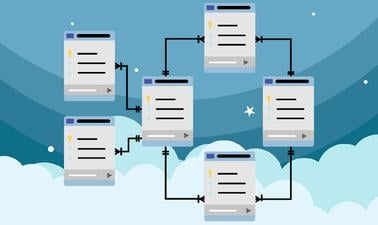
This course prepares you with the skills and hands-on experience to design, implement and maintain enterprise data warehouse systems and business intelligence tools. You’ll gain extensive knowledge on various data repositories including data marts, data lakes and data reservoirs, explore data warehousing system architectures, deepen on data cubes and data organization using related tables. And analyze data using business intelligence like Cognos Analytics, including its reporting and dashboard features, and interactive visualization capabilities.
This course provides hands-on experience with practice labs and a real-world inspired project that can be added to your portfolio and will demonstrate your proficiency in working with data warehouses. Skills you will gain include building data warehouses, Star/Snowflake schemas, CUBEs, ROLLUPs, Materialized Views/MQTs, reports and dashboards.
This course assumes prior SQL and relational database experience.
This course is part of the following programs:

What you'll learn

  • Describe the architecture, features, and benefits of data warehouses, data marts, and data lakes and identify popular data warehouse system vendors.
  • Design and populate a data warehouse, and model and query data using SQL to build CUBEs, ROLLUPs, and Materialized Views.
  • Analyze warehouse data using popular Business Intelligence (BI) tools such as Cognos Analytics to create reports and dashboards.
  • Demonstrate loading data into a data warehouse, writing aggregation queries, creating materialized query tables, and building an analytics dashboard.

Syllabus

Module 1: Data Warehouses, Data Marts, and Data Lakes

  • Data Warehouse Overview
  • Popular Data Warehouse Systems
  • Selecting a Data Warehouse System
  • IBM Db2 Warehouse (Optional)
  • Data Marts Overview
  • Data Lakes Overview

Module 2: Designing, Modeling and Implementing Data Warehouses

  • Overview of Data Warehouse Architectures
  • CUBEs, ROLLUPs, Materialized Views and Tables
  • Facts and Dimensional Modeling
  • Data Modeling using Star and Snowflake Schemas
  • Staging Areas for Data Warehouses
  • Verify Data Quality
  • Populating a Data Warehouse
  • Querying the Data

Module 3: Data Warehouse Analytics

  • Introduction to Analytics and Business Intelligence (BI) Tools
  • Cognos Analytics: Introduction and How to Sign Up
  • Navigating in Cognos Analytics
  • Creating a Simple Dashboard in Cognos
  • Advanced Capabilities in Cognos Analytics Dashboards
  • Accessing Your Warehouse with Cognos

Module 4: Final Assignment

Go to Class
MOOC List is learner-supported. When you buy through links on our site, we may earn an affiliate commission.

Related Courses

Introduction to SQL (edX) EdX
Davidson College,DavidsonX

Introduction to SQL (edX)

In this introduction to SQL Online Course you will gain strong understanding and utilize SQL to aggregate, manipulate, analyze, and visualize data in your field. SQL (Structured Query Language) is the most commonly used language to communicate with databases and extract data for application development, reporting and analytics. It is ubiquitous for industries across the world and a vital skill for aspiring data professions to have. This course will introduce you to the SQL language and give you the skills you need to query and analyze data from complex relational databases.

Self Paced
Self-Paced
Python Basics for Data Science (edX) EdX
IBM

Python Basics for Data Science (edX)

This Python course provides a beginner-friendly introduction to Python for Data Science. Practice through lab exercises, and you'll be ready to create your first Python scripts on your own! Kickstart your learning of Python for data science, as well as programming in general with this introduction to Python course. This beginner-friendly Python course will quickly take you from zero to programming in Python in a matter of hours and give you a taste of how to start working with data in Python.

Self Paced
Self-Paced
Data Analytics Basics for Everyone (edX) EdX
IBM

Data Analytics Basics for Everyone (edX)

Learn the fundamentals of Data Analytics and gain an understanding of the data ecosystem, the process and lifecycle of data analytics, career opportunities, and the different learning paths you can take to be a Data Analyst. In this course, you will learn about the various components of a modern data ecosystem and the role Data Analysts, Data Scientists, and Data Engineers play in this ecosystem.

Self Paced
Self-Paced
Django Application Development with SQL and Databases (edX) EdX
IBM

Django Application Development with SQL and Databases (edX)

This course introduces you to the basics of SQL, Django and Bootstrap. You will gain hands-on practical experience developing and deploying a full-stack Django web application on the cloud. This course introduces you to the basics of SQL, a simple and powerful programming language for querying and managing data, and the fundamentals of cloud databases. You will discover Object-Relational Mapping (ORM), and how to use Object-Oriented Programming (OOP) languages to work with databases.

Self Paced
Self-Paced
Smart Analytics, Machine Learning, and AI on Google Cloud (edX) EdX
Google Cloud

Smart Analytics, Machine Learning, and AI on Google Cloud (edX)

This course covers several ways machine learning can be included in data pipelines on Google Cloud depending on the level of customization required. Incorporating machine learning into data pipelines increases the ability of businesses to extract insights from their data. This course covers several ways machine learning can be included in data pipelines on Google Cloud depending on the level of customization required.

Self Paced
Self-Paced
Digital Marketing Analytics: Tools and Techniques (edX) EdX
University of Maryland, College Park,University System of Maryland - USM,USMx,UMD

Digital Marketing Analytics: Tools and Techniques (edX)

Learn how to leverage leading tools and approaches to digital marketing data analysis. Dive into SEO and SEM strategies including web analytics, machine learning and AI/Big Data applications to strengthen your digital marketing efforts and leverage your resources most effectively.

Self Paced
Self-Paced
CS50's Introduction to Computer Science (edX) EdX
HarvardX,Harvard University

CS50's Introduction to Computer Science (edX)

An introduction to the intellectual enterprises of computer science and the art of programming. This is CS50, Harvard University's introduction to the intellectual enterprises of computer science and the art of programming for majors and non-majors alike, with or without prior programming experience. An entry-level course taught by David J. Malan, CS50 teaches students how to think algorithmically and solve problems efficiently.

Self Paced
Self-Paced