EdX

Data Science for Smart Cities (edX)

Offered by Purdue University, PurdueX,
Data Science for Smart Cities (edX)

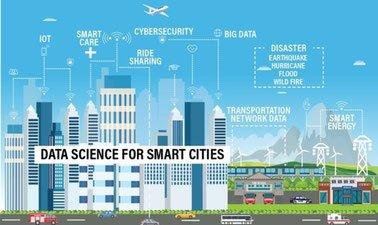
Learn various scientific techniques that will allow the analysis, inference and prediction of large-scale data (e.g. GPS vehicular data, social media data, mobile phone data, individual social network data etc.) that are present in city networks. The availability of low cost and ubiquitous sensors in city infrastructure provides high granular data at unprecedented spatiotemporal scales. “Smart Cities” envision to utilize this data to provide a healthy, happy and sustainable urban ecosystem by integrating the information and communication technology (ICT), Internet of things (IoT) and citizen participation to effectively manage and utilize city infrastructure and services.

Class Deals by MOOC List - Click here and see EdX's Active Discounts, Deals, and Promo Codes.

“Data Science” is an interdisciplinary field of scientific methods, processes, algorithms and systems to extract knowledge from data in various forms and provides fast and efficient understanding of the current dynamics of cities and ways to improve different services.

This course will introduce scientific techniques that will allow the analysis, inference and prediction of large-scale data (e.g. GPS vehicular data, social media data, mobile phone data, individual social network data, etc.) that are present in city networks. Basics of the data science methods to analyze these datasets will be presented. The course will focus both on the methods and their application to smart-city problems. Python will be used to demonstrate the application of each method on datasets available to the instructor. Examples of problems that will be discussed include ridesharing platforms, smart and energy-efficient buildings, evacuation modeling, decision making during extreme events & urban resilience.

What you'll learn

  • Classify the different types of data generated by smart cities.
  • Apply the basics of various data mining techniques.
  • Map the data mining tool that is appropriate for various smart city applications.
  • Code, apply and solve the data mining algorithms using Python.
  • Interpret the results from the data mining tools and make connections to policy making as they relate to smart cities applications.

Syllabus

Unit 1. Introduction to Data Mining
Week 1: Introduction to the Course & Syllabus, Review of Statistical Methods
Instructor introduction, introduction to data mining, course overview, student introduction, introduction of statistical methods, modeling uncertainty, random variables, population and samples, and statistical inference
Week 2: Optimization, Data Pre-Processing
Introduction to optimization, optimization-basic concepts, optimization problem formulation, optimization algorithms, data and measurement, types of datasets, data quality, data pre-processing, and task identification
Week 3: Project Discussion/Introduction to Python
Introduction to Python, Python for data mining, optimization using Python, and data pre-processing using python

Unit 2. Data Mining Tasks
Week 4: Regression Analysis, Association Rule Mining
Introduction to regression analysis, Linear regression, Logistic regression models, Poisson regression models, applications of regression analysis to smart cities, introduction to associate rule mining, association rule mining applications to urban systems, and association rule mining approaches
Week 5: Association Rule Mining, Statistical Classification
A-priori algorithm, F-P growth algorithm, ECLAT, evaluation methods, introduction to the classification problem, Logistic regression, Naïve Bayes classifier, and Bayesian network classifier
Weeks 6 and 7: Decision Tree, Support Vector Machines
Introduction to decision trees, decision tree training, decision tree algorithms, practical issues with decision trees, introduction to support vector machines, support vector machines, ensemble classifiers, and classifier performance evaluation
Weeks 8 and 10: Introduction to Data Clustering, Clustering Algorithms: Partitional and Hierarchical
Introduction to data clustering, (dis)similarity measures, distribution (model)-based clustering algorithms, types of clustering algorithms, partitional clustering (k-means and its variants), and hierarchical clustering
Week 11: Other Clustering Approaches
Density-based clustering algorithms, cluster validity, characteristics of “data, clusters, and clustering algorithms”

Unit 3. Advanced Data Mining Techniques
Week 12: Neural Networks
Introduction to neural networks, a neuron model, learning an ANN model, multi-layer-feed-forward ANNs, ANN application to land use prediction
Week 13: Deep Learning
Introduction to deep learning, deep learning, and deep learning for smart cities
Week 14: Case studies of Data Science Applications for Smart Cities
Week 15: Virtual Exam and Project Submission


Go to Class
MOOC List is learner-supported. When you buy through links on our site, we may earn an affiliate commission.

Related Courses

Statistical Thinking for Data Science and Analytics (edX) EdX
Columbia University,ColumbiaX

Statistical Thinking for Data Science and Analytics (edX)

Learn how statistics plays a central role in the data science approach. This statistics and data analysis course will pave the statistical foundation for our discussion on data science. You will learn how data scientists exercise statistical thinking in designing data collection, derive insights from visualizing data, obtain supporting evidence for data-based decisions and construct models for predicting future trends from data.

Self Paced
Self-Paced
Behavioural Economics in Action (edX) EdX
University of Toronto,University of TorontoX

Behavioural Economics in Action (edX)

Learn to use principles and methods of behavioural economics to change behaviours, improve welfare and make better products and policy. How can we get people to save more money, eat healthy foods, engage in healthy behaviors, and make better choices in general? There has been a lot written about the fact that human beings do not process information and make decisions in an optimal fashion.

Self Paced
Self-Paced
Predictive Analytics (edX) EdX
Indian Institute of Management, Bangalore,IIMBx

Predictive Analytics (edX)

Master the tools of predictive analytics in this statistics based analytics course. Decision makers often struggle with questions such as: What should be the right price for a product? Which customer is likely to default in his/her loan repayment? Which products should be recommended to an existing customer? Finding right answers to these questions can be challenging yet rewarding.

This course is archived
5-12 Weeks
Computer Applications of Artificial Intelligence and e-Construction (edX) EdX
Purdue University,PurdueX

Computer Applications of Artificial Intelligence and e-Construction (edX)

Learn the fundamentals of artificial intelligence, machine learning, natural language processing and their applications in e-Construction. This course is the third in a sequence of interrelated courses of the current computer applications in the construction industry. The emphasis of this course is the advanced computational tools including artificial intelligence, machine learning, and natural language processing, and their applications in e-Construction.

Mar 28th 2022
5-12 Weeks
Introduction to Linear Models and Matrix Algebra (edX) EdX
HarvardX,Harvard University

Introduction to Linear Models and Matrix Algebra (edX)

Learn to use R programming to apply linear models to analyze data in life sciences. Matrix Algebra underlies many of the current tools for experimental design and the analysis of high-dimensional data. In this introductory data analysis course, we will use matrix algebra to represent the linear models that commonly used to model differences between experimental units. We perform statistical inference on these differences. Throughout the course we will use the R programming language.

Self Paced
Self-Paced
Data, Analytics and Learning (edX) EdX
University of Texas at Arlington,UTArlingtonX

Data, Analytics and Learning (edX)

An introduction to the logic and methods of analysis of data to improve teaching and learning. Capturing and analyzing data has changed how decisions are made and resources are allocated in businesses, journalism, government, and military and intelligence fields. Through better use of data, leaders are able to plan and enact strategies with greater clarity and confidence.

No sessions available
4 Weeks
Datos para la efectividad de las políticas públicas (edX) EdX
Inter-American Development Bank - IDB,IDBx

Datos para la efectividad de las políticas públicas (edX)

Este curso te ayudará a tomar el control de los datos y familiarizarte con las herramientas para utilizarlos en la planificación, gestión y evaluación de políticas publicas. En esta era de la información, los datos están disponibles en todos lados y crecen a una tasa exponencial. ¿Cómo podemos darles sentido a todos los datos y aprovecharlos en el momento de tomar decisiones?, ¿cómo los utilizamos para que nos ayuden a guiar la gestión y planificación de nuestras políticas? Tanto si eres ciudadano como planificador de políticas, deberías poder responder a estas preguntas.

Self Paced
Self-Paced
The Analytics Edge (edX) EdX
MIT,MITx

The Analytics Edge (edX)

Through inspiring examples and stories, discover the power of data and use analytics to provide an edge to your career and your life. In the last decade, the amount of data available to organizations has reached unprecedented levels. Data is transforming business, social interactions, and the future of our society. In this course, you will learn how to use data and analytics to give an edge to your career and your life.

This course is archived
13-24 Weeks
CS For All: Introduction to Computer Science and Python Programming (edX) EdX
Harvey Mudd College,HarveyMuddX

CS For All: Introduction to Computer Science and Python Programming (edX)

A fun, fast-paced introduction to solving interesting problems with computer science through Python programming. Looking to get started with computer science while learning to program in Python? This computer science course provides an introduction to computer science that’s both challenging and fun.

No sessions available
13-24 Weeks