Data Science for Business with R Programming (Coursera)

Data Science for Business with R Programming (Coursera)

This Guided Project "Data Science for Business with R programming "is for the business professionals to assist them in solving the basic questions of Economics which are essential for any business, that is, what to produce and for whom to produce, by analysing the market forces and the trends, with the data science tools. This project will guide the business professionals in Real world strategic decision making, based on data and direct towards effective allocation of resources for business.

Class Deals by MOOC List - Click here and see Coursera's Active Discounts, Deals, and Promo Codes.

In this Guided Project, you will:
-Learn Data Manipulation

  • Learn Data Visualization
  • Analyse market forces and trends with Data Science tools, hence Business Analytics

Learn step-by-step

  • Data Manipulation: filter()
  • Data Manipulation: select() & mutate()
  • Data Manipulation: arrange() & summarise()
  • Data Visualization: Scatter Plot + Analysis of market forces (demand)
  • Data Visualization: Column Plot + Analysis of market forces (demand)
  • Data Visualization: Line Plot + Analysis of market forces (demand)
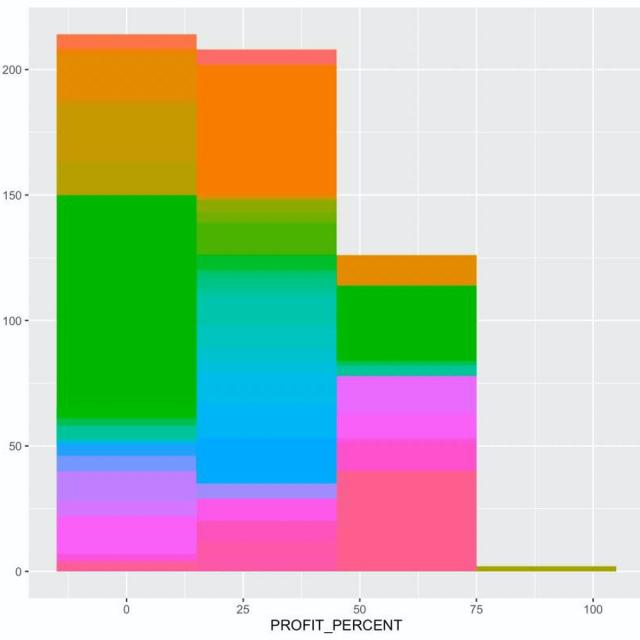
  • Data Visualization: Histogram + Analysis of market forces (demand)
Go to Class
MOOC List is learner-supported. When you buy through links on our site, we may earn an affiliate commission.
Related Courses

Managing the Company of the Future (Coursera) Coursera
University of London,London Business School

Managing the Company of the Future (Coursera)

The aim of the course is to provide you with a comprehensive framework for understanding both the traditional principles of management inside companies today as well as the alternative principles that are becoming increasingly important. It provides both theoretical and practical perspectives on the nature of management in today’s organisations.

Jun 22nd 2026
5-12 Weeks
Introduction to Genomic Technologies (Coursera) Coursera
Johns Hopkins University

Introduction to Genomic Technologies (Coursera)

This course introduces you to the basic biology of modern genomics and the experimental tools that we use to measure it. We'll introduce the Central Dogma of Molecular Biology and cover how next-generation sequencing can be used to measure DNA, RNA, and epigenetic patterns. You'll also get an introduction to the key concepts in computing and data science that you'll need to understand how data from next-generation sequencing experiments are generated and analyzed.

Jun 22nd 2026
4 Weeks
How to Finance and Grow Your Startup – Without VC (Coursera) Coursera
University of London,London Business School

How to Finance and Grow Your Startup – Without VC (Coursera)

Who? If you’re an entrepreneur at any stage of your journey, or even an aspiring one, and you need money to start or grow your business, this course is for you. What? This course will introduce, and help you put to use in your startup, the five models through which your customers can – and will, if you ask them! – fund your business. These five time-tested models have been put to use by entrepreneurial superstars like Michael Dell, Bill Gates, Richard Branson and more. Sadly, though, the five models are rarely talked about and not widely understood. Until now! The five models will be brought to life by the real-world stories of an inspiring collection of incredibly creative entrepreneurs from around the world – including successes and failures – through a series of captivating no-holds-barred interviews with founders and others, and investors, too.

Jun 23rd 2026
5-12 Weeks
Introduction to Machine Learning (Coursera) Coursera
Duke University

Introduction to Machine Learning (Coursera)

This course will provide you a foundational understanding of machine learning models (logistic regression, multilayer perceptrons, convolutional neural networks, natural language processing, etc.) as well as demonstrate how these models can solve complex problems in a variety of industries, from medical diagnostics to image recognition to text prediction.

Jun 26th 2026
5-12 Weeks
Statistical Inference (Coursera) Coursera
Johns Hopkins University

Statistical Inference (Coursera)

Statistical inference is the process of drawing conclusions about populations or scientific truths from data. There are many modes of performing inference including statistical modeling, data oriented strategies and explicit use of designs and randomization in analyses. Furthermore, there are broad theories (frequentists, Bayesian, likelihood, design based, …) and numerous complexities (missing data, observed and unobserved confounding, biases) for performing inference.

Jun 22nd 2026
4 Weeks
Experimentation for Improvement (Coursera) Coursera
McMaster University

Experimentation for Improvement (Coursera)

We are always using experiments to improve our lives, our community, and our work. Are you doing it efficiently? Or are you (incorrectly) changing one thing at a time and hoping for the best? In this course, you will learn how to plan efficient experiments - testing with many variables. Our goal is to find the best results using only a few experiments. A key part of the course is how to optimize a system.

Jun 22nd 2026
5-12 Weeks
Regression Models (Coursera) Coursera
Johns Hopkins University

Regression Models (Coursera)

Linear models, as their name implies, relates an outcome to a set of predictors of interest using linear assumptions. Regression models, a subset of linear models, are the most important statistical analysis tool in a data scientist’s toolkit. This course covers regression analysis, least squares and inference using regression models.

Jun 22nd 2026
4 Weeks