Comportamiento adaptativo (Coursera)

Comportamiento adaptativo (Coursera)

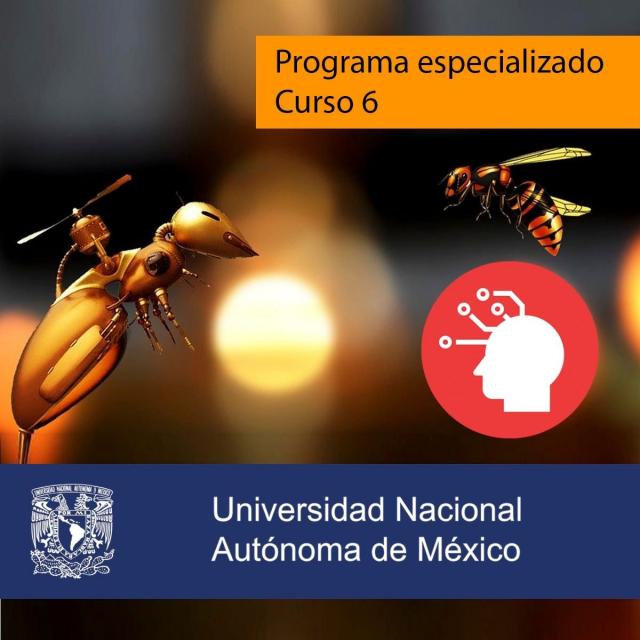
Los seres vivos han evolucionado en entornos cambiantes, por lo que han desarrollado mecanismos que les permiten exhibir comportamiento adaptativo. Usando el método sintético, podemos construir sistemas artificiales adaptativos que implementen dichos mecanismos, con lo cual también podemos incrementar nuestra comprensión de los sistemas naturales.

Class Deals by MOOC List - Click here and see Coursera's Active Discounts, Deals, and Promo Codes.

En este curso veremos diversos conceptos que se han aplicado en la inteligencia artificial con orígenes en la biología y en la cibernética. Construyendo sobre ejemplos de sistemas vivos, revisaremos diversos algoritmos que permiten a los sistemas adaptarse y de esta manera enfrentar a la complejidad y cambios de su entorno. También cubriremos temas relacionados con la robustez, la cual complementa a la adaptación. Finalmente, veremos algunas aplicaciones de este tipo de inteligencia artificial. En el proyecto final, se desarrollará un sistema artificial que exhiba comportamiento adaptativo.

Course 6 of 9 in the Introducción a la inteligencia artificial Specialization

Syllabus

WEEK 1
Adaptación en animales y máquinas
En este módulo se realizará un breve recorrido histórico donde revisaremos los principales conceptos del comportamiento adaptativo.

WEEK 2
Auto-organización
Un mecanismo que puede generar adaptación es la auto-organización. Se revisarán conceptos y casos particulares de auto-organización en diversos ámbitos.

WEEK 3
Robustez
En este módulo revisaremos cómo es que la robustez complementa a la adaptación, ya que mantiene la funcionalidad de los sistemas en presencia de cambios

WEEK 4
Aplicaciones
Para ilustrar los conceptos vistos hasta ahora, se presentarán ejemplos de aplicaciones, mostrando cómo la adaptabilidad puede beneficiar a la movilidad urbana en distintos casos.


Go to Class
MOOC List is learner-supported. When you buy through links on our site, we may earn an affiliate commission.

Related Courses

Scalable Machine Learning on Big Data using Apache Spark (Coursera) Coursera
IBM

Scalable Machine Learning on Big Data using Apache Spark (Coursera)

This course will empower you with the skills to scale data science and machine learning (ML) tasks on Big Data sets using Apache Spark. Most real world machine learning work involves very large data sets that go beyond the CPU, memory and storage limitations of a single computer. Apache Spark is an open source framework that leverages cluster computing and distributed storage to process extremely large data sets in an efficient and cost effective manner. Therefore an applied knowledge of working with Apache Spark is a great asset and potential differentiator for a Machine Learning engineer.

Jun 22nd 2026
4 Weeks
Evaluations of AI Applications in Healthcare (Coursera) Coursera
Stanford University

Evaluations of AI Applications in Healthcare (Coursera)

With artificial intelligence applications proliferating throughout the healthcare system, stakeholders are faced with both opportunities and challenges of these evolving technologies. This course explores the principles of AI deployment in healthcare and the framework used to evaluate downstream effects of AI healthcare solutions.

Jun 22nd 2026
5-12 Weeks
Inteligência Artificial para Logística (Coursera) Coursera
FIA Business School

Inteligência Artificial para Logística (Coursera)

Nossas boas-vindas ao Curso Inteligência Artificial para Logística. Neste curso, você aprenderá sobre os processos de planejamento logístico, seu escopo de atuação e sua integração com as demais áreas da empresa, e como as novas tecnologias de inteligência artificial e internet das coisas podem ampliar a eficiência e a geração de valor para a empresa.

Jun 22nd 2026
4 Weeks
AI for Medical Diagnosis (Coursera) Coursera
DeepLearning.AI

AI for Medical Diagnosis (Coursera)

AI is transforming the practice of medicine. It’s helping doctors diagnose patients more accurately, make predictions about patients’ future health, and recommend better treatments. As an AI practitioner, you have the opportunity to join in this transformation of modern medicine. If you're already familiar with some of the math and coding behind AI algorithms, and are eager to develop your skills further to tackle challenges in the healthcare industry, then this specialization is for you. No prior medical expertise is required!

Jun 22nd 2026
3 Weeks
AI Strategy and Governance (Coursera) Coursera
University of Pennsylvania

AI Strategy and Governance (Coursera)

In this course, you will discover AI and the strategies that are used in transforming business in order to gain a competitive advantage. You will explore the multitude of uses for AI in an enterprise setting and the tools that are available to lower the barriers to AI use. You will get a closer look at the purpose, function, and use-cases for explainable AI. This course will also provide you with the tools to build responsible AI governance algorithms as faculty dive into the large datasets that you can expect to see in an enterprise setting and how that affects the business on a greater scale.

Jun 22nd 2026
4 Weeks
Fundamentals of Reinforcement Learning (Coursera) Coursera
University of Alberta,Alberta Machine Intelligence Institute

Fundamentals of Reinforcement Learning (Coursera)

Reinforcement Learning is a subfield of Machine Learning, but is also a general purpose formalism for automated decision-making and AI. This course introduces you to statistical learning techniques where an agent explicitly takes actions and interacts with the world. Understanding the importance and challenges of learning agents that make decisions is of vital importance today, with more and more companies interested in interactive agents and intelligent decision-making.

Jun 22nd 2026
4 Weeks
Machine Learning Introduction for Everyone (Coursera) Coursera
IBM

Machine Learning Introduction for Everyone (Coursera)

This three-module course introduces machine learning and data science for everyone with a foundational understanding of machine learning models. You’ll learn about the history of machine learning, applications of machine learning, the machine learning model lifecycle, and tools for machine learning. You’ll also learn about supervised versus unsupervised learning, classification, regression, evaluating machine learning models, and more.

Jun 22nd 2026
3 Weeks
Introduction to TensorFlow for Artificial Intelligence, Machine Learning, and Deep Learning (Coursera) Coursera
DeepLearning.AI

Introduction to TensorFlow for Artificial Intelligence, Machine Learning, and Deep Learning (Coursera)

If you are a software developer who wants to build scalable AI-powered algorithms, you need to understand how to use the tools to build them. This course is part of the upcoming Machine Learning in Tensorflow Specialization and will teach you best practices for using TensorFlow, a popular open-source framework for machine learning.

Jun 22nd 2026
4 Weeks
Introduction to Deep Learning & Neural Networks with Keras (Coursera) Coursera
IBM

Introduction to Deep Learning & Neural Networks with Keras (Coursera)

Looking to start a career in Deep Learning? Look no further. This course will introduce you to the field of deep learning and help you answer many questions that people are asking nowadays, like what is deep learning, and how do deep learning models compare to artificial neural networks? You will learn about the different deep learning models and build your first deep learning model using the Keras library.

Jun 22nd 2026
5-12 Weeks
Human Factors in AI (Coursera) Coursera
Duke University

Human Factors in AI (Coursera)

This third and final course of the AI Product Management Specialization by Duke University's Pratt School of Engineering focuses on the critical human factors in developing AI-based products. The course begins with an introduction to human-centered design and the unique elements of user experience design for AI products.

Jun 22nd 2026
4 Weeks