Cognitive Solutions and RPA Analytics (Coursera)

Offered by Automation Anywhere,
Cognitive Solutions and RPA Analytics (Coursera)

Millions of companies in the world today are processing endless documents in various formats. Although Robotic Process Automation (RPA) thrives in almost every industry and is growing fast, it works well only with structured data sources. What about the data that’s not fully structured and comes in varying layouts? To address this problem, there is another aspect of RPA that is taking the industry by storm: cognitive automation.

Class Deals by MOOC List - Click here and see Coursera's Active Discounts, Deals, and Promo Codes.

While implementing RPA, you can deploy automations with “cognitive” capabilities. Cognitive automation uses Artificial Intelligence (AI) to learn and understand the same way the human brain works. Thus, it assists humans in making decisions, completing tasks, or meeting goals. Using cognitive automation, you can extract semi—or unstructured data—which is 80% of all data!
Data is a precious asset. Businesses struggle to make sense of large volumes of available data and to generate a tangible value from them. Manual business processes barely contain any data that is available for capture. This is where Robotic Process Automation (or RPA) Analytics comes in. RPA bots don’t just automate business processes; they also digitize them. They take the large volume of data and interpret it in near real-time to provide actionable information.
In this course, you will be introduced to cognitive automation, the role that AI plays in it, and Automation Anywhere’s cognitive solution, IQ Bot. You will also be introduced to RPA analytics and explore how Automation Anywhere’s Web Control Room and Bot Insight can provide this functionality.
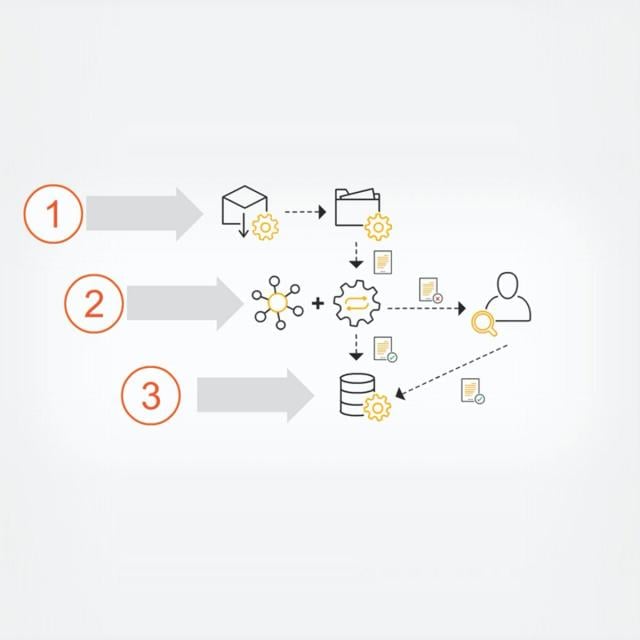
As you begin this course, you will learn the six steps to deploy cognitive automation. Next, you will explore the IQ Bot portal – Automation Anywhere’s web-based application for developing the cognitive IQ bots. You will then learn to use the portal by following the IQ Bot workflow.
Next, you will learn how RPA analytics help interpret and improve automated business processes. You will see how Bot Insight functions as an RPA analytics platform.
You will also explore the different types of RPA analytics and learn how to generate RPA analytics via two mechanisms – the Web Control Room for Operational Analytics and Bot Insight for Business Analytics and CoE Analytics.
Finally, you will learn how to use the RPA mobile app to study and edit the default CoE dashboard that is published via Bot Insight.
Course 4 of 4 in the Implementing RPA with Cognitive Automation and Analytics Specialization.

What You Will Learn

  • Explain the function of cognitive solutions within RPA and six-step process of deploying cognitive automation
  • Define the IQ Bot portal and workflow, create a learning instance and Train a bot on the Designer of the IQ Bot portal
  • Explain the function of analytics within RPA, types of automation analytics, generate operational analytics and describe the features of Bot Insight
  • Generate business analytics on Bot Insight, use the CoE Dashboard and explain how to leverage the RPA mobile app to manage analytics on the go

Syllabus

WEEK 1
Understanding IQ Bot and Creating an Instance
In this module, you will explore the concept of cognitive automation, the six-step process of deploying a cognitive automation, IQ Bot as a cognitive solution, the basics of the IQ Bot portal, and the IQ bot workflow at a high-level. You will also learn to perform the first two steps of the IQ Bot workflow: Instance creation and Document analysis. After this, you will use the IQ Bot portal to create (and edit) a learning instance and trigger document analysis that produces document groups, depending on the input documents’ layout and content.

WEEK 2
Performing Bot Training, Production Processing, and Document Validation
In this module, you will learn to perform the remaining four steps of the IQ Bot workflow: Bot training, in context of fields and tables; Bot training, with focus on check boxes and repeated sections; Production processing; Document validation; and Progress monitoring. You will use the Designer on the IQ Bot portal to perform each of these steps.

WEEK 3
Generating RPA Analytics
In this module, you will explore the concept of analytics and how it is applied within RPA, get introduced to the Bot Insight application, and learn about the different types of analytics. You will also learn how to generate operational analytics on the Web Control Room. You will then explore Bot Insight’s user interface and features and learn how to deploy it using APIs. Next, you will explore the various roles who generate or view business analytics, and learn how to generate them on Bot Insight. You will also explore the CoE Dashboard on Bot Insight and learn how to configure, customize, and publish this dashboard. Finally, you will see how the RPA mobile app can be used to study and edit the default CoE dashboard that is published via Bot Insight.

Go to Class
MOOC List is learner-supported. When you buy through links on our site, we may earn an affiliate commission.

Related Courses

RPA Basics and Introduction to UiPath (Coursera) Coursera
UiPath

RPA Basics and Introduction to UiPath (Coursera)

The RPA Basics and Introduction to UiPath course provides knowledge on Robotic Process Automation basic concepts. It also introduces you to the UiPath Platform and its core components. The course provides a detailed explanation of UiPath Studio User Interface and its features. By the end of the course, you will be able to build your first automation project in UiPath Studio.

Jun 22nd 2026
2 Weeks
Building Scalable Java Microservices with Spring Boot and Spring Cloud (Coursera) Coursera
Google Cloud

Building Scalable Java Microservices with Spring Boot and Spring Cloud (Coursera)

"Microservices" describes a software design pattern in which an application is a collection of loosely coupled services. These services are fine-grained, and can be individually maintained and scaled. The microservices architecture is ideal for the public cloud, with its focus on elastic scaling with on-demand resources. In this course, you will learn how to build Java applications using Spring Boot and Spring Cloud on Google Cloud Platform.

Jun 23rd 2026
2 Weeks
Business Process Automation in SAP S/4HANA with SAP Intelligent RPA (openSAP) OpenSAP
SAP

Business Process Automation in SAP S/4HANA with SAP Intelligent RPA (openSAP)

Join this free online course to learn how you can use SAP Intelligent Robotic Process Automation as part of your SAP S/4HANA landscape, and how you can adjust the bots according to your business needs. Robotic process automation (RPA) helps reduce human error by automating business process-related manual tasks, increasing speed and lowering the total cost of ownership by saving you time and effort. Adding intelligence, which is what SAP Intelligent Robotic Process Automation does, means automated decision making, which leads to additional savings through the reduction of analytical effort.

Self Paced
Self-Paced
Enter Next-Level Bot Building with SAP Intelligent RPA 2.0 (openSAP) OpenSAP
SAP

Enter Next-Level Bot Building with SAP Intelligent RPA 2.0 (openSAP)

Join this free online course to learn about SAP Intelligent Robotic Process Automation (SAP Intelligent RPA) 2.0 and how the updated version of the solution simplifies the bot-building experience. SAP Intelligent Robotic Process Automation  (SAP Intelligent RPA) is a complete automation suite, where software robots are designed to mimic humans by replacing manual clicks and automate end-to-end scenarios for definable and repeatable business processes. The solution consists of several components that enable you to develop your own bots by capturing your process, creating your workflow, and configuring, executing, monitoring, and debugging your automations.

Self Paced
Self-Paced
Robotic process and intelligent automation for finance (edX) EdX
ACCA

Robotic process and intelligent automation for finance (edX)

In this course we explain how automation can play a key role in delivering the requirement to have robust processes and clean data. By using automation tools and machine learning, finance leaders can identify, implement and configure the right solutions for their organisation. It also shows how tools, such as Python, can be applied to finance processes and the benefits this will bring.

Self Paced
Self-Paced
Approximation Algorithms (Coursera) Coursera
EIT Digital

Approximation Algorithms (Coursera)

Many real-world algorithmic problems cannot be solved efficiently using traditional algorithmic tools, for example because the problems are NP-hard. The goal of this course is to become familiar with important algorithmic concepts and techniques needed to effectively deal with such problems. These techniques apply when we don't require the optimal solution to certain problems, but an approximation that is close to the optimal solution. We will see how to efficiently find such approximations.

Jun 26th 2026
4 Weeks
Industry 4.0: PLM, Value Chain, and Smart Factory (Coursera) Coursera
L&T EduTech

Industry 4.0: PLM, Value Chain, and Smart Factory (Coursera)

This course is designed for Mechanical, Manufacturing, and Mechatronics Engineers. Throughout the course, students will obtain an extensive understanding of Product Life Cycle and Value Chain Management, Manufacturing Workflow, and integration into the Smart Factory concept. Participants will gain a holistic understanding of how these elements collaborate to revolutionize traditional production methods, driving us towards a more connected, efficient, and intelligent future.

Jun 22nd 2026
3 Weeks
Introduction to Git and GitHub (Coursera) Coursera
Google

Introduction to Git and GitHub (Coursera)

In this course, you’ll learn how to keep track of the different versions of your code and configuration files using a popular version control system (VCS) called Git. We'll also go through how to setup an account with a service called GitHub so that you can create your very own remote repositories to store your code and configuration.

Jun 23rd 2026
4 Weeks
Introduction à la programmation orientée objet (en C++) (Coursera) Coursera
École Polytechnique Fédérale de Lausanne

Introduction à la programmation orientée objet (en C++) (Coursera)

Ce cours introduit la programmation orientée objet (encapsulation, abstration, héritage, polymorphisme) en l'illustrant en langage C++. Il présuppose connues les bases de la programmation (variables, types, boucles, fonctions, ...). Il est conçu comme la suite du cours « Initiation à la programmation (en C++) ».

Jun 22nd 2026
5-12 Weeks
Getting Started with Automation 360 (Coursera) Coursera
Automation Anywhere

Getting Started with Automation 360 (Coursera)

Automation 360(tm) is the leading cloud-native end-to-end intelligent automation platform used by the world's top enterprises to automate business processes across systems and applications. This course is designed to introduce Robotic Process Automation (RPA), how RPA can be used to identify business processes for automation, and how to use Automation Anywhere Robotic Interface (AARI) to automate back office and front office business processes.

Feb 9th 2026
5-12 Weeks