Climate Resilience and Adaptation for Rural Roads (FutureLearn)

Climate Resilience and Adaptation for Rural Roads (FutureLearn)

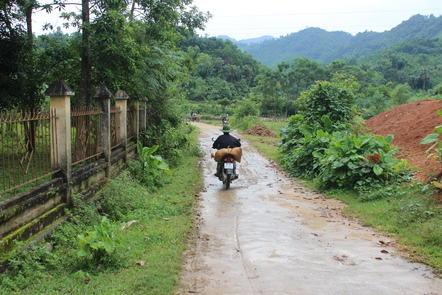
Find out how planners and road designers can manage the effect of climate change and extreme weather on rural roads. Discover how rural roads can become more resilient to changing weather patterns. We already know that climate change is having a significant impact on temperature, rainfall and wind speed.

Class Deals by MOOC List - Click here and see FutureLearn's Active Discounts, Deals, and Promo Codes.

Planners, designers and managers of rural road infrastructures must keep up-to-date with the nature of these changes. This includes understanding the likelihood of occurrence, as well as the implications on the financing, design, and maintenance of these roads in the future.
On this course, you’ll explore these factors and consider how new and existing infrastructure can be planned, designed, upgraded, maintained and adapted to become more climate-resilient.

What topics will you cover?

  • Climate related issues which might affect the design, construction and maintenance of low volume rural roads.
  • The Impact on the socio-economic situation of those reliant on low volume rural roads.
  • How the changing climate affects the impact of the design.
  • How the design, construction and maintenance of low volume rural roads can be modified to increase their climate resilience.

What will you achieve?
By the end of the course, you‘ll be able to...

  • Explore research from the Research for Community Access Partnership (ReCAP) on rural roads.
  • Identify the anthropogenic causes of Climate change and global warming and have a basic understanding of the science that underpins climate change.
  • Assess how confidently climate change tools can be used to predict the most likely regional climate change events and the anticipated impact on rural roads.
  • Develop a range of maintenance and rehabilitation strategies and approaches to adapt the rural road network to climate change events and mitigate against damage and loss of function.
  • Explain effectively (to stakeholders and national strategic transport planners) the importance of appropriate planning for Climate change and adoption of climate adaptation procedures.
Go to Class
MOOC List is learner-supported. When you buy through links on our site, we may earn an affiliate commission.

Related Courses

Learning for a Sustainable Future: Live at COP26 (FutureLearn) FutureLearn
University of Edinburgh

Learning for a Sustainable Future: Live at COP26 (FutureLearn)

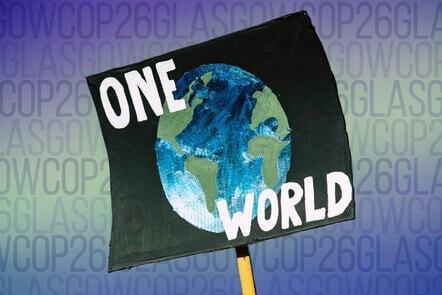
Explore global issues during COP26 and be part of the call for collective action. What on Earth could be more important? Live at COP26. The 26th UN Climate Change Conference (COP26) is being held in Glasgow, Scotland between 31st October and 12th November 2021. It will bring together heads of state, climate experts and campaigners to agree and accelerate coordinated global action on climate change.

Nov 7th 2022
2 Weeks
How to Measure, Reduce, and Offset your Company’s Carbon Footprint (FutureLearn) FutureLearn
BIMA,MSQ

How to Measure, Reduce, and Offset your Company’s Carbon Footprint (FutureLearn)

Help tackle climate change with this guide to carbon footprint measurement, offsetting, and reduction strategies for your company. Explore the different carbon footprint modelling tools No matter how many green practices you have in place, companies still produce at least some carbon in their operations.

Sep 6th 2021
5-12 Weeks
Innovation in Arable Farming: Technologies for Sustainable Farming Systems (FutureLearn) FutureLearn
University of Reading,EIT Food,EIT

Innovation in Arable Farming: Technologies for Sustainable Farming Systems (FutureLearn)

Explore how innovative, digital technologies can help achieve sustainable intensification of arable farming systems. Consider ways arable farmers in the EU can use agri-tech to benefit business. On this course, you’ll explore evidence-based information that outlines the benefits and challenges of adopting new technologies within the EU, and have the chance to read case study examples of some of these applications.

Jan 2nd 2023
3 Weeks
The Great Sustainability Transition: Global Challenges, Local Actions (FutureLearn) FutureLearn
Leiden University

The Great Sustainability Transition: Global Challenges, Local Actions (FutureLearn)

Discover how global environmental crises are connected, their impacts, and how to take action in your local community. Learn from experts in environmental science at Leiden University. We are living in an era of unprecedented environmental change. As a result, we are experiencing biodiversity loss, climate change, and overuse of freshwater resources, to name just a few. All of these affect fundamental ecosystem processes, causing change on a local and global scale. On this four-week course from Leiden University, you’ll learn how these huge environmental crises are interconnected and how they impact our planet.

Jan 16th 2023
4 Weeks
Climate and Energy: An Interdisciplinary Perspective (FutureLearn) FutureLearn
University of Glasgow,CIVIS

Climate and Energy: An Interdisciplinary Perspective (FutureLearn)

Explore climate change issues from an interdisciplinary perspective to find innovative solutions for a better future. Gain interdisciplinary skills for climate change solutions. On this four-week course, you’ll join educators from ten universities on a virtual field trip to a remote Swedish island to gain perspectives on climate and energy from a multitude of disciplines.

Self Paced
4 Weeks
Climate Intelligence: Using Climate Data to Improve Business Decision-Making (FutureLearn) FutureLearn
University of Reading

Climate Intelligence: Using Climate Data to Improve Business Decision-Making (FutureLearn)

Build climate resilience in your business as you learn how climate intelligence helps make decisions that mitigate risks. How exposed is your organisation to climate risk? Climate and weather projections hold the data that businesses need both to evaluate the risk climate change poses and to mitigate that risk. However, interpreting this data can be challenging. On this two-week course, you’ll learn how to identify relevant and reliable climate data for your business and explore how that raw data can be converted into information that connects with the particular operational and financial decisions you face.

Self Paced
2 Weeks
Nature Connectedness with the University of Derby (FutureLearn) FutureLearn
University of Derby

Nature Connectedness with the University of Derby (FutureLearn)

Learn to establish a new relationship with nature to help improve your wellbeing and tackle larger issues such as climate change. Explore the relationship between nature connection and the climate crisis. Too often we see nature as something to use, control, or as a threat to us. The climate crisis and wildlife emergency show that the existing relationship between people and the rest of nature is breaking down. It has become too disconnected and narrow.

Jul 26th 2021
4 Weeks
Interfaith Dialogue for Combating Extremism among Young People (FutureLearn) FutureLearn
European University Institute - EUI

Interfaith Dialogue for Combating Extremism among Young People (FutureLearn)

Explore the role of interfaith education in preventing forms of violent extremism and building resilient communities. Learn how interfaith dialogue builds resilience to the influences of extremism. On this course, you’ll be introduced to interfaith and learn how to implement interfaith initiatives to encourage understanding between faiths and communities.

Nov 28th 2022
3 Weeks
Using Systems Thinking to Tackle the Climate and Biodiversity Crisis (FutureLearn) FutureLearn
University of Reading

Using Systems Thinking to Tackle the Climate and Biodiversity Crisis (FutureLearn)

Discover how switching to a systems mindset could help overcome the global environmental challenges we face today. Take a big picture approach to the climate and biodiversity crisis. With crises as vast, complex, and interconnected as climate change and biodiversity loss, focusing on one aspect of the problem will never be enough. Systems thinking offers a new way of seeing and understanding environmental issues, which could radically change how we go about tackling them. On this two-week course from the University of Reading, you’ll learn what systems thinking is and how it could transform your approach to the climate and biodiversity crisis.

Self Paced
2 Weeks
Essentials in Arts Fundraising (FutureLearn) FutureLearn
University of Leeds,Arts Fundraising & Philanthropy,Cause4

Essentials in Arts Fundraising (FutureLearn)

Develop practical skills to help you fundraise from a variety of sources and build resilience in arts and culture organisations. Learn how to fundraise effectively with arts and culture industry experts. External investment and philanthropy have always been crucial for arts and culture organisations. As the sector recovers from the pandemic, fundraising is more important than ever. This two-week course, led by experts in arts fundraising, will show you how to fundraise from a variety of sources to build resilience, even in times of crisis.

Self Paced
2 Weeks
Championing Change: Human Rights and the Climate Crisis (FutureLearn) FutureLearn
Amnesty International

Championing Change: Human Rights and the Climate Crisis (FutureLearn)

Learn why climate change is a human rights issue, and how human rights can be used as a tool to combat the climate crisis.Find solutions that address both global warming and human rights violations. Rising sea levels. Floods. Droughts. Extreme weather. We know the effects of climate change but their associated human rights violations are not as well understood.

Nov 22nd 2021
3 Weeks