EdX

Circular Strategies for Hospitals (edX)

Circular Strategies for Hospitals (edX)

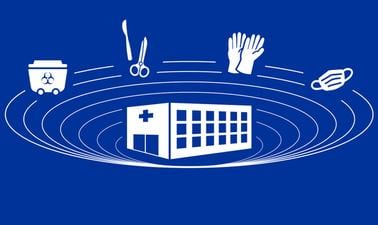
Learn to apply the principles of the circular economy in a hospital or healthcare organization to reduce waste and contribute to sustainable healthcare. Reducing medical waste is a worldwide challenge that calls for smarter solutions that can make healthcare more sustainable. This course helps hospital staff, management, users and buyers of medical products and decision-makers make the transition to a circular economy and therefore contribute to reducing waste streams and costs.

Class Deals by MOOC List - Click here and see EdX's Active Discounts, Deals, and Promo Codes.

This course uses an interdisciplinary approach to create sustainable solutions in hospitals. It includes business cases with visual examples of circular economy strategies presented by experts from the field. These strategies are also a tool to help relieve the supply chain as resources are under increasing pressure.
After taking this course you will master the concept of the circular economy from a hospital perspective. You will learn to apply circular strategies and how to set-up a green team to integrate circular processes in your organization. Finally, you will learn how to make recommendations for reducing waste streams.
This course is part of the program Circular Strategies for Sustainable Healthcare developed by TU Delft’s MedTech experts in close collaboration with industry representatives and renowned institutes. These courses provide not only academic insights but also practical tools and examples which can be implemented in any healthcare organization, and can help you propose and develop your own circular solutions and programs.
Free e-book
In addition to 24/7 online access to video lectures and other course material, you will receive an electronic copy of the brand-new book 'Creating a Circular Healthcare Economy'. This book will further equip you to drive sustainable change and embrace circularity in the healthcare sector.
This course is part of the Circular Strategies for Sustainable Healthcare Professional Certificate.

What you'll learn

  • Define the basics of circular economy from a hospital perspective
  • Translate the circular approaches of the Butterfly Diagram to a hospital or healthcare environment
  • Recognize the purpose of a green team and outline its requirements
  • Define urban mining and identify urban mining strategies in the hospital
  • Analyze waste streams in the hospital and identify how these can be reduced or eliminated
  • Formulate a set of recommendations to decrease hospital waste

Syllabus

Week 1: Basics of the circular healthcare economy, from a hospital perspective
In this week you will learn the basics of the circular healthcare economy, from a hospital perspective. Topics which we will cover this week are:
The transfer from linear to circular
The need to transfer to circular healthcare economy
Explanation of the Butterfly Diagram as a ‘system’ and its use as a model for waste reduction
The EU Climate Law and Green Deal
Trend towards reducing medical waste.

Week 2: Applying circular strategies in a hospital environment
In this week you will learn to apply circular approaches. Topics which we will cover this week are:
Visualizing all Butterfly Diagram approaches as strategies in a hospital.
Applying the circular strategies of Maintenance, Reuse, Repair, Remanufacturing, Recycling
Transforming hospitals’ use of circular products and processes
Product-life-extending programs
Circular strategies in hospitals

Week 3: Setting-up a green team
In this week you will learn how to set-up a green team. Topics which we will cover this week are:
Designing a green team
Integrating circular processes in an organization
Critical success factors and how to overcome resistance in setting-up a team
How to create a support base in the organization

Week 4: Urban Mining
In this week you will learn to define urban mining and to identify urban mining strategies in the hospital. Topics which we will cover this week are:
The definition of urban mining and its relevance
How to urban mine in a hospital
Risks of contamination
Differences between the different wastes streams: household, contaminated and non-contaminated waste streams
Materials and their properties
Mono versus mixed waste streams.

Week 5: How to reduce waste streams
In this week you will learn how to analyze waste streams in the hospital and identify how these can be reduced or eliminated. Topics which we will cover this week are:
Waste reduction strategies
Waste reduction programs
Medical devices with extended service-life and longer durability
Advantages of repair, preventive maintenance, refurbishment in the context of reducing waste streams
How to separate waste streams.

Week 6: Making recommendations to reduce waste in a hospital
In this week you will learn how to formulate a set of recommendations to decrease hospital waste. Topics which we will cover this week are:
Writing a waste reduction proposal
Evaluating a circular proposal
Creating a sustainable advice network.

Week 7: Summary of the course
In this week we will wrap-up and provide main takeaways as well as additional resources and information. Literature reviews and finding relevant publications were part of this course and we will provide you with more relevant literature on this topic.


Go to Class
MOOC List is learner-supported. When you buy through links on our site, we may earn an affiliate commission.

Related Courses

Master Control in Supply Chain Management and Logistics (edX) EdX
Chalmers University of Technology,ChalmersX

Master Control in Supply Chain Management and Logistics (edX)

Boost your logistics skills in this hands-on course on how to master and control your supply chain to enhance your organisation’s productivity. Logistics and supply chain structures can be found in virtually any system. A supply chain is a complex environment with a multitude of forces and variables with various degrees of dependence. Unforeseen events are frequent and in order to achieve a competitive supply chain, constant supervision is needed.

Self Paced
Self-Paced
Sustainable Global Food Systems (edX) EdX
University of Edinburgh,EdinburghX

Sustainable Global Food Systems (edX)

How do we feed 11 billion people? Discover the importance of sustainable food systems on a global scale. We are currently facing one of the biggest challenges worldwide: how to feed a growing population without exhausting global resources. This course examines food security from a food systems perspective and illustrates the major global challenges present, from the environmental impact of food production to the public health impacts of current and future diets.

Self Paced
Self-Paced
Feeding a Hungry Planet: Agriculture, Nutrition and Sustainability (edX) EdX
SDGAcademyX,SDG Academy

Feeding a Hungry Planet: Agriculture, Nutrition and Sustainability (edX)

How do we create a healthy and sustainable diet for the growing world population? Agriculture is more than waving fields of wheat; our ability to grow food from existing natural resources – and without decimating those resources – is key to sustainably feeding the world. In this course, learn about food security worldwide, the effects of malnutrition, how we manage ecosystems that provide food resources and more.

Self Paced
Self-Paced
Climate Change Science and Negotiations (edX) EdX
SDGAcademyX,SDG Academy

Climate Change Science and Negotiations (edX)

Humanity is up against a tight timeline to address climate change. Learn how we can deeply decarbonize the global energy systems, and put the world on a 2°C pathway. In this course, learn solutions to mitigate the effects of the global greenhouse gas emissions causing temperature rise, and how to apply these solutions in different national contexts improvements.

Self Paced
Self-Paced
Cities and the Challenge of Sustainable Development (edX) EdX
SDGAcademyX,SDG Academy

Cities and the Challenge of Sustainable Development (edX)

What is a sustainable city? Learn the basics here. According to the United Nations, urbanization and population growth could result in an increase of 2.5 billion people into urban populations by 2050, with associated impacts ranging from increased transportation needs to more building. How do we make cities sustainable to support this growth?

Self Paced
Self-Paced
Value Co-Creation in Sport Management – A New Logic in a Changing Society (edX) EdX
University of Bayreuth,BayreuthX

Value Co-Creation in Sport Management – A New Logic in a Changing Society (edX)

Do you want to become a successful sport management expert? Learn the importance of value co-creation and gather new insights that will make you more competitive in the field of sport management. Are you a passionate sports lover interested in exploring a new innovative logic in sport management? Enroll in this online course.

Self Paced
Self-Paced
Circular Economy: An Introduction (edX) EdX
Delft University of Technology,DelftX

Circular Economy: An Introduction (edX)

Ready to make a difference? Learn how to contribute to a sustainable economic system by implementing novel business and design approaches! Our global society is not sustainable. We all know about the challenges we’re facing: waste, climate change, resource scarcity, loss of biodiversity. At the same time, we want to sustain our economies and offer opportunities for a growing world population. This course is about providing solutions we really believe in: a Circular Economy.

Self Paced
Self-Paced
Industrial Biotechnology (edX) EdX
Delft University of Technology,DelftX

Industrial Biotechnology (edX)

Learn the basics of sustainable processing for biobased products to further understand their impact on global sustainability. As fossil-based fuels and raw materials contribute to climate change, the use of renewable materials and energy as an alternative is increasingly important and common. This transition is not a luxury, but rather a necessity.

Self Paced
Self-Paced
Sustainable Urban Development (edX) EdX
Wageningen University,Delft University of Technology,DelftX,WageningenX

Sustainable Urban Development (edX)

Learn why cities are key in resolving global urbanization and sustainability challenges and how you can engineer tomorrow’s cities today. Did you know that cities take up less than 3% of the earth’s land surface, but more than 50% of the world’s population live in them? And, cities generate more than 70% of the global emissions? Large cities and their hinterlands (jointly called metropolitan regions) greatly contribute to global urbanization and sustainability challenges, yet are also key to resolving these same challenges.

Self Paced
Self-Paced
Sustainable Development: The Post-Capitalist Order (edX) EdX
SDGAcademyX,SDG Academy

Sustainable Development: The Post-Capitalist Order (edX)

Sustainable development represents a shift from our current system of inequitable capitalism to one that prioritizes prosperity for all, while remaining conscious of its environmental impact and sustainability for future generations. Learn why sustainable development has been adopted by countries and multilateral organizations around the world, and how this approach is transforming the way we live, work, and govern our planet.

Self Paced
Self-Paced
Creating a Pro-Renewables Environment (edX) EdX
Imperial College London,ImperialX

Creating a Pro-Renewables Environment (edX)

Understand the policy, regulatory and fiscal measures that can incentivise renewable power and drive cleaner investment along the entire electricity supply chain. This course provides the tools needed to build a low-carbon power sector around the world. By diving into the perspective of different players in the power sector - from investors through to utilities, regulators and project developers - you will be able to choose the right strategies, policies and other levers needed to incentivise a cleaner power mix in your own context.

Self Paced
Self-Paced