Chinese for HSK 1 (Coursera)

Offered by Peking University,
Chinese for HSK 1 (Coursera)

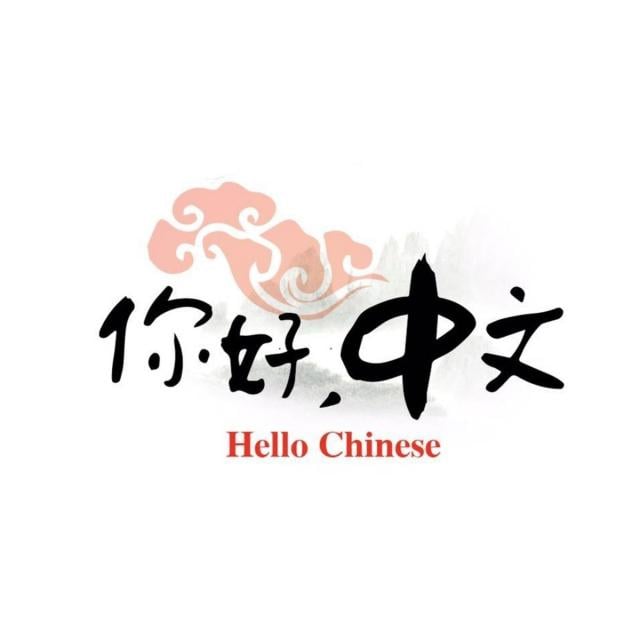
Nǐ hǎo! 你好!Welcome to Chinese for HSK - a Chinese course for everybody. My name is YU Bin. I am very happy to meet you here! HSK stands for Hànyǔ (Chinese) Shuǐpíng (level) Kǎoshì (test), which is the most important Chinese proficiency test in use today. It assesses non-native Chinese speakers’ abilities in using Chinese in their daily, academic and professional lives. Chinese for HSK Level 1 is the first step of the 6 levels and assesses test takers’ abilities in the application of everyday Chinese. It is the counterpart of Level 1 of the Chinese Language Proficiency Scales for Speakers of Other Languages and the A1 Level of the Common European Framework of Reference for Languages.

Class Deals by MOOC List - Click here and see Coursera's Active Discounts, Deals, and Promo Codes.

You will learn:
-30 video lectures with dialogue role plays by PKU students;
-More than 150 commonly used words;
-Around 50 key grammar points;
-New words and texts via audio;
-Quizzes for each lesson and HSK test papers;
-Videos for 70 basic Chinese characters (optional);
-Supplementary materials about China (optional).
In short, the course covers the four skills although only listening and reading are tested in HSK. At the end of the course, you will be able to understand and use simple Chinese phrases, meet basic needs for communication and possess the ability to further your Chinese language studies.
Have a fantastic journey of Chinese learning.
Course 1 of 4 in the Learn Chinese: HSK Test Preparation Specialization.

Syllabus

WEEK 1
Greetings and numbers
In this week, you will learn about name, nationality, age, phone number and other personal information as well as basic greetings. Together with these topics, you will also have opportunities to practise pinyin. If you have never learnt pinyin, you may need a bit more time on it; if you have already learnt it, you could skip the related contents.

WEEK 2
Family and school/university
How do you introduce your family? Do you have any pets? If you are a student, would you like to tell us something about your school or university? At the end of this week, you will be able to answer the questions above in Chinese.

WEEK 3
Time and weather
What time do you get up? When is your birthday? What is the weather like in different places in China? This week, you will learn how to ask and answer questions about the time and the weather.

WEEK 4
Work and hobbies
What do you do? Where would you like to work? Do you like watching films? What is your favorite sport? You will be able to answer these questions in Chinese after this week!

WEEK 5
Shopping and food
Whether you like it or hate it, shopping is very much a part of daily life. What do you usually buy? How to ask the price in Chinese? Do you like online shopping? These lessons may give you more confidence when going to a Chinese supermarket or restaurant!

WEEK 6
Traffic and directions
How do you get to your school/university/office? Do you like walking? Where would you like to visit? Can you describe the location of the place? What time is your flight? At the end of this week, you will be able to talk about traffic and directions in Chinese!

WEEK 7
FINAL TEST

Go to Class
MOOC List is learner-supported. When you buy through links on our site, we may earn an affiliate commission.

Related Courses

Translation in Practice (Coursera) Coursera
Nanjing University

Translation in Practice (Coursera)

This course offers you basic but valuable techniques used by a good translator in the translation between English and Chinese. We’ll discuss what is translation, what is good translation, and learn about how to produce good translations. All the examples used in this course are taken from the course instructor's own translations of various genres and topics of writing.

Sep 7th 2026
5-12 Weeks
Structuring Values in Modern China (Coursera) Coursera
The Chinese University of Hong Kong

Structuring Values in Modern China (Coursera)

This sequence of four courses will propose a multi-disciplinary approach to the study of Chinese cultural history conceived of as a succession of modes of rationality (philosophical, bureaucratic, and economic). The focus will be on the moments of paradigm shift from one mode of rationality to another. For each of these moments, cultural facts and artifacts—thought, literature, ritual—will be examined in relationship to changing social, political, and economic systems.

Sep 14th 2026
5-12 Weeks
The amazing world of the ethnic groups of Yunnan Province (Coursera) Coursera
Shanghai Jiao Tong University

The amazing world of the ethnic groups of Yunnan Province (Coursera)

Yunnan, abbreviated as Yun and called Dian for short, is a multi-ethnic province which has historically been situated in the southwest frontier of China. Over time, the ethnic minorities evolved into splendid cultures, each with their own unique social life, religious beliefs and customs. The course is taught in English and provides an introduction to 25 ethnic minorities in Yunnan Province, namely the Yi, Bai, Hani, Dai, Zhuang, Miao, Hui, Lisu, Lahu, Wa, Naxi, Yao, Jingpo, Tibetan, Bulang, Buyi, Achang, Pumi, Mongolian, Nu, Jinuo, De'ang, Shui, Man and Dulong nationalities.

Sep 7th 2026
5-12 Weeks
Chino básico: La etiqueta social en los negocios (Coursera) Coursera
Arizona State University

Chino básico: La etiqueta social en los negocios (Coursera)

El segundo curso del Programa Especializado Chino básico para hispanohablantes: lenguaje y cultura empresarial tiene un enfoque en el lenguaje que se puede usar en posibles situaciones profesionales. Antes de aprender este lenguaje, se repasará la información aprendida el en curso anterior. Para poder entender bien el contenido de este curso, es necesario que el aprendiz tome el primer curso antes de entrar en este.

Aug 31st 2026
5-12 Weeks
Introduction to Comparative Indo-European Linguistics (Coursera) Coursera
Leiden University

Introduction to Comparative Indo-European Linguistics (Coursera)

Build your knowledge of Indo-European languages, how they changed through time, and how to reconstruct ancient languages. Every language belongs to a language family; a group of languages that are genetically related to each other. Indo-European is the name of the language family to which English belongs, along with many sub-families such as Germanic languages and Romance languages.

Aug 31st 2026
5-12 Weeks
Conjunctions, Connectives, and Adverb Clauses (Coursera) Coursera
University of California, Irvine

Conjunctions, Connectives, and Adverb Clauses (Coursera)

This is the second course in the Learn English: Advanced Grammar and Punctuation specialty. In this course, you will learn about a lot of different ways to join ideas to make more complex and interesting sentences. You'll learn about two types of conjunctions, many other types of connectives, and adverb clauses. You'll also learn about how to punctuate all of these expressions and the types of sentences they create. All of this is grammar you must know to have a high fluency in English.

Aug 31st 2026
4 Weeks
Questions, Present Progressive and Future Tenses (Coursera) Coursera
University of California, Irvine

Questions, Present Progressive and Future Tenses (Coursera)

In this course, “Questions, Present Progressive and Future Tenses,” you will learn about question words in English and how to form questions in the simple present. Then you will learn how to form the present progressive to express ideas about things that are happening right now. You will look at the differences between the simple present and present progressive. Finally, you will learn how to use “to be going to” and the present progressive to talk about the future and how to use “can” to talk about ability.

Aug 31st 2026
4 Weeks
Intellectual Change in Early China: Warring States and Han (Coursera) Coursera
The Chinese University of Hong Kong

Intellectual Change in Early China: Warring States and Han (Coursera)

This sequence of four courses will propose a multi-disciplinary approach to the study of Chinese cultural history conceived of as a succession of modes of rationality (philosophical, bureaucratic, and economic). The focus will be on the moments of paradigm shift from one mode of rationality to another. For each of these moments, cultural facts and artifacts—thought, literature, ritual—will be examined in relationship to changing social, political, and economic systems.

Sep 7th 2026
5-12 Weeks
English Intermediate B1.2 (Coursera) Coursera
University of Naples Federico II

English Intermediate B1.2 (Coursera)

Welcome to the second and final course in our B1 program! English is the most important international language for the workplace and for study, and this second course will help you improve your language skills even further to reach the convincing intermediate level you need to work, study or travel abroad. The varied learning activities will enable you to communicate on a variety of more complex topics like the digital university, the climate and the environment, and looking after your health.

Sep 14th 2026
5-12 Weeks
Chinese Politics Part 1 - China and Political Science (Coursera) Coursera
The Hong Kong University of Science and Technology - HKUST

Chinese Politics Part 1 - China and Political Science (Coursera)

This course offers a conceptual framework for understanding China that highlights the intersection of politics and economics. It shows that rather than develop into a full blown market economy, state and party officials at all levels of the political system maintain significant influence in economic development. Such a “political” economy has had both positive and negative outcomes, which we will assess in detail.

Sep 14th 2026
5-12 Weeks
A Bridge to the World: Korean Language for Beginners Ⅰ (Coursera) Coursera
Sungkyunkwan University - SKKU

A Bridge to the World: Korean Language for Beginners Ⅰ (Coursera)

This course is an introductory course to Korean language that aims to cultivate basic communication skill for those that are interested in learning Korean language. The course is composed of essential expressions that are often used in everyday life, and designed to teach grammars using basic dialogues which reflect colloquial characteristics of Korean language so by end of this course, a student will be able to express him/herself on ordinary topics.

Sep 14th 2026
5-12 Weeks
Religious Transformation in Early China: the Period of Division (Coursera) Coursera
The Chinese University of Hong Kong

Religious Transformation in Early China: the Period of Division (Coursera)

This sequence of four courses will propose a multi-disciplinary approach to the study of Chinese cultural history conceived of as a succession of modes of rationality (philosophical, bureaucratic, and economic). The focus will be on the moments of paradigm shift from one mode of rationality to another. For each of these moments, cultural facts and artifacts—thought, literature, ritual—will be examined in relationship to changing social, political, and economic systems.

Sep 7th 2026
5-12 Weeks