Calculus through Data & Modeling: Precalculus Review (Coursera)

Calculus through Data & Modeling: Precalculus Review (Coursera)

This course is an applications-oriented, investigative approach to the study of the mathematical topics needed for further coursework in single and multivariable calculus. The unifying theme is the study of functions, including polynomial, rational, exponential, logarithmic, and trigonometric functions. An emphasis is placed on using these functions to model and analyze data. Graphing calculators and/or the computer will be used as an integral part of the course.

Class Deals by MOOC List - Click here and see Coursera's Active Discounts, Deals, and Promo Codes.

Course 1 of 4 in the Differential Calculus through Data and Modeling Specialization

Syllabus

WEEK 1
Exponential and Logarithmic Functions
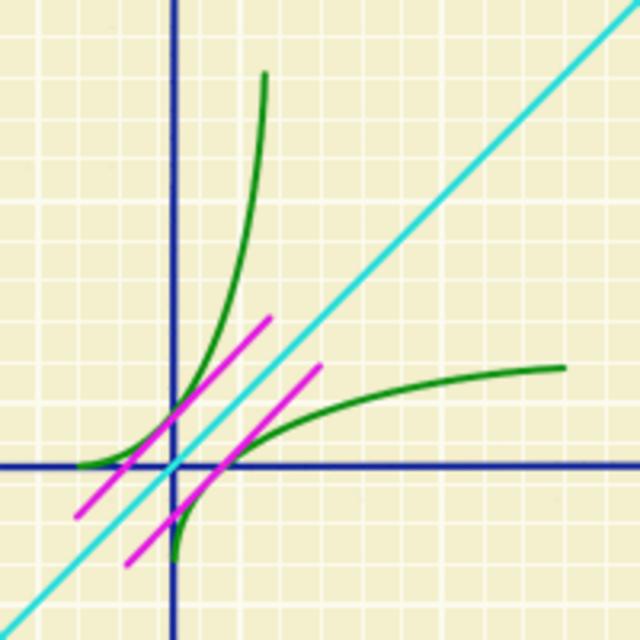
In this module, we will review some of the key concepts from Precalculus. Exponential and logarithmic functions arise often when modeling natural phenomena, and are important to Calculus. In applied settings, exponential functions model a relationship in which a constant change in the independent variable gives the same proportional change (i.e., percentage increase or decrease) in the dependent variable. This occurs widely in the natural and social sciences, as in a self-reproducing population, a fund accruing compound interest, or a growing body of manufacturing expertise. Thus, the exponential function also appears in a variety of contexts within physics, chemistry, engineering, mathematical biology, and economics.

WEEK 2
Trigonometric Functions
Equally important are the trigonometric functions, some of the most well-known examples of periodic or cyclic functions. Common phenomena have an oscillatory, or periodic, behavior. This is observed through ocean waves, sound waves, or even the regular beating of your heart. All these phenomena can be modeled using equations based on the familiar sine and cosine functions. In this module, we will see how to apply and construct functions that permit us to model cyclic behavior.

WEEK 3
Vectors in Space
In classical Euclidean geometry, vectors are an equivalence class of directed segments with the same magnitude (e.g., the length of the line segment (A, B)) and same direction (e.g., the direction from A to B). Vectors are used both in abstract sense as well as for applications, particularly in physics, Euclidean vectors are used to represent physical quantities that have both magnitude and direction, but are not located at a specific place, in contrast to scalars, which have no direction. For example, velocity, forces and acceleration are represented by vectors. In this module, we will study vectors specifically in the xy-plane and in "3D" space.

WEEK 4
Equations of Lines and Planes
Continuing our study of multi-dimensional analytic geometry, vectors are now applied to create algebraic equations to describe common objects like lines and planes in space. This module will test your ability to visualize algebraic equations and to create movement and thus control of these objects in space by performing algebraic manipulations. This will create a solid foundation for our study of multivariable calculus on these higher dimensional objects.
Precalculus Review Final Exam
The assessment below will help to identify strengths as weaknesses in your foundational material in order to be successful in single and multivariable differentiable calculus. Use the assessment below as a guide as to where to follow up and seek out more resources and examples.


Go to Class
MOOC List is learner-supported. When you buy through links on our site, we may earn an affiliate commission.

Related Courses

Precalculus: Periodic Functions (Coursera) Coursera
Johns Hopkins University

Precalculus: Periodic Functions (Coursera)

This course helps to build the foundational material to use mathematics as a tool to model, understand, and interpret the world around us. This is done through studying functions, their properties, and applications to data analysis. Concepts of precalculus provide the set of tools for the beginning student to begin their scientific career, preparing them for future science and calculus courses. This course is designed for all students, not just those interested in further mathematics courses.

Jun 1st 2026
5-12 Weeks
Calculus: Single Variable Part 4 - Applications (Coursera) Coursera
University of Pennsylvania

Calculus: Single Variable Part 4 - Applications (Coursera)

Calculus is one of the grandest achievements of human thought, explaining everything from planetary orbits to the optimal size of a city to the periodicity of a heartbeat. This brisk course covers the core ideas of single-variable Calculus with emphases on conceptual understanding and applications. The course is ideal for students beginning in the engineering, physical, and social sciences.

Jun 8th 2026
5-12 Weeks
Multivariable Calculus 1: Vectors and Derivatives (edX) EdX
MIT,MITx

Multivariable Calculus 1: Vectors and Derivatives (edX)

We live in a multivariable world. Explore the derivative in higher dimensions and learn how to apply it to solve real world problems. Part 1 of 3. Variables are all around us: temperature, altitude, location, profit, color, and countless others. Multivariable Calculus is the tool of choice to shed light on complex relationships between 2, 3, or hundreds of variables simultaneously.

Feb 16th 2022
13-24 Weeks
Mathematical and Computational Methods (edX) EdX
Georgetown University,GeorgetownX

Mathematical and Computational Methods (edX)

Physicists use math all of the time in nearly everything that they work on. This course will help you understand how math is interconnected and recognize that math involves a handful of simple ideas that repeat. By the end of the course, you will be able to re-derive important formulas from basic principles or know precisely where to look them up and use them.

Jan 14th 2024
13-24 Weeks
Introduction to Calculus (Coursera) Coursera
The University of Sydney

Introduction to Calculus (Coursera)

The focus and themes of the Introduction to Calculus course address the most important foundations for applications of mathematics in science, engineering and commerce. The course emphasises the key ideas and historical motivation for calculus, while at the same time striking a balance between theory and application, leading to a mastery of key threshold concepts in foundational mathematics.

May 18th 2026
5-12 Weeks
Physics 101 - Rotational Motion and Gravitation (Coursera) Coursera
Rice University

Physics 101 - Rotational Motion and Gravitation (Coursera)

This course serves as an introduction to the physics of rotational motion and gravitation. Upon completion, learners will have an understanding of how mathematical laws and conservation principles describe the motions and interactions of objects all around us. They will gain experience in solving physics problems with tools such as graphical analysis, algebra, vector analysis, and calculus.

Jun 8th 2026
4 Weeks
Calculus: Single Variable Part 1 - Functions (Coursera) Coursera
University of Pennsylvania

Calculus: Single Variable Part 1 - Functions (Coursera)

Calculus is one of the grandest achievements of human thought, explaining everything from planetary orbits to the optimal size of a city to the periodicity of a heartbeat. This brisk course covers the core ideas of single-variable Calculus with emphases on conceptual understanding and applications. The course is ideal for students beginning in the engineering, physical, and social sciences.

Jun 8th 2026
4 Weeks
Precalculus: Relations and Functions (Coursera) Coursera
Johns Hopkins University

Precalculus: Relations and Functions (Coursera)

This course helps to build the foundational material to use mathematics as a tool to model, understand, and interpret the world around us. This is done through studying functions, their properties, and applications to data analysis. Concepts of precalculus provide the set of tools for the beginning student to begin their scientific career, preparing them for future science and calculus courses. This course is designed for all students, not just those interested in further mathematics courses.

Jun 1st 2026
4 Weeks
Calculus through Data & Modeling: Limits & Derivatives (Coursera) Coursera
Johns Hopkins University

Calculus through Data & Modeling: Limits & Derivatives (Coursera)

This first course on concepts of single variable calculus will introduce the notions of limits of a function to define the derivative of a function. In mathematics, the derivative measures the sensitivity to change of the function. For example, the derivative of the position of a moving object with respect to time is the object's velocity: this measures how quickly the position of the object changes when time advances. This fundamental notion will be applied through the modelling and analysis of data.

Jun 1st 2026
5-12 Weeks
Analytic Combinatorics (Coursera) Coursera
Princeton University

Analytic Combinatorics (Coursera)

Analytic Combinatorics teaches a calculus that enables precise quantitative predictions of large combinatorial structures. This course introduces the symbolic method to derive functional relations among ordinary, exponential, and multivariate generating functions, and methods in complex analysis for deriving accurate asymptotics from the GF equations. All the features of this course are available for free. It does not offer a certificate upon completion.

May 18th 2026
5-12 Weeks
Introduction to Logic (Coursera) Coursera
Stanford University

Introduction to Logic (Coursera)

This course is an introduction to Logic from a computational perspective. It shows how to encode information in the form of logical sentences; it shows how to reason with information in this form; and it provides an overview of logic technology and its applications - in mathematics, science, engineering, business, law, and so forth.

Mar 23rd 2026
5-12 Weeks
Calculus: Single Variable Part 3 - Integration (Coursera) Coursera
University of Pennsylvania

Calculus: Single Variable Part 3 - Integration (Coursera)

Calculus is one of the grandest achievements of human thought, explaining everything from planetary orbits to the optimal size of a city to the periodicity of a heartbeat. This brisk course covers the core ideas of single-variable Calculus with emphases on conceptual understanding and applications. The course is ideal for students beginning in the engineering, physical, and social sciences.

Jun 8th 2026
4 Weeks